
The narrative of the Great Wealth Transfer has long been sold as a tidal wave of liquidity—a projected $124 trillion flowing from Boomers to younger generations. However, the reality is far more sterile. Once you strip away the debt and account for the escalating costs of retirement, that figure collapses to roughly $36 trillion. This isn't just a reduction in volume; it is a signal that the window for passive accumulation is closing. Those who currently hold the reins of extreme wealth are no longer looking for growth in the traditional sense. They are seeking survival through tangible, non-correlated assets.
Why the sudden urgency to exit the digital comfort zone? The answer lies in the saturation of the AI trade. For the last few years, the global elite parked capital in a handful of obvious software and chip names, creating a crowded trade where alpha has effectively evaporated. When everyone owns the same 'disruptive' stock, the asset ceases to be a hedge and becomes a liability. The smart money is now rotating toward what actually powers those servers: the raw, physical substrates of the modern world.
The Structural Conviction in Hard Assets
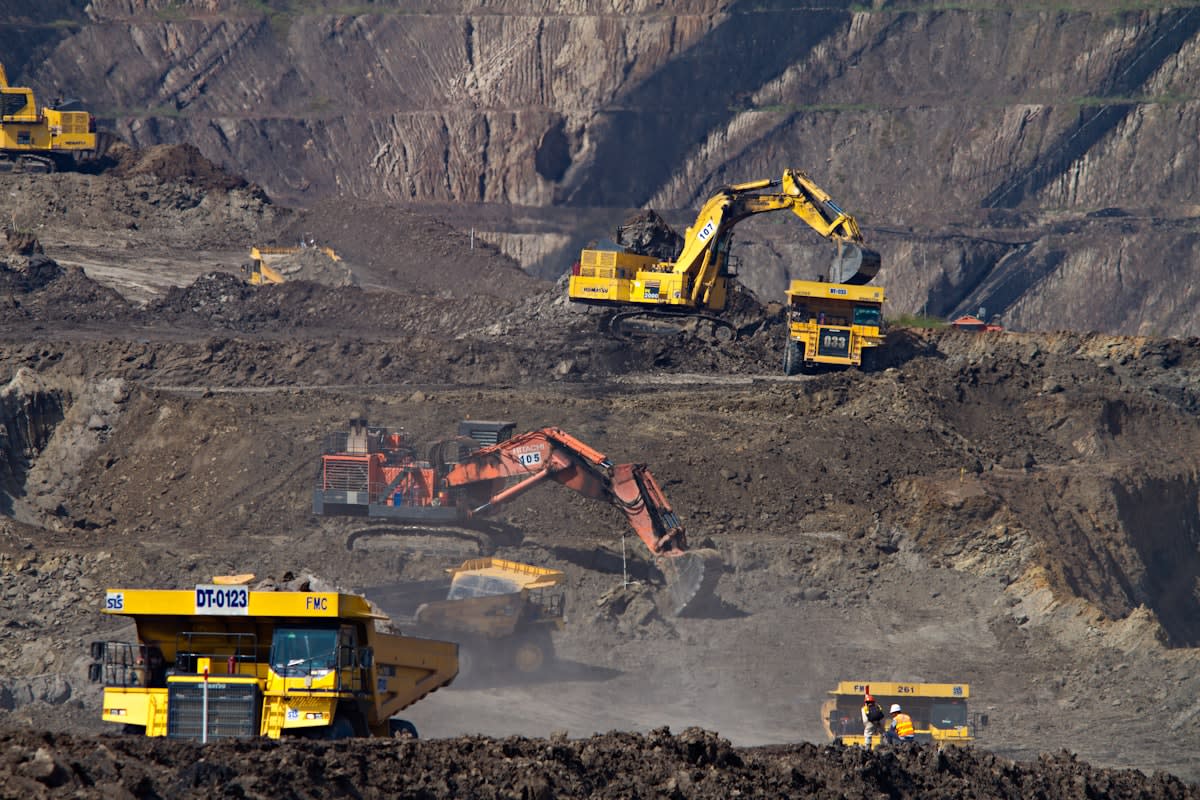
We are witnessing a transition from cyclical hesitation to structural conviction. For decades, commodities were treated as bets on economic cycles—buy copper when the economy grows, sell when it slows. That logic is dead. Today, copper, aluminum, and nuclear infrastructure are being acquired as quality-growth assets. The demand is no longer just about GDP growth; it is about the electrification of everything and the staggering energy requirements of AI data centers. This is a fundamental realignment of how value is perceived.
Brazil is already signaling this direction by planning to open its uranium sector to private investment. This is not a random policy change; it is a response to a long-dated nuclear project pipeline that requires massive private capital to execute. When sovereign states begin opening their most strategic energy reserves to private equity, it confirms that the elite are prioritizing energy security over liquid dividends. Who benefits when the grid fails but the private nuclear plant stays online?
The Materialist Pivot
The shift is not toward gold—which remains volatile under US-Iran tensions—but toward the industrial metals that cannot be synthesized or ignored. Tungsten, rare earths, and high-grade copper are the new reserve currencies.
Look at the periphery of the mining world. In Timor-Leste, the discovery of high-grade copper by Estrella is not just a geological win; it is a strategic acquisition. Similarly, the pursuit of rare earth zones in Jupiter by Critica and the 9.5x rare earth upgrade at Cummins Range by RareX show a focused effort to secure the supply chain. These are not retail trades. These are the footprints of institutional capital moving into assets that are physically impossible to replace.
| Asset Category | Previous Logic | New Structural Logic | Primary Driver |
|---|---|---|---|
| AI Equities | Early-stage growth | Crowded trade/Saturation | Software dominance |
| Critical Metals | Cyclical hedge | Structural necessity | Electrification/Data Centers |
| Aerospace | Luxury/Transport | Strategic Infrastructure | Global Supply Chain Stability |
| Nuclear Energy | Niche/Controversial | Baseload Security | AI Energy Demand |
This rotation is further evidenced by the movement into under-owned domestic infrastructure. While the West remains fixated on the S&P 500, a significant portion of sophisticated capital is eyeing China's domestic infrastructure buildout. This is a contrarian play. By moving into assets that are currently under-owned and undervalued, investors are hedging against a dollar that may strengthen in the short term but cannot sustain the weight of a multi-polar physical economy.
Aerospace as the New Sovereign Vault
If minerals are the skin of the new economy, aerospace is the nervous system. The recent $8 billion deal for Rocket Lab to acquire Iridium Communications, expected to close in mid-2027, is a masterclass in vertical integration. It is no longer enough to launch a rocket; you must own the communication network the rocket serves. This is the transition from being a service provider to owning the utility. This is how extreme wealth secures its position: by owning the bottleneck.
The aerospace sector is also seeing a fragmentation that allows for more precise capital allocation. Honeywell's board recently approved the spinoff of its aerospace unit for a separate Nasdaq listing on June 29. This allows investors to decouple the stability of aerospace from the volatility of other industrial segments. Why keep a high-performing aerospace engine tied to a diversified conglomerate when you can isolate it as a pure-play bet on global connectivity?

Even the bizjet market, often dismissed as a vanity play, is acting as a leading indicator for capital markets. Record IPO activity has historically tracked business jet delivery trends, suggesting that the movement of physical assets precedes the movement of public equity. When the ultra-wealthy increase their fleet—as seen in the early completion of the Wheels Up fleet transition involving nearly 100 aircraft—it signals a preference for mobility and autonomy over centralized corporate structures.
"The trade is no longer early-stage. Crowding in the obvious names is pushing the more compelling alpha toward under-owned domestic infrastructure and the raw materials of electrification."— Seeking Alpha Analysis
Is it a coincidence that we see a simultaneous push into Endeavour Silver Corporation by International Assets Investment Management LLC while gold prices dip due to US-Iran tensions? Not at all. The elite are diversifying away from the 'safe haven' assets that react to headlines and moving toward assets that react to physics. Silver, copper, and uranium don't care about a diplomatic spat in the Middle East; they care about the number of data centers being built in the desert.
This strategy is a response to a reflationary world where pricing power is the only true security. Companies that control the supply of aluminum or the orbit of a satellite possess an inherent pricing power that a software company—reliant on a fickle user base and expensive cloud credits—simply cannot match. The migration is quiet because it is an institutional rotation, not a retail frenzy.
The Erosion of the Great Wealth Transfer
Executive Insight
+18.4%
YTD Growth
What happens when the $36 trillion that actually reaches the next generation is already concentrated in the hands of those who are already wealthy? You get a feedback loop of asset scarcity. The few who control the rare earth mines in Australia or the uranium fields in Brazil will hold more leverage than those who hold a diversified portfolio of index funds. The game has changed from maximizing returns to minimizing dependence on external systems.
Ultimately, the migration to non-traditional assets is a confession. It is a confession that the digital economy has reached a point of diminishing returns for the ultra-wealthy. By pivoting to the raw materials of the earth and the infrastructure of the stars, they are building a fortress that is immune to the volatility of the stock market and the whims of central banks. They are no longer betting on the future; they are buying the components required to build it.