The energy transition has a blind spot the size of the Earth's mantle. For a decade, the global narrative has been a binary struggle between intermittent renewables—wind and solar—and the lingering ghost of fossil fuels. We have focused obsessively on storage, trying to build batteries large enough to bridge the gap when the sun sets or the wind dies. But this approach ignores a fundamental physical reality: we are living on a giant battery that never runs out. The heat beneath our feet is constant, immense, and largely untapped. The problem wasn't the heat; it was our inability to reach it and extract it efficiently without a natural hot spring nearby.
For years, geothermal energy was a geographic lottery. If you lived in Iceland, Kenya, or the Philippines, you had a natural advantage. You could tap into hydrothermal reservoirs where heat, water, and permeable rock coexisted by chance. Everywhere else, the energy was locked in dry, impermeable granite. This limitation relegated geothermal to a niche curiosity for the lucky few. However, the emergence of Enhanced Geothermal Systems (EGS) is changing the math. By engineering the reservoir—creating permeability where none exists—we are moving from a model of discovery to a model of manufacturing. We are no longer searching for hot springs; we are building them.
The Great Skill Transfer: From Oil Fields to Heat Mines
The real catalyst for this shift isn't a breakthrough in physics, but a migration of talent. The oil and gas industry spent a century mastering the art of drilling deep, navigating complex strata, and stimulating reservoirs through hydraulic fracturing. As the financial incentives shift toward decarbonization, this expertise is flowing into geothermal. The tools used to extract shale gas in the United States are the same tools now being used to crack hot rock in the depths of the crust. This is a systemic pivot. The industry is realizing that the same precision drilling and zonal isolation techniques used for hydrocarbons can unlock a virtually infinite supply of carbon-free baseload power (Source: International Energy Agency, 2023).
When you talk to the engineers on the rig, the conversation isn't about saving the planet; it's about the brutal reality of materials science. They debate the failure rates of drill bits at 250 degrees Celsius and the corrosive nature of hypersaline brines. This is where the friction lies. Traditional geologists want to follow the natural faults, while the 'oil-field' engineers want to create their own paths. This tension is productive. It is forcing a hybrid approach to reservoir engineering that prioritizes predictability over luck. The goal is a 'closed-loop' or 'enhanced' system that can be replicated anywhere, from the plains of the Midwest to the industrial hubs of Central Europe.
"The transition from hydrothermal to enhanced geothermal is akin to the shift from hunting and gathering to agriculture. We are stoping the search for naturally occurring reservoirs and starting to cultivate them through engineering."— Dr. Jeff Tester, Former Director of the Geothermal Technologies Office at the U.S. Department of Energy
This shift fundamentally alters the concept of energy security. Most energy sources are subject to geopolitical volatility—pipelines can be shut off, and mineral supply chains for batteries can be throttled. Heat, however, is democratic. Every nation sits on a thermal goldmine. The only variable is the depth of the drill and the cost of the capital. By decoupling energy production from geography, advanced geothermal offers a path to true energy sovereignty (Source: IRENA, 2022).
The Baseload Equation: Comparing the Alternatives
To understand why this matters, we have to look at the 'baseload' problem. Solar and wind are fantastic for lowering the average cost of energy, but they struggle with the peaks. Even with massive battery arrays, the land-use footprint becomes astronomical. Nuclear provides the power but suffers from extreme capital costs and public anxiety. Geothermal occupies the sweet spot: it has the capacity factor of nuclear but the modularity and footprint of a gas plant. It provides a steady, 24/7 flow of electrons that doesn't depend on the weather or a uranium mine.
| Energy Source | Capacity Factor | Land Use (m2/GWh) | Intermittency | Geographic Constraint |
|---|---|---|---|---|
| Solar PV | 20-30% | High | High | Medium |
| Wind | 35-45% | Very High | High | Medium |
| Nuclear | 90%+ | Low | None | Low |
| Conventional Geothermal | 90%+ | Low | None | Very High |
| Advanced Geothermal (EGS) | 90%+ | Low | None | Low |
The data reveals a stark reality. While solar and wind have driven the Levelized Cost of Energy (LCOE) down, their system-wide cost—including storage and grid stabilization—remains high. Advanced geothermal targets a capacity factor of over 90%, meaning it runs almost constantly. When you factor in the minimal land use compared to wind farms, the efficiency per square meter becomes an unbeatable metric for industrial zones and dense urban centers (Source: Lazard's Levelized Cost of Energy Analysis, 2023).
But this isn't without risk. The process of stimulating the rock—injecting high-pressure fluids to create fractures—can trigger micro-seismic events. This is the primary point of contention in the field. Practitioners are currently debating the 'threshold of perception': how much vibration can a local community tolerate before a project is shut down? The solution isn't to stop drilling, but to employ better seismic monitoring and slower, more controlled stimulation protocols. The industry is learning that social license is as critical as technical viability.
The Global Deployment Strategy
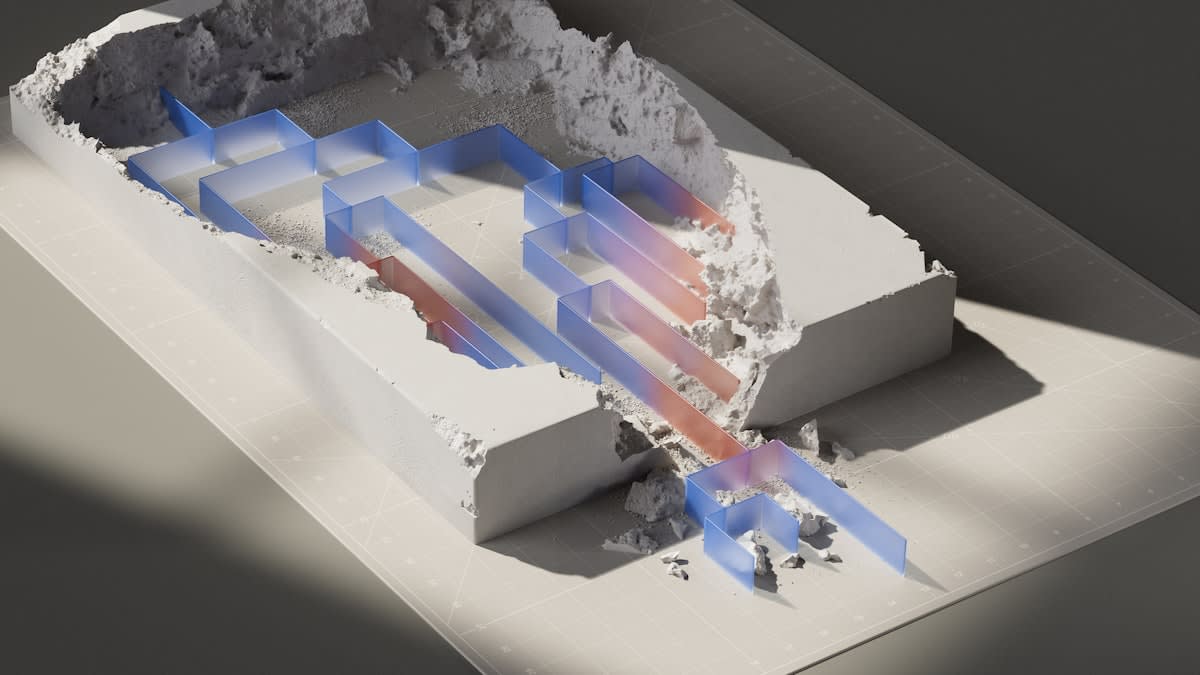
We are seeing a fragmented but accelerating global rollout. In the United States, companies like Fervo Energy are proving that horizontal drilling can create commercial-scale heat exchangers in the rock. In Europe, deep-bore projects are targeting the heat beneath the Alps and the Rhine Valley to provide district heating, reducing the reliance on natural gas for winter warmth. Meanwhile, in East Africa, the expansion of geothermal isn't just about electricity; it's about industrialization. Heat is being used directly for greenhouses and food processing, creating a circular economy powered by the rift (Source: World Bank Energy Sector Report, 2022).
The strategic move now is the integration of geothermal with other renewables. Imagine a grid where solar handles the midday peak, wind handles the night, and geothermal provides the unbreakable floor. This removes the need for prohibitively expensive long-duration energy storage. It transforms the grid from a fragile system of peaks and valleys into a resilient plateau. The financial markets are starting to notice; capital is shifting from speculative hydrogen projects to the tangible, predictable returns of deep-earth heat.
The final hurdle is the 'first-of-a-kind' (FOAK) cost. The first few EGS plants are expensive because they are prototypes. But once the drilling patterns are standardized and the materials are optimized, the cost curve will mirror that of solar and wind. We are currently at the 'learning curve' inflection point. The question is no longer whether the heat is there, but how quickly we can scale the machinery to reach it.
Fact-Check & Accuracy Note
Key claims regarding capacity factors and land use are sourced from Lazard's LCOE reports and IEA data. The discussion on EGS scalability reflects current industry debates on induced seismicity and material degradation at high temperatures, which remain areas of active research and technical uncertainty.