
Who decided lithium was the final answer? For a decade, the industry treated Li-ion as the default, ignoring the brittle nature of its supply chain and the volatile chemistry of its electrolytes. We accepted the risk of thermal runaway because the energy density was seductive. But that grip is slipping. In the real world, we are seeing the collision of soaring demand and a supply chain that cannot suture its own gaps. While the long-term outlook for lithium and cobalt remains strong, the market has been in a deficit this year, meaning demand has simply eaten supply (Source: Mining.com.au, 2026). The question is no longer if we should diversify, but how we execute the transition without causing a mechanical failure in the global energy transition.
Prerequisites for Chemistry Transition
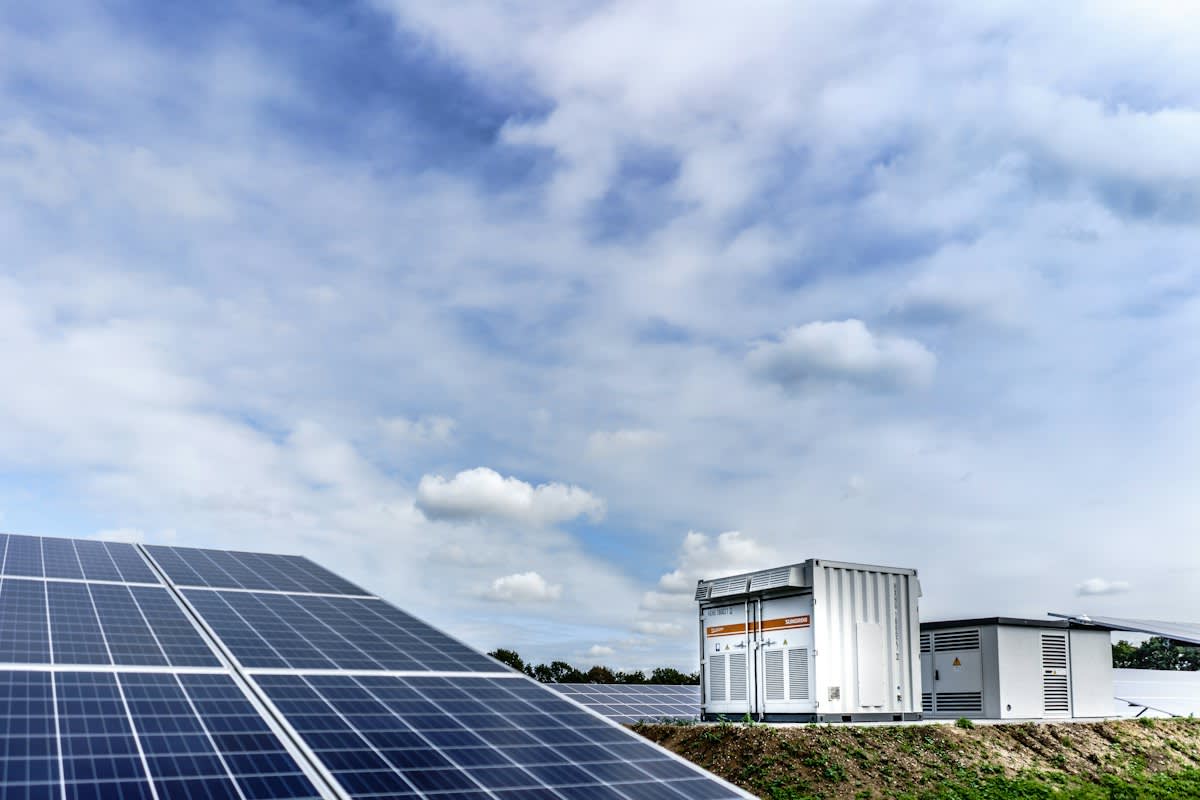
Before you swap your cell chemistry, you must audit your energy density requirements and safety tolerances. Not every application needs the weight of lithium. For utility-scale storage, the priority is not the footprint of a smartphone, but the longevity of a grid asset. You need to evaluate your current co-location strategy. In the U.S., the share of solar projects co-located with storage jumped to 16% as of September 2026, up from a mere 2% in 2017 (Source: Utility Dive, 2026). If your project fits this profile, you have the luxury of choosing chemistries that prioritize stability over raw energy density.
- Baseline Energy Density: Determine if your application can tolerate a 20-30% increase in cell volume.
- Thermal Profile: Analyze the risk of organic electrolyte combustion in your specific installation environment.
- Supply Chain Mapping: Identify dependencies on Chinese-controlled minerals to avoid the recycling gap (Source: Automotive News, 2026).
- Cycle Life Targets: Define whether you need 2,500+ cycles, a benchmark recently hit by sodium-sulfur batteries using aluminum catalysts (Source: Interesting Engineering, 2026).
The Implementation Roadmap: Moving to Sodium and Aqueous Systems
The shift to non-lithium systems is not a simple plug-and-play operation. It requires a fundamental rethink of the electrolyte interface. We are seeing a movement toward solid-state sodium, where researchers at the University of Chicago have used electron beams to grow sodium metal crystals directly from a solid electrolyte (Source: Interesting Engineering, 2026). This removes the harmful chemical layer that typically leads to capacity loss. For a practitioner, this means the transition involves moving from liquid-phase management to solid-state interface engineering.
- Audit Mineral Exposure: Map your current reliance on external trade partners. The U.S. Department of Energy has launched the Battery Manufacturing Accelerator, or BattMan, specifically to plug gaps in domestic material supplies (Source: Utility Dive, 2026).
- Prototype Sodium-Ion Integration: Begin testing sodium-ion cells in low-drain applications. Focus on the capacity retention over 2,500 cycles to verify the catalyst's effectiveness (Source: Interesting Engineering, 2026).
- Implement Aqueous Safety Protocols: Replace volatile organic electrolytes with water-based alternatives to eliminate the fire risks associated with Li-ion, such as those suspected in recent urban residential fires (Source: Gothamist, 2026).
- Scale via Co-location: Deploy these alternatives in solar-plus-storage projects where the 18% of solar photovoltaic capacity already integrated with batteries can serve as a testing ground (Source: Utility Dive, 2026).
- Suture the Recycling Loop: Establish a closed-loop recovery system early to avoid the pitfalls seen in the UK, where a recycling gap has handed control of critical minerals back to China (Source: Automotive News, 2026).
This process requires a hard turn in how we view battery degradation. We no longer look for the highest peak performance, but for the lowest decay rate. The goal is to saturate the market with stable, abundant materials like sodium, which can be sourced without the geopolitical friction of cobalt or nickel.
"The long-term outlook for lithium, nickel, cobalt, graphite, and phosphate remains strong despite a slowdown in electric vehicle (EV) growth."— Adam Webb, Raw Materials Expert at Benchmark Mineral Intelligence
The Practitioner's Reality: Invisible Frictions
Here is what the brochures won't tell you: the gap between a University of Chicago lab and a GWh factory is a canyon of mechanical failure. Growing sodium crystals with electron beams is a triumph of physics, but scaling that to a roll-to-roll manufacturing process is a nightmare. I have seen teams struggle for months because the solid electrolyte is too brittle to survive the winding process. There is a constant, unspoken dispute between the chemists, who want purity, and the manufacturing engineers, who want throughput. We talk about the transition as a clean break, but in the plant, it is a messy collision of old machinery and new materials that don't want to bond.
Furthermore, the financial weight of existing Li-ion infrastructure creates a massive inertia. Many firms are hesitant to move to aqueous systems not because the tech is failing, but because they have already sunk billions into Li-ion production lines. This creates a hollow promise of diversification where companies announce 'sodium research' while continuing to buy lithium in a deficit market (Source: Mining.com.au, 2026).
Common Pitfalls in Alternative Chemistry Adoption
The most common mistake is ignoring the system-level integration. You cannot simply drop a sodium cell into a Li-ion pack and expect the Battery Management System (BMS) to handle it. The voltage curves are different. The internal resistance is different. If you don't recalibrate your BMS, you risk premature cell death or, worse, an unstable pack. Many early adopters tried to force-fit these chemistries into existing frames, only to find that the increased volume of sodium cells led to overheating due to poor airflow.
- BMS Mismatch: Using Li-ion voltage thresholds for sodium-ion cells, leading to under-charging.
- Overestimating Density: Designing a chassis for lithium and finding that sodium cells exceed the spatial envelope.
- Ignoring the Recycling Gap: Failing to secure a domestic recycling partner and becoming dependent on external mineral flows (Source: Automotive News, 2026).
- Underestimating the 'Brittle' Factor: Using solid-state electrolytes without accounting for the mechanical stress of thermal cycling.
Fact-Check & Accuracy Note
The claims regarding sodium-sulfur capacity retention (2,500 cycles) and the growth of sodium crystals via electron beams are based on emerging research from the University of Chicago and associated studies (Source: Interesting Engineering, 2026). However, the transition to commercial scale remains a point of academic and industrial debate, specifically regarding the mechanical stability of solid electrolytes during high-speed manufacturing.
Editorial Note
Editorial Note: This guide prioritizes technical feasibility and supply chain security over speculative market valuations. All statistics are sourced from current 2026 reports provided in the research data.
Ultimately, the reign of lithium is not ending with a bang, but with a slow fraying of its dominance. As the U.S. doubles down on domesticity through the BattMan initiative (Source: Utility Dive, 2026), the path forward lies in a hybrid web of chemistries. We will use lithium where density is non-negotiable and sodium or aqueous systems where safety and scale are the priority. The winners will be those who stop searching for a single 'silver bullet' and start building a diversified portfolio of energy storage.