Dichotomy in Xi’s China: Discipline vs efficiency
Source Entity
Latest News: Todays Latest News Headlines from India & World | Hindustan Times
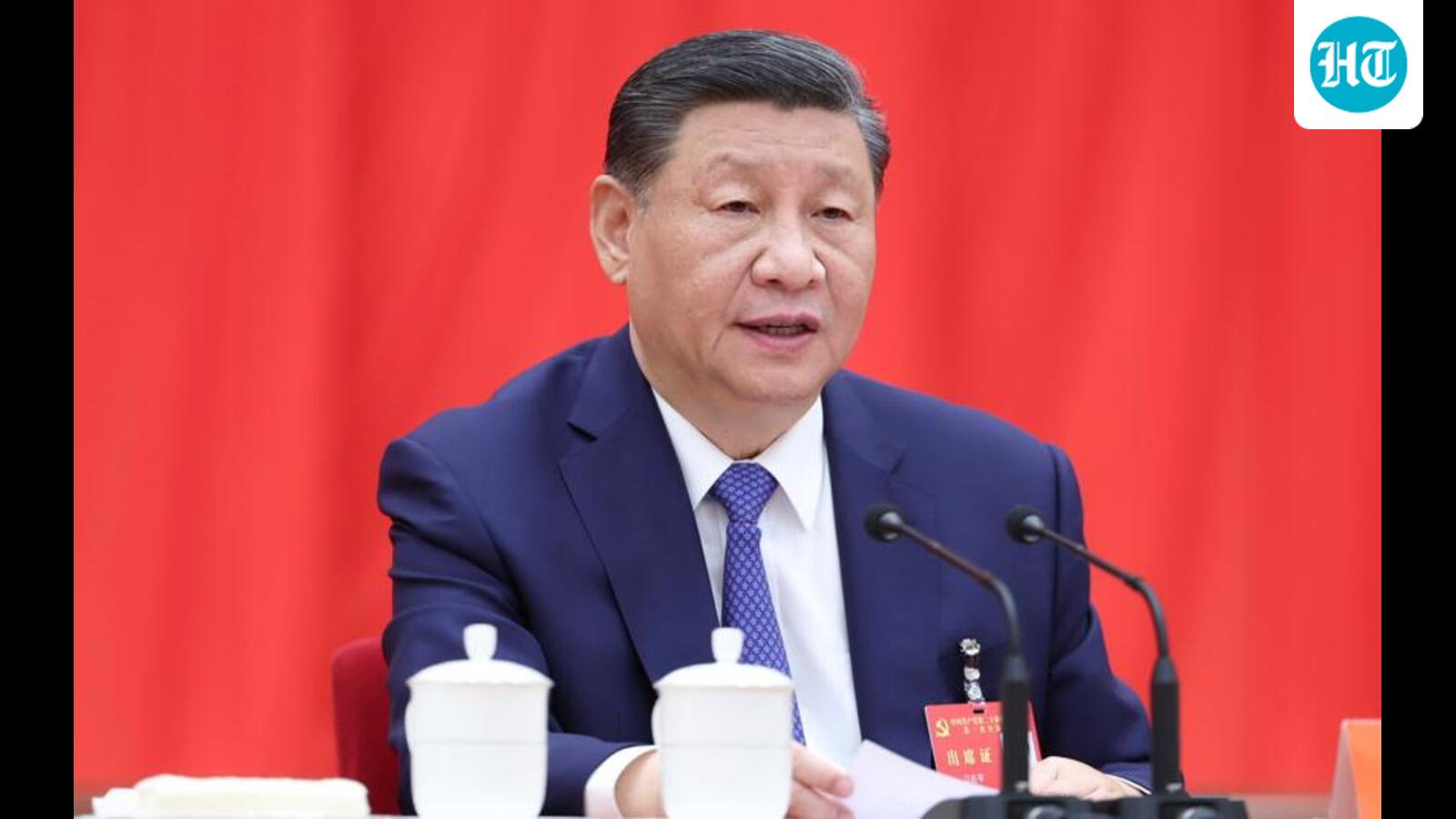
The CPC's 20th Central Committee has prioritized rigorous self-governance while simultaneously demanding greater administrative efficiency from its officials. President Xi Jinping aims to bridge the gap between central policy directives and local execution by curbing bureaucratic formalism.
The Dual Mandate: Discipline and Competence in Modern China
The conclusion of the Fifth Plenum of the Communist Party of China’s (CPC) 20th Central Committee on October 29 marks a pivotal moment in the evolution of Beijing’s governance model. By reaffirming a commitment to 'comprehensive and rigorous party self-governance,' President Xi Jinping is signaling that the ideological tightening observed over the past decade will not only continue but intensify. However, this disciplinary framework is being paired with an urgent call for administrative competence and local initiative, reflecting a strategic pivot toward addressing the inherent friction between strict central control and the practical requirements of governance.
Historical Context of Administrative Flexibility
Historically, China’s governing system has thrived on a degree of administrative flexibility and local experimentation. During the era of reform and opening up, local officials were often granted significant leeway to interpret central directives, allowing for rapid economic adaptation across diverse provinces. This 'fragmented authoritarianism' allowed China to navigate complex developmental challenges. The current shift toward stricter discipline represents an attempt to reclaim the efficiency of that model while ensuring that local experimentation does not deviate from the core political objectives set forth by the central leadership in Beijing.
The Challenge of Bureaucratic Formalism
President Xi Jinping has explicitly warned against the danger of institutional rules becoming mere 'hollow exercises.' A persistent issue within the Chinese bureaucracy is the rise of formalism—a phenomenon where officials prioritize the appearance of compliance through excessive paperwork and performative adherence to rules rather than substantive policy implementation. This culture of 'lying flat' or bureaucratic inertia stems from a fear of making mistakes in an environment where political discipline is absolute. By calling for greater initiative, the leadership is attempting to mitigate this paralysis, encouraging officials to act decisively without fearing retribution for minor procedural deviations.
Bridging the Gap in Policy Execution
For the leadership, the primary objective of these reforms is to bridge the systemic gap between decisions made in Beijing and their actualization on the ground. When central directives are filtered through layers of risk-averse local bureaucracy, the intent of the policy is often diluted or lost. The 20th Central Committee's recent focus on 'effective governance' suggests that the CPC is moving toward a more centralized oversight mechanism designed to hold officials accountable not just for following rules, but for delivering tangible results that align with the national agenda.
Future Implications and Institutional Adaptability
Can a more extensively supervised CPC truly become more adaptable? The tension between rigid political discipline and the need for agile, localized problem-solving remains the central paradox of Xi’s China. If the state can successfully incentivize risk-taking while maintaining ideological coherence, it may create a more responsive administrative apparatus. Conversely, if the emphasis on discipline continues to overshadow the need for local innovation, the system may struggle with the very efficiency it seeks to cultivate. The coming months will likely see new regulatory frameworks aimed at measuring official performance beyond simple statistical targets, focusing instead on qualitative outcomes and responsiveness to central mandates.
Verification Required?