Israel Election Results 2026 LIVE Updates: Israel’s opposition leaders back Eisenkot to oust Netanyahu
Source Entity
The Indian Express
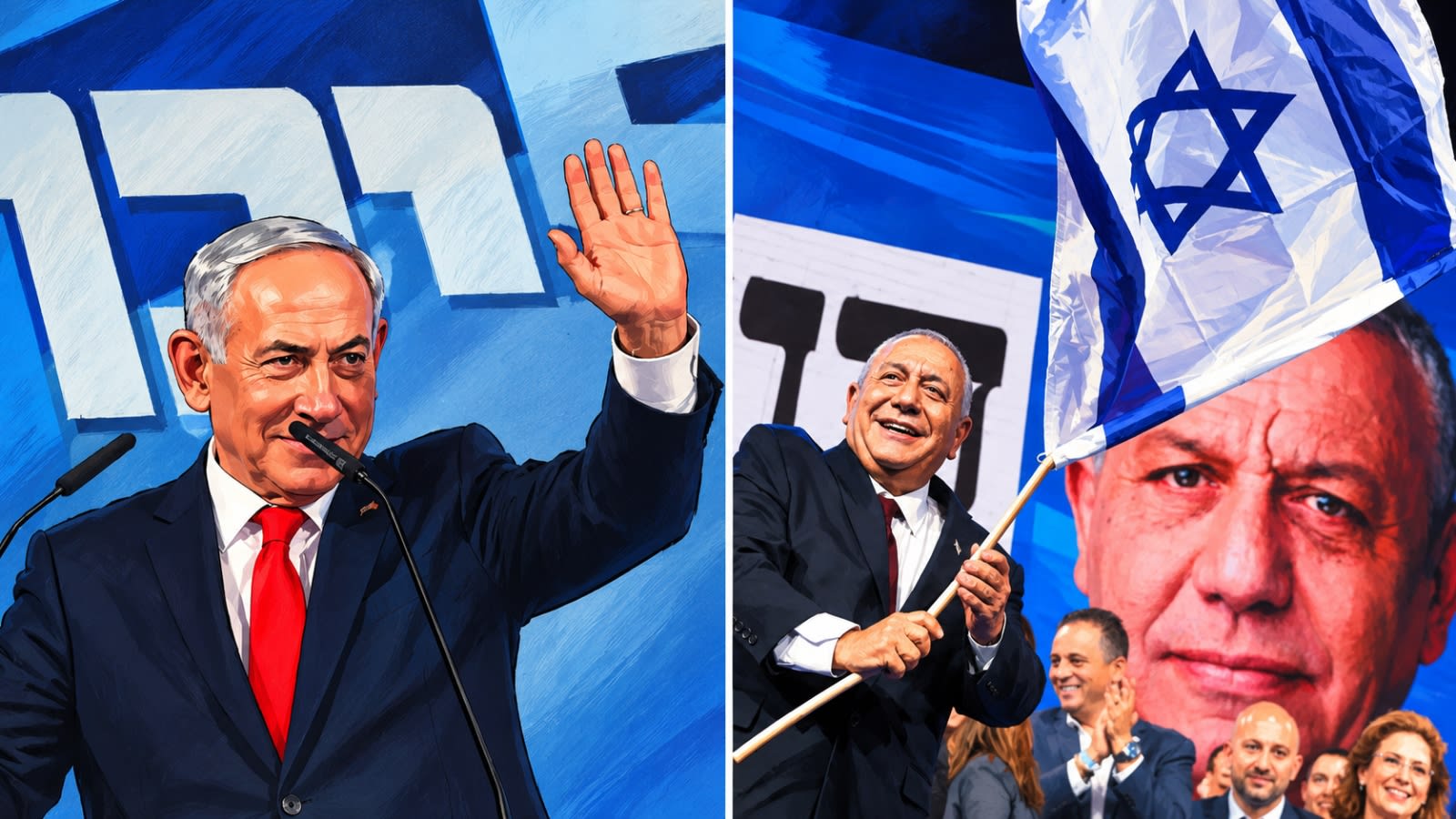
Israel faces a political deadlock following the 2026 general election, which resulted in a hung parliament. Prime Minister Benjamin Netanyahu and opposition leader Gadi Eisenkot are both struggling to secure a majority, leaving the nation's governance in flux.
The 2026 Israeli Election Deadlock: A Deep Dive
The Anatomy of a Hung Parliament
The 2026 Israeli general election has culminated in a significant political impasse, characterized by a hung parliament. With neither the bloc led by incumbent Prime Minister Benjamin Netanyahu nor the coalition headed by former military chief Gadi Eisenkot achieving the required majority threshold, the nation enters a period of intense legislative uncertainty. This gridlock reflects deep-seated ideological fractures within the electorate and the Knesset, complicating the formation of a stable executive branch.
Netanyahu’s Strategy and the Claim to Power
Prime Minister Benjamin Netanyahu, whose Likud party secured 27 seats to remain the largest single party in the Knesset, has formally called for a "broad national government." His strategy hinges on the premise that as the leader of the largest faction, he holds the primary mandate to form the next administration. However, his vision for this government explicitly excludes Arab-led parties, a stance that narrows his path to a majority and heightens the tension surrounding coalition negotiations.
The Role of the Opposition and Military Leadership
Opposing Netanyahu is Gadi Eisenkot, a former Israeli military chief whose coalition represents the primary challenge to the current Prime Minister. The rivalry between these two figures underscores a broader debate on security, governance, and the future direction of the state. Eisenkot’s reluctance to engage with certain factions, combined with the rigid ideological boundaries set by opposition leaders, has effectively gridlocked the traditional coalition-building process, forcing parties to consider unconventional arrangements.
The Pivot Point: The Arab-Led Parties
A critical factor in this election is the performance of Arab-led parties, including the Joint List and Ra’am, which collectively secured 19 seats. These parties hold the balance of power in the Knesset, making them essential, if controversial, kingmakers. While their presence is mathematically vital for any stable coalition, the historical and political friction between these parties and the mainstream Jewish-led blocs creates a significant hurdle that complicates the formation of a functional government.
Potential Governing Arrangements
As the political class maneuvers, several potential outcomes are being debated. These include the formation of a unity government, which would necessitate compromise between bitter rivals, or the establishment of a minority government that relies on external support. Both paths are fraught with risk; a unity government could alienate core supporters, while a minority government would likely suffer from chronic instability and legislative impotence.
Future Trends and Implications
Looking ahead, the inability to form a clear government may lead to prolonged instability or, in the worst-case scenario, the prospect of repeat elections. The current impasse suggests that the Israeli political landscape is becoming increasingly fragmented, with power concentrated in the hands of smaller, ideologically driven parties. The final resolution of this crisis will likely hinge on which leader is willing to make the most significant concessions to bridge the gap between their stated ideals and the cold reality of parliamentary arithmetic.
Multiple Citing Sources