The Cobalt Paradox
For a decade, the electric vehicle (EV) revolution operated on a convenient blind spot. We celebrated the zero-emission tailpipe while ignoring the carbon-heavy, ethically fraught journey of the cobalt inside the battery. The industry relied on a fragmented chain of intermediaries who obscured the origin of minerals, allowing 'dirty' cobalt—mined under hazardous conditions in the Democratic Republic of Congo (DRC)—to blend seamlessly with industrial-grade ore. It was a system built on plausible deniability. But the luxury of ignorance has expired. The introduction of the Battery Passport is not merely a regulatory hurdle; it is a systemic reconfiguration of how we value raw materials.
Why now? Because the risk has shifted from the ethical to the financial. Institutional investors and sovereign wealth funds no longer view human rights abuses in the supply chain as a PR problem, but as a material financial risk. A single exposé on child labor can wipe billions off a manufacturer's market cap in hours. The Battery Passport solves this by creating a digital twin for every battery pack, recording its chemical composition, origin of materials, and recycled content. According to the EU Battery Regulation (Source: European Commission, 2023), this mandate will require all batteries over 2kWh entering the EU market to have a digital passport by 2027.
"The battery passport is the missing link between the mine and the end-user. It transforms a physical product into a data-rich asset, ensuring that sustainability claims are verifiable rather than aspirational."— Representative of the Global Battery Alliance (Source: GBA Framework, 2022)
This transition represents a fundamental shift in power. For years, the upstream miners held the leverage because they controlled the physical resource. Now, the downstream OEMs (Original Equipment Manufacturers) are leveraging regulatory frameworks to demand total transparency. If a batch of cobalt cannot be digitally traced to a certified site, it simply cannot enter the most lucrative markets. This creates a binary economy: 'Clean' cobalt with a digital pedigree that commands a premium, and 'Dirty' cobalt that is effectively locked out of the Western economy.
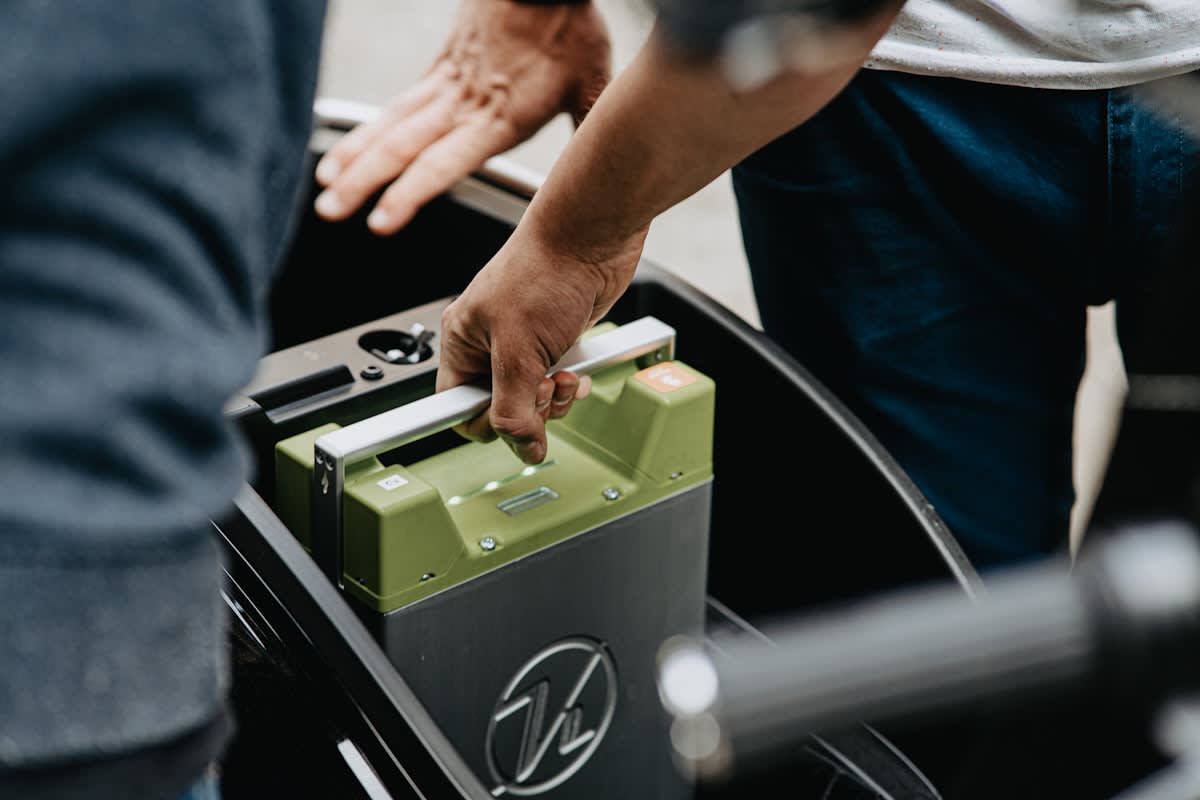
But let's be clear: this is not just about morality. It is about the circular economy. A battery without a passport is a liability at the end of its life because the recycler doesn't know exactly what is inside it. By documenting the precise chemistry and state of health, the passport turns a waste product into a predictable feedstock. This shift is expected to significantly increase the recovery rates of critical minerals like cobalt and lithium, reducing the reliance on volatile primary mining (Source: International Energy Agency, 2023).
The Friction of Reality: A Practitioner's Perspective
If you spend enough time in the logistics hubs of Lubumbashi or the refineries in Ningbo, you realize that the 'digital' part of the passport is the easy bit. The real battle is the 'physical' link. In the field, practitioners are wrestling with a massive data integrity problem: how do you ensure that the cobalt tagged at a certified mine isn't swapped for artisanal ore at a transit warehouse? This is the 'garbage in, garbage out' dilemma. We see a fierce internal debate among supply chain auditors about whether blockchain is a cure-all or just a high-tech way of documenting a lie. The consensus is shifting toward a hybrid model—combining digital ledgers with chemical fingerprinting and satellite monitoring of mine sites.
The friction is palpable. Small-scale miners, who provide a significant portion of the world's cobalt, fear that these passports will act as a barrier to entry, effectively criminalizing their livelihood to satisfy a European regulatory checklist. The industry is currently debating whether to 'exclude' artisanal mining or 'formalize' it through the passport system. The latter is the only sustainable path, but it requires an infrastructure investment that most OEMs are reluctant to fund. Who pays for the QR code at the pit head?
| Feature | Traditional Sourcing | Passport-Enabled Sourcing |
|---|---|---|
| Traceability | Tier-1 Supplier only (Opaque) | Mine-to-Wheel (Transparent) |
| Risk Management | Reactive (Post-scandal) | Proactive (Real-time auditing) |
| Asset Valuation | Based on commodity spot price | Based on purity + ESG pedigree |
| End-of-Life | Generic waste stream | Targeted material recovery |
This structural shift is forcing a realignment of global trade routes. We are seeing the emergence of 'green corridors' where minerals move from certified mines in Australia or Canada directly to refineries and then to gigafactories, bypassing the traditional, murky hubs. The goal is a closed-loop system where the passport follows the mineral through its first life in a car, its second life in stationary grid storage, and finally back into the refinery.
The Contrarian View: Capital, Not Conscience
It is tempting to frame the Battery Passport as a victory for human rights. That is a romantic narrative, but it ignores the underlying economic engine. The real driver here is the securitization of the battery. By creating a standardized, digital record of a battery's health and origin, the industry is turning batteries into tradable financial assets. A battery with a verified passport has a higher residual value because the buyer knows its history. It is essentially a 'Carfax' for energy storage.
Furthermore, the passport is a geopolitical tool. By setting the standards for what constitutes a 'clean' battery, the EU is effectively exporting its regulatory values and creating a non-tariff trade barrier. If you cannot meet the digital transparency requirements, you are locked out of the market. This forces global suppliers—particularly in Asia—to adopt Western standards of reporting or lose access to the world's most affluent consumers. It is a sophisticated form of regulatory diplomacy.
Does this actually end 'dirty' cobalt? Not overnight. But it changes the math. When the cost of hiding the origin of cobalt exceeds the cost of mining it ethically, the market will flip. We are seeing the first signs of this as the price premium for 'certified' cobalt begins to stabilize. The passport doesn't just track the mineral; it prices the ethics into the product. For the first time, the externalized cost of human suffering is being internalized into the balance sheet of the automotive giant.
Ultimately, the Battery Passport is the first step toward a total 'material passport' economy. Once we solve this for cobalt, we will apply it to copper, nickel, and rare earths. We are moving toward a world where every gram of critical mineral has a digital biography. The era of the anonymous commodity is ending; the era of the identified asset has begun.
Fact-Check & Accuracy Note
Key claims regarding the 2027 deadline and digital twin requirements are sourced from the EU Battery Regulation (2023). Data on circular economy recovery rates is based on IEA 2023 reports. The framework for the 'Battery Passport' concept is attributed to the Global Battery Alliance (2022). Debate regarding artisanal mining integration remains an ongoing point of contention among industry stakeholders and NGOs.