If a data center is camouflaged in the woods, will anyone hate it?
Source Entity
Justine Calma
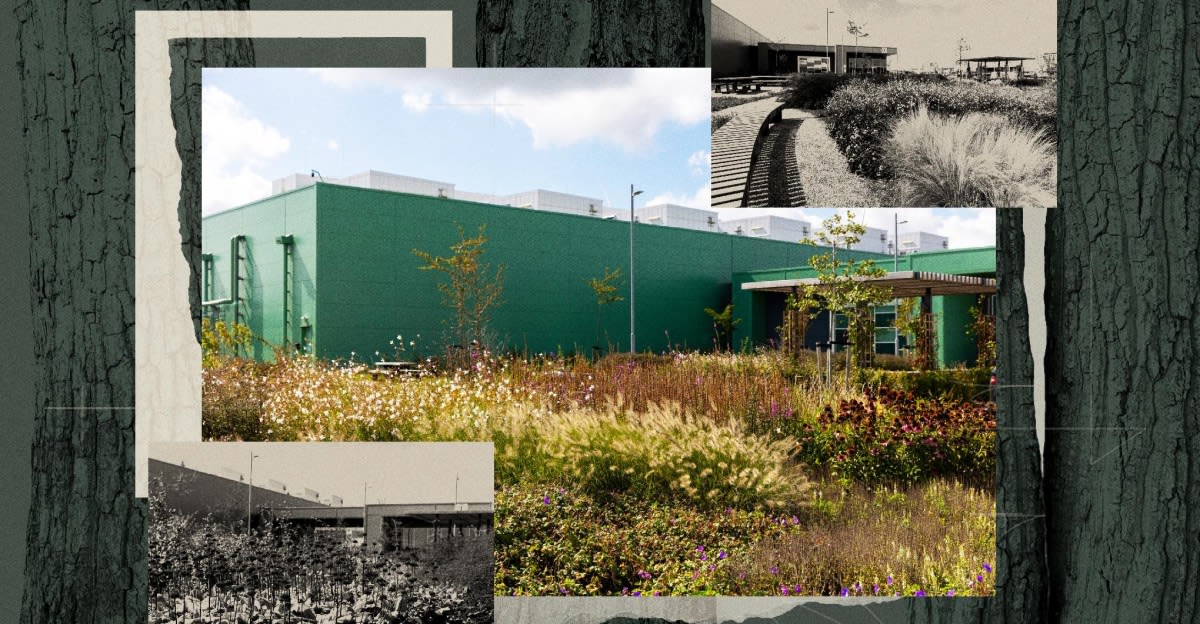
As AI demand drives a massive expansion of hyperscale data centers, communities are pushing back against the resulting environmental and noise nuisances. Amazon is responding with a $1 billion investment pledge and a public campaign defending the facilities as essential to national security.
The Growing Friction Between AI Infrastructure and Local Communities
For decades, the physical footprint of the internet was largely invisible, hidden within modest, unassuming office buildings. However, as the artificial intelligence boom accelerates, the scale of data storage and processing has shifted dramatically. In cities like San Antonio, where Councilmember Ric Galvan notes that data centers have evolved into massive 'hyperscale' facilities spanning millions of square feet, the transition from minor infrastructure to dominant local features has sparked significant community unrest.
The Environmental and Social Cost of Hyperscale
The rapid expansion of these facilities, particularly when clustered in specific districts, has introduced tangible nuisances to surrounding neighborhoods. Residents are increasingly vocal about the loss of green space, the noise pollution from cooling systems, and the persistent, disruptive glow of high-intensity lighting. When these structures replace formerly natural landscapes, the environmental impact—ranging from tree removal to the strain on local power grids and water supplies—becomes a focal point for local resistance.
The National Security Argument
In response to this mounting backlash, Amazon Web Services (AWS) CEO Matt Garman has taken an aggressive stance, framing the construction of these data centers as a matter of national security and economic survival. In a lengthy blog post, Garman warned that failing to support these projects could lead to 'irreparable harm' to the U.S. economy, essentially arguing that the race for AI dominance necessitates a rapid, unencumbered build-out of physical infrastructure.
Corporate Strategy: The $1 Billion Pivot
Recognizing that public opinion is turning against their expansion plans, Amazon has launched a $1 billion commitment over the next five years aimed at community development. The initiative purports to address concerns regarding energy affordability, water preservation, and local education. By shifting the narrative from 'nuisance' to 'community partner,' Amazon hopes to mitigate the friction that has emerged as these data centers become more prevalent.
The Challenge of Transparency
Despite these financial commitments, Amazon faces criticism for its communication style, which some observers feel downplays the environmental realities of data center operations. While the company has pledged to be 'water positive' by 2030 and has taken steps to eliminate non-disclosure agreements (NDAs) that previously silenced local concerns, the tension between corporate growth targets and community well-being remains high. The company’s attempt to dismiss opposition as 'misinformation' suggests that the struggle for social license to operate will continue to be a defining feature of the AI era.
Future Trends and Outlook
As the demand for AI processing power continues to scale, the conflict between hyper-local neighborhood interests and global technological necessity is unlikely to dissipate. We can expect to see more companies following Amazon’s lead in creating community benefit funds, but the long-term success of these projects will depend on whether they can genuinely solve for the environmental impacts of noise, power consumption, and water usage, rather than simply rebranding the development process.