Tinder adapts to a social, IRL dating future with ‘Group Hangouts’ feature
Source Entity
Lauren Forristal
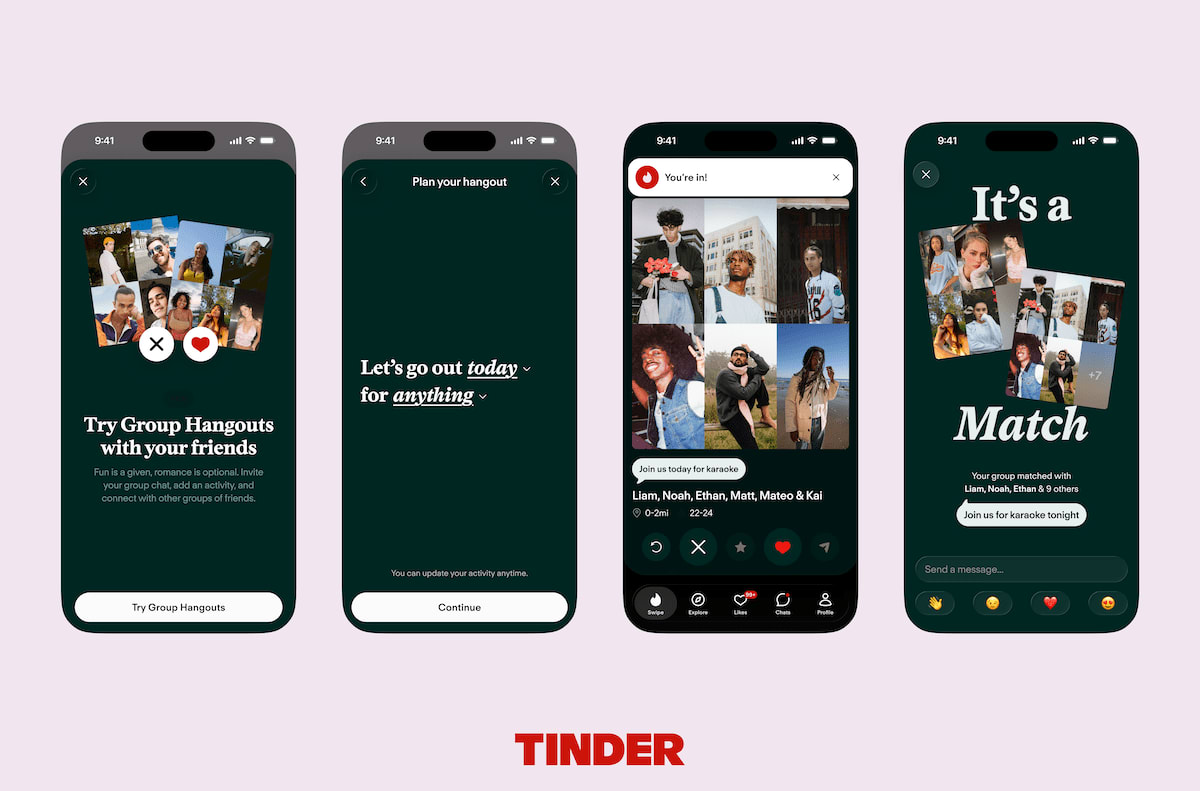
Tinder has launched a new 'Group Hangouts' feature designed to shift dating from solitary swiping to social, real-world interactions. The feature allows groups of friends to match with other groups based on shared activities to facilitate offline meetups.
Tinder’s Strategic Pivot: From Solo Swiping to Social Connection
Tinder, long synonymous with the 'endless scroll' of digital dating, is undergoing a significant transformation with the introduction of its new 'Group Hangouts' feature. This shift signals a broader industry recognition that younger demographics are experiencing fatigue with traditional, individual-centric swiping mechanics. By centering the experience on groups rather than individuals, Tinder is attempting to align its platform with a generational preference for communal, real-world experiences over isolated digital interactions.
The Mechanics of Group Interaction
The new feature operates by shifting the focus from individual profiles to collaborative group planning. Users initiate the process by selecting a specific activity and inviting at least two friends to join, forming a unit that can reach a maximum of 15 members. Once a group reaches the three-member threshold, it becomes visible in Tinder’s main card stack. This structural change gamifies the discovery process, turning the app into a tool for social coordination rather than just romantic matchmaking.
Addressing Dating App Fatigue
The move is a direct response to the growing 'dating app fatigue' among Gen Z and younger millennials. After years of the swipe-based model, which often leads to superficial connections and burnout, users are increasingly prioritizing safety and social comfort. By allowing users to interact as part of a group, Tinder mitigates the anxiety often associated with one-on-one 'blind' dates, providing a more secure and organic environment for meeting new people.
Redefining the 'Match' Concept
Under this new system, the concept of a 'match' is redefined as a mutual interest between two groups. When a group finds another group they wish to connect with, they can 'like' them, leading to potential inter-group communication. This collaborative approach lowers the stakes of initial meetings and encourages users to leverage their existing social networks to vet potential acquaintances, a trend that could significantly alter how dating apps function in the future.
Future Implications for Social Networking
If successful, Group Hangouts could mark the beginning of a larger trend where dating applications blend into general social networking platforms. By focusing on shared activities rather than individual romantic intent, Tinder is expanding its utility beyond traditional dating. This evolution suggests that the future of social technology lies in bridging the gap between digital discovery and tangible, physical-world engagement, potentially setting a new standard for how apps facilitate human interaction.