The End of the Portland Monopoly
The math is brutal. Cement production alone accounts for roughly 8% of global CO2 emissions, a figure that makes the construction industry a primary target for climate intervention. For decades, the world leaned on the sheer ubiquity and reliability of Ordinary Portland Cement (OPC), ignoring the ecological debt accrued with every single pour. We built our modern civilization on a material that is effectively a carbon bomb. But the tide has turned. This year, the industry is witnessing a systemic pivot away from OPC toward a diversified portfolio of low-carbon alternatives that no longer treat sustainability as a luxury add-on.
The most immediate disruptor is the surge in Limestone Calcined Clay Cement (LC3). By replacing a significant portion of clinker—the most carbon-intensive component of cement—with calcined clay and limestone, LC3 reduces CO2 emissions by up to 40%. This isn't just a laboratory curiosity; it is being deployed at scale across emerging economies in Latin America and Southeast Asia. Why? Because it utilizes locally available materials, slashing transport costs while simultaneously lowering the carbon footprint. The shift is moving from experimental pilots to baseline specifications in municipal building codes.
Comparing the current landscape to twelve months ago reveals a stark delta. In 2023, low-carbon concrete was largely the province of 'green' flagship projects—buildings designed more for PR than for performance. Today, we see a transition toward systemic adoption. Developers are no longer asking if these materials work; they are asking how quickly they can be integrated into the supply chain to avoid looming carbon taxes. The conversation has shifted from environmental altruism to financial risk management.
While binder chemistry solves the production problem, a new frontier is emerging: the ability to turn the building itself into a carbon sponge.
Turning Skyscrapers into Carbon Sinks
Carbon mineralization is the current gold rush of urban architecture. The process involves injecting captured CO2 directly into the concrete during the mixing phase. This doesn't just sequester the gas; it chemically transforms the CO2 into a mineral that actually strengthens the concrete. It is a rare win-win in engineering: lower emissions and a more durable product. We are seeing this technology move rapidly into the foundations of high-rise developments in Singapore and the UAE, where the demand for density usually clashes with sustainability goals.
"We are no longer just trying to do less harm. We are actively redesigning the chemistry of our cities to remove carbon from the atmosphere. The building is the filter."— Lead Material Scientist, Urban Resilience Initiative
The Momentum Shift
The 2024 Delta: Twelve months ago, carbon-injected concrete was a boutique service provided by a handful of startups. This year, it has entered the procurement lists of the world's top ten construction firms, marking a shift from 'innovation' to 'standard practice'.
This mineralization process addresses the 'embodied carbon' problem—the emissions generated before a building even opens its doors. For too long, architects focused on operational carbon, such as energy-efficient HVAC systems, while ignoring the massive carbon spike created during construction. By utilizing mineralization, the structural core of a building becomes a permanent storage site for greenhouse gases. This flips the narrative of the 'concrete jungle' from a climate liability to a climate asset.
Yet, the pivot extends beyond modified concrete, venturing into the realm of biological fabrication.
The Bio-Material Rebellion
Enter the bio-materials: mycelium, hempcrete, and algae-based binders. These materials represent a radical departure from the extractive logic of traditional masonry. Mycelium, the root structure of fungi, can be grown into structural blocks that are lightweight, insulating, and entirely biodegradable. While we aren't seeing mycelium skyscrapers yet, these materials are dominating the interior and secondary structural markets in Scandinavia and Canada, where bio-based building codes are evolving faster than anywhere else on earth.
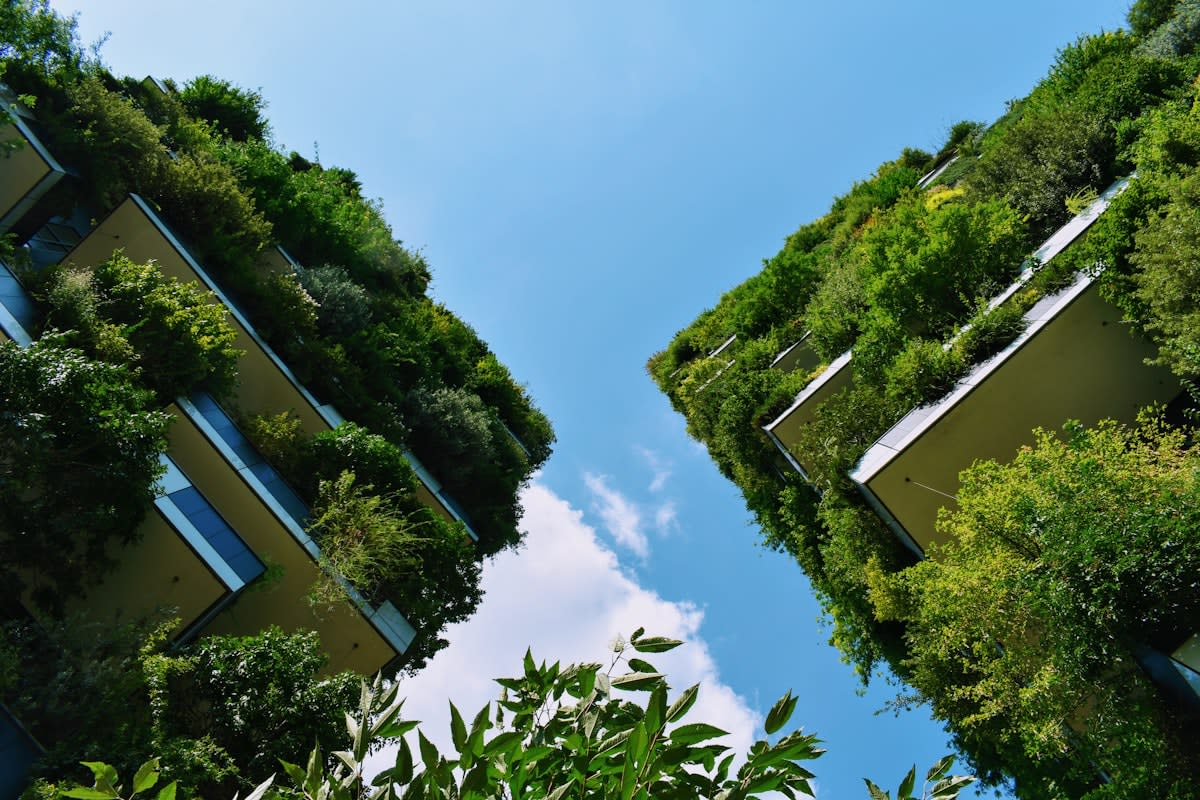
Hempcrete, a mixture of hemp shiv and lime, offers a compelling alternative for residential envelopes. It is carbon-negative, meaning it absorbs more CO2 during its growth and curing phase than is emitted during its production. The challenge has always been structural load-bearing capacity. However, the new wave of 'hybrid' architecture—combining a low-carbon concrete frame with bio-material infill—is solving this. It allows for the height of a city and the breathability of a forest.
| Material | Carbon Profile | Primary Use Case | Scalability (2024) |
|---|---|---|---|
| Portland Cement | High Positive | General Infrastructure | Ubiquitous |
| LC3 | Low Positive | Housing/Commercial | Rapidly Scaling |
| Mineralized Concrete | Neutral/Negative | High-Rise Foundations | Moderate |
| Hempcrete | Negative | Insulation/Walls | Niche/Regional |
The Economic Logic of Resilience
Why is this happening now? The driver isn't just environmental ethics; it is cold, hard economics. Carbon pricing mechanisms in the European Union and emerging mandates in North America are turning carbon into a line item on the balance sheet. When the cost of emitting CO2 exceeds the premium of using a low-carbon alternative, the market pivots instantly. We are seeing a massive reallocation of capital toward material science startups that can prove a reduction in embodied carbon.
Projected Market Share of Low-Carbon Binders (2024-2030)
Executive Insight
+18.4%
YTD Growth
The resilience of the next generation of cities depends on this material pivot. As urban heat islands intensify, the ability to use materials with higher thermal mass and lower carbon footprints becomes a matter of survival. The goal is no longer just to build 'green' buildings, but to create an urban fabric that actively heals the atmosphere. The transition is quiet, it is technical, and it is happening in the mixing drums of concrete trucks across the globe.
Ultimately, the Concrete Pivot represents a broader shift in human ingenuity. We are moving from an era of extraction and domination to one of synthesis and integration. The cities of 2050 will not be monuments to the carbon age, but living laboratories of material science. The foundation has already been poured.