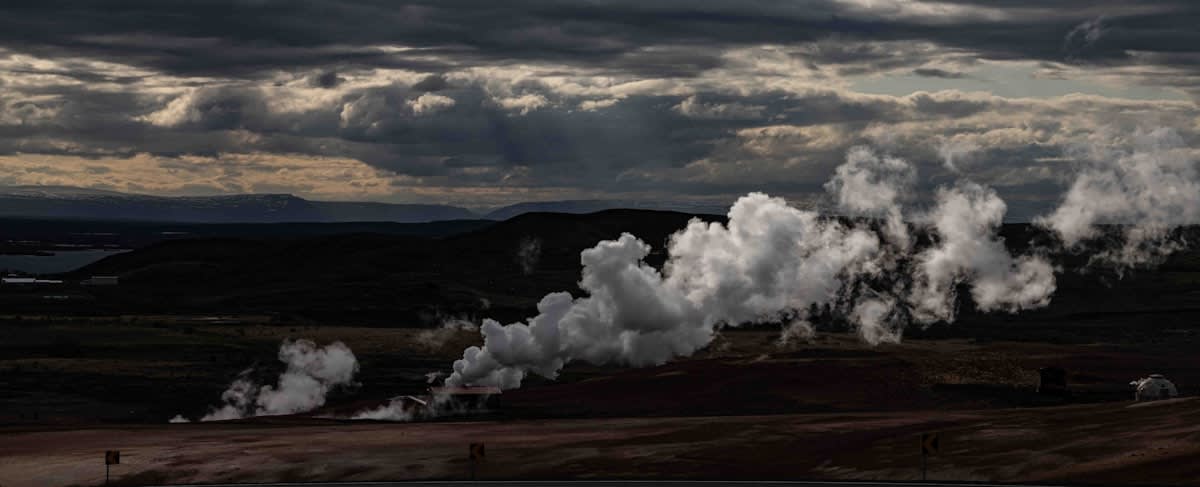
The global energy map is being redrawn, not by the wind or the sun, but by the crushing pressure and searing heat miles beneath our feet. For decades, geothermal energy was a niche play, restricted to volcanic hotspots like Iceland or the rift valleys of East Africa. That limitation is evaporating. We are now entering the era of Super-Hot Rock (SHR) geothermal, a technological leap that treats the entire Earth's crust as a potential battery. Why does this matter now? Because we have finally stopped looking for natural steam vents and started deciding where we want to create them.
The technical threshold for this revolution is the supercritical point of water: 374 degrees Celsius at pressures above 22 megapascals. When water reaches this state, it is neither liquid nor gas; it becomes a supercritical fluid with the density of a liquid and the viscosity of a gas. This state allows the fluid to carry an order of magnitude more energy than conventional steam. While standard geothermal plants might struggle with lukewarm reservoirs, SHR targets the deep basement rock where the heat is omnipresent and staggering. The goal is simple: drill deeper, hit hotter, and extract more.
The Delta: From Experimental Theory to Grid Reality
Twelve months ago, the conversation around super-hot rock was dominated by academic papers and high-risk venture capital pitches. The primary hurdle was the 'drill bit problem'—the reality that traditional tungsten-carbide bits melt or wear down long before they hit the 10-kilometer mark. Fast forward to today, and the delta is stark. We have transitioned from asking if we can survive the heat to optimizing how we harvest it. Recent breakthroughs in millimeter-wave drilling and advanced plasma-pulse technologies are beginning to bypass the mechanical limitations of rotating steel, promising to penetrate the crust at speeds previously thought impossible.
The shift is most evident in the deployment of Enhanced Geothermal Systems (EGS). A year ago, EGS was often criticized for its low flow rates and the risk of induced seismicity. Now, the industry is leveraging horizontal drilling techniques borrowed from the shale revolution to create massive, artificial heat exchangers in the deep rock. By fracking the hot basement rock with precision, companies are creating reservoirs where none existed. This transforms geothermal from a geographical lottery into a scalable industrial process.
Is this just another hype cycle? The capital flowing into the sector suggests otherwise. We are seeing a convergence of oil and gas expertise with renewable ambition. The same engineers who mastered the Permian Basin are now applying their knowledge of subsurface fluid dynamics to heat extraction. This cross-pollination of skills has accelerated the development timeline by years. The industry is no longer waiting for a 'eureka' moment; it is executing a calculated engineering roadmap.
The Supercritical Advantage
The energy density of supercritical water is the 'secret sauce' here. Because it carries up to 10 times more energy than conventional steam, a single SHR well can produce as much electricity as ten traditional geothermal wells, drastically reducing the surface footprint and the cost per megawatt.
Global Deployment: Beyond the Volcanic Fringe
The geographic liberation of energy is the most disruptive aspect of the SHR race. In the past, if you weren't in Iceland, Kenya, or the Philippines, geothermal wasn't an option. Now, the target is the 'deep heat' available everywhere. In the United States, projects in Nevada and Utah are proving that the hot dry rock beneath the desert can be turned into a power plant. Meanwhile, in Europe, deep drilling initiatives are exploring the possibility of heating entire cities by tapping into the crystalline basement rock beneath urban centers.
The implications for energy sovereignty are massive. Imagine a world where a landlocked nation with no oil, no wind, and no sun can generate 24/7 baseload power simply by drilling five kilometers down. This removes the geopolitical leverage currently held by fossil fuel exporters. It turns energy production into a localized infrastructure project rather than a global commodity trade. Who wins in this scenario? The nations that invest in drilling technology today.
| Metric | Conventional Geothermal | Super-Hot Rock (SHR) |
|---|---|---|
| Typical Temp | 150C - 250C | 374C - 500C+ |
| Energy Density | Baseline (1x) | 10x - 15x |
| Geographic Limit | Volcanic/Tectonic Zones | Ubiquitous (Deep Crust) |
| Well Lifespan | Medium (scaling issues) | High (if materials hold) |
However, the path to 'virtually free' energy is not without friction. The primary antagonist is material science. At 400 degrees Celsius, most electronics fry and most steels lose their structural integrity. The race is now a materials war. We need casings that can withstand the corrosive nature of supercritical fluids and sensors that can operate in a literal furnace. The companies that solve the metallurgy problem will hold the keys to the kingdom.
"We are not just drilling for heat; we are drilling for the end of energy scarcity. Once you decouple baseload power from geography, the economic logic of the entire world changes."— Industry Lead, Deep-Tech Energy Consortium
Then there is the question of the earth's response. Creating artificial reservoirs requires injecting fluids at high pressure, which can trigger micro-seismic events. This is the 'social license' hurdle. In regions like Switzerland or South Korea, previous geothermal attempts were shut down after inducing small earthquakes that spooked the public. The industry is responding with 'closed-loop' systems—essentially giant underground radiators that circulate fluid without fracking the rock—to mitigate this risk.

The Economic Endgame: The Path to Zero Marginal Cost
Why do we claim this could make energy virtually free? Because geothermal, unlike wind or solar, provides a constant, unwavering stream of power without the need for expensive battery storage. Once the initial capital expenditure of drilling the well is amortized, the fuel—the Earth's internal heat—is free and infinite. We are looking at a potential Levelized Cost of Energy (LCOE) that could undercut even the cheapest natural gas plants.
The scalability of SHR means that power plants can be built exactly where the demand is. This eliminates the need for massive, inefficient long-distance transmission lines that lose energy over hundreds of miles. By placing the power source in the basement of the city it serves, we slash the systemic waste of the current grid. The efficiency gains alone would represent a multi-billion dollar saving for global municipalities.
- Elimination of fuel supply chain risks and price volatility.
- Zero-carbon baseload power that complements intermittent renewables.
- Repurposing of defunct oil and gas wells for heat extraction.
- Radical reduction in land use compared to solar farms or wind parks.
The transition will not happen overnight, but the momentum is undeniable. We are seeing the first commercial-scale pilots that prove the viability of horizontal drilling in hot rock. As these projects move from 'proof of concept' to 'commercial operation,' the cost of drilling will drop, following the same learning curve that made solar panels cheap. The question is no longer whether the heat is there—it is whether we have the courage to go deep enough to get it.
Ultimately, the quest for super-hot rock is a quest for resilience. In an era of volatile climates and unstable geopolitics, a power source that is invisible, constant, and available everywhere is the ultimate strategic advantage. The deep heat race is not just about electricity; it is about the fundamental decoupling of human prosperity from the limitations of the surface world.