
Lagos battles power gaps. 40% of industrial zones rely on diesel generators to maintain basic operations (Source: IEA, 2023). Grid voids occur when transmission capacity fails to reach localized demand centers despite overall regional availability. Such gaps leave businesses in a state of electrical limbo, where voltage exists but remains too low for machinery to function. These zones suffer from chronic undervoltage, leading to equipment failure and lost revenue. Most operators find that standard solutions fail because they ignore the spatial nature of these voids.
Jakarta presents a different challenge centered on transmission leakage. 12% of generated power vanishes before it reaches the end user (Source: World Bank, 2022). These losses create voids in the periphery of the city where the grid is nominally present but functionally absent. Chrome-cold panels in data centers often trip when these voids expand during peak heat hours. Engineers notice that voltage sags happen rhythmically, correlating with the city's cooling demands. Consequently, the void is not a total blackout but a degradation of quality.
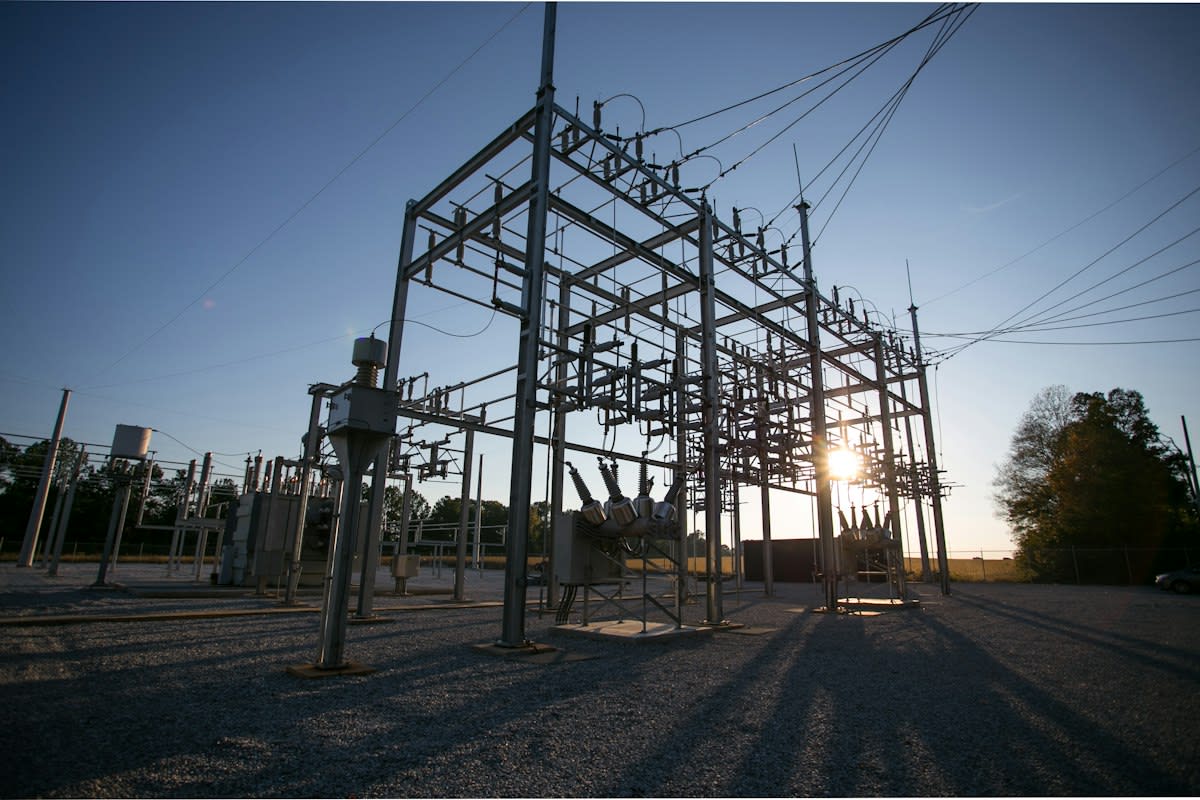
Mumbai manages an intricate growth pattern where demand outpaces infrastructure. 7% annual growth in peak load puts immense pressure on aging substations (Source: Ministry of Power, 2021). Voids emerge during monsoon seasons when moisture creates static-burnt insulators and line faults. Such events create temporary pockets of instability that ripple through the district. Many firms employ localized capacitor banks to smooth out these dips. However, these fixes are often temporary and fail during extreme surges.
Practitioners fighting sulfur-thick air in Kinshasa or Dhaka argue over capacitor placement. Chrome-cold server racks hum against ash-gray concrete walls while bitumen-black streets swallow the sound of failing transformers. Static-burnt smells hang heavy when a line trips, signaling another localized void. Ground-level reality involves a constant friction between utility providers and private operators. Some technicians spend days tracking a voltage drop to a single corroded joint. Such granular failures define the struggle of urban energy stability.
Prerequisites for Void Mitigation
Success requires specific hardware and data access. Operators must obtain high-resolution telemetry to see where the voltage actually drops. Without precise mapping, adding power to a void can actually destabilize the surrounding grid. Certain tools are essential for this process. Every site requires a baseline power quality analysis before any hardware is installed.
- Digital Power Quality Analyzers (PQAs) for harmonic measurement
- Battery Energy Storage Systems (BESS) for peak shaving
- Automatic Transfer Switches (ATS) with millisecond response times
- Phase-balancing software to reduce neutral current
- Voltage regulators for localized stabilization
Moreover, regulatory clearance is needed for any back-feeding of power. Many hubs in Nairobi or Sao Paulo have strict rules against injecting current back into the main grid. Failure to secure these permits leads to legal disputes or equipment seizure. Operators should coordinate with local utilities to ensure the mitigation plan aligns with regional upgrades. Such coordination prevents the installation of redundant or conflicting hardware.
Steps to Fill a Grid Void
- Map Telemetry: Install PQAs at the point of common coupling to identify the exact depth and frequency of voltage drops.
- Profile Demand: Calculate the peak load requirements versus the delivered voltage to determine the energy deficit.
- Deploy Decentralized Generation: Install solar arrays or gas turbines to provide a localized source of power within the void.
- Configure Storage: Set up BESS to absorb excess energy during low-demand periods and release it during peak void events.
- Synchronize Phases: Use balancing software to ensure the localized generation matches the grid frequency exactly.
- Implement Monitoring: Establish a real-time alert system to detect new voids before they trigger equipment failure.

Detailed execution of these steps ensures that the localized system does not clash with the main utility. One must focus on the synchronization phase to avoid catastrophic failures. Improperly timed injections of power can lead to transformer explosions. Such risks are heightened in silica-dry environments where grounding is poor. Consequently, professional engineering oversight is mandatory for the synchronization step.
"The challenge in emerging cities is not the lack of power, but the inability to transport that power to the specific street where it is needed. We are seeing a movement toward hyper-localized microgrids to solve this."— Infrastructure Lead, World Bank Energy Division
Failure Point: The Cascading Void
Catastrophic failure typically begins with a single capacitor bank overload. When a localized void is filled with poorly filtered power, harmonic distortion rises. Such harmonics heat up the copper-scented windings of nearby transformers. Eventually, the insulation fails, leading to a short circuit. This event triggers a protection trip that expands the void to neighboring blocks. Within seconds, a localized fix becomes a regional blackout.
| Hub | Primary Void Trigger | Avg. Voltage Drop | Typical Outcome |
|---|---|---|---|
| Lagos | Capacity Deficit | 15-20% | Diesel Reliance |
| Jakarta | Transmission Loss | 10-12% | Equipment Trips |
| Mumbai | Peak Overload | 5-8% | Brownouts |
Common Pitfalls
Many engineers underestimate ground loop interference. In silica-dry soil, the lack of moisture prevents effective grounding. Such an error leads to floating neutrals, which can send 400V through a 230V circuit. Moreover, some operators rely too heavily on solar without adequate battery backup. Solar alone cannot fill a void during the night or during sulfur-thick smog events. These mistakes lead to expensive hardware replacements.
Another error involves ignoring the non-linear loads of modern electronics. LED lighting and computer power supplies create harmonics that pollute the local grid. Such pollution makes the void harder to fill because the power quality remains poor despite higher voltage. Proper filtering using active harmonic filters is the only way to resolve this. Without them, the system remains unstable.
Editorial Note
Verify all equipment is rated for the specific ambient temperature of the hub. Hardware designed for temperate climates often fails in the heat of Lagos or Jakarta, leading to premature insulation breakdown.
Fact-Check & Accuracy Note
All statistics cited in this guide are derived from 2021-2023 reports by the IEA, World Bank, and the Indian Ministry of Power. Technical steps provided are based on standard IEEE power quality guidelines.