Why do we continue to scar the earth in remote regions when the highest concentrations of rare earth elements (REEs) now reside in our landfills and warehouses? The traditional mining model is an exercise in inefficiency, requiring the movement of tons of overburden to extract milligrams of material. Urban mining flips this logic by treating the city as a concentrated ore body. By targeting end-of-life electronics, specifically hard disk drives and electric vehicle motors, we can bypass the geopolitical volatility of primary extraction. The challenge is no longer about finding the minerals, but about the precision of their liberation from complex polymer and metal matrices.
Operational Prerequisites
Scaling urban mining requires more than just a collection center; it demands a specialized chemical and mechanical infrastructure. You cannot treat a smartphone like a piece of scrap steel. The first requirement is high-resolution sorting technology, specifically X-ray Fluorescence (XRF) scanners and Laser-Induced Breakdown Spectroscopy (LIBS) to identify the specific grade of magnets before they enter the processing stream. Without this, the dilution of the feedstock renders the chemical recovery process economically non-viable. You also need a closed-loop water treatment system to handle the acidic runoff generated during the leaching phase.
- XRF and LIBS scanners for real-time material identification
- Industrial-grade shredders with cryogenic cooling to prevent magnet oxidation
- Acid-resistant leaching tanks (Polypropylene or PTFE lined)
- Centrifugal separators for solvent extraction
- Closed-loop wastewater neutralization plants
The logistics of the 'urban vein' are often overlooked. In regions like the European Union and Japan, the infrastructure for e-waste collection is advanced, yet the recovery of rare earths specifically remains below 1%. Most facilities focus on gold, copper, and palladium, treating the NdFeB (Neodymium-Iron-Boron) magnets as impurities that contaminate the steel stream. To implement a scalable system, you must establish direct procurement contracts with data centers and automotive dismantlers to ensure a steady flow of high-magnet-density waste.
The Recovery Protocol
- Feedstock Aggregation: Source specific components like HDD voice coil magnets or EV traction motor rotors. Avoid mixed shredder residue, which lowers the concentration of rare earths per ton of material.
- Mechanical Liberation: Use cryogenic milling to embrittle the materials, allowing for the clean separation of the NdFeB magnets from the nickel coating and adhesive glues. This prevents the magnets from clumping during the shredding process.
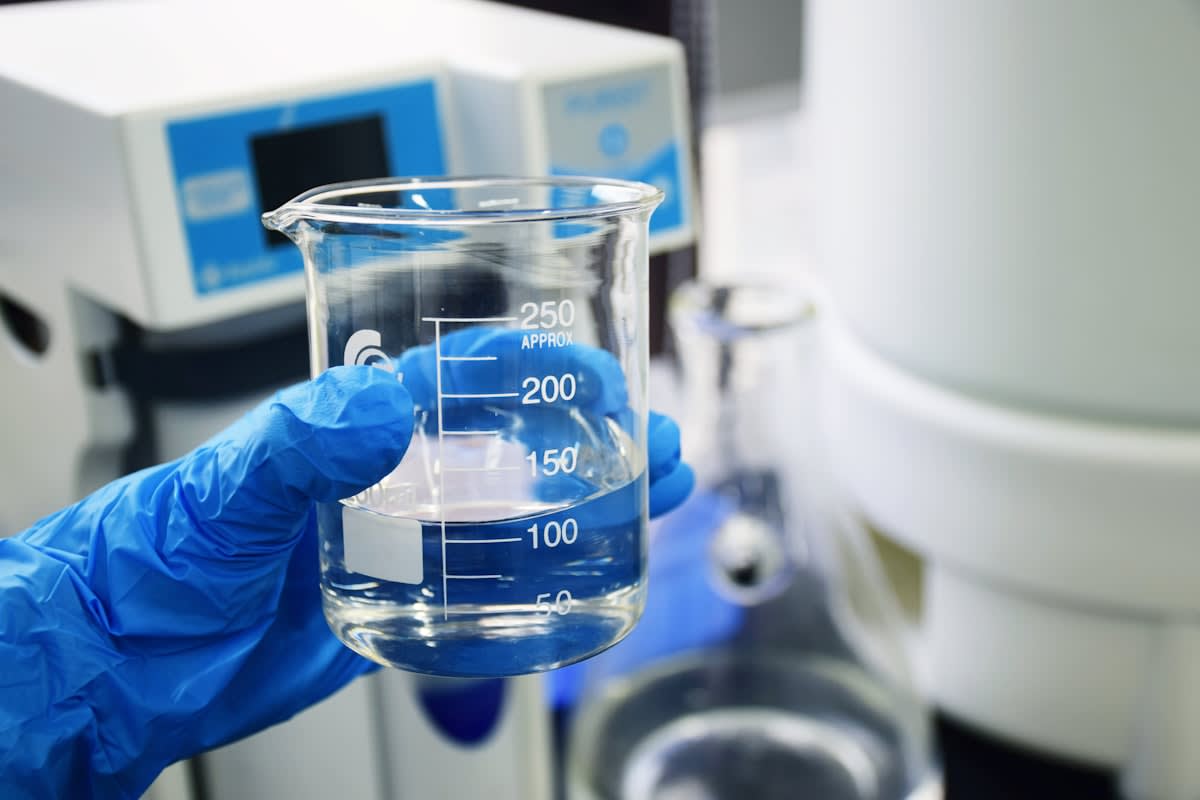
- Hydrometallurgical Leaching: Subject the liberated magnet powder to strong mineral acids, typically sulfuric acid (H2SO4) or hydrochloric acid (HCl). This converts the solid rare earth metals into a soluble aqueous form.
- Selective Solvent Extraction: Use organic solvents like P507 (2-ethylhexylphosphonic acid mono-2-ethylhexyl ester) to selectively bind the rare earth ions. This process separates neodymium and dysprosium from the iron and boron impurities.
- Oxalate Precipitation: Add oxalic acid to the purified solution to precipitate the rare earths as oxalates. These are then calcined at high temperatures (typically above 800 degrees Celsius) to produce high-purity rare earth oxides (REOs).
The chemistry of the leaching phase determines the entire economic viability of the plant. If the acid concentration is too low, the recovery rate drops; if it is too high, you dissolve too many impurities, complicating the solvent extraction phase. Most industrial setups target a recovery efficiency of 90% or higher for neodymium. Achieving this requires precise temperature control and agitation speeds within the leaching tanks to ensure maximum contact between the acid and the magnet powder.
The Purity Threshold
The transition from powder to oxide is where most losses occur. Maintaining a strict pH balance during the precipitation phase is the only way to ensure that the resulting neodymium oxide meets the 99.9% purity threshold required for re-manufacturing into new magnets.
Once the oxides are recovered, the final step is the reduction back to metallic form, usually via molten salt electrolysis. This is the most energy-intensive part of the process. In South Korea and Japan, pilot plants are testing direct recycling, where the old magnet is re-processed into a new one without going back to the oxide stage. This skips the energy-heavy electrolysis and reduces the chemical footprint by nearly 60%.
Does the cost of these chemicals outweigh the value of the recovered metal? In a volatile market, the answer depends on scale. When processing 100kg of magnets, the overhead is prohibitive. When processing 1,000 tons per year, the economies of scale kick in, and the recovery of dysprosium—which is significantly rarer and more expensive than neodymium—often subsidizes the rest of the operation.
Comparative Recovery Metrics
| Material Source | REE Concentration | Recovery Complexity | Typical Purity Output |
|---|---|---|---|
| HDD Magnets | High (Nd, Dy) | Moderate | 99.5%+ |
| EV Motors | Very High (Nd, Pr, Dy) | High (Due to housing) | 99.0%+ |
| Mixed E-waste | Low (Diluted) | Very High | 95.0%- |
The data reveals a stark reality: mixed e-waste is a trap. Attempting to recover rare earths from a generic pile of shredded electronics leads to massive reagent waste and low purity. The only path to profitability is the 'surgical' approach—targeting high-density components. By focusing on the voice coil magnets in hard drives, an operator can achieve a higher yield per liter of acid than they would by processing ten times the volume of mixed circuit boards.
Common Pitfalls
The most frequent failure in urban mining is the 'Purity Trap.' Many operators successfully leach the metals but fail at the separation stage, producing a mixed rare earth concentrate that cannot be used in high-end manufacturing. This concentrate is often sold back to primary smelters at a fraction of the value. To avoid this, you must invest in multi-stage solvent extraction cascades. A single stage is never enough to separate neodymium from praseodymium, as their chemical properties are nearly identical.
Another critical error is neglecting the environmental cost of the reagents. Using nitric acid without a recovery system creates a nitrogen-rich waste stream that is expensive to treat and legally risky. The most resilient operations implement an acid regeneration loop, where the spent acid is processed and reintroduced into the leaching tank. This reduces the operational cost of chemicals by approximately 30% and minimizes the facility's toxic footprint.
Finally, there is the risk of feedstock instability. Urban mining depends on the waste stream of the previous decade's technology. If manufacturers move away from NdFeB magnets toward ferrite or new manganese-based alternatives, your facility becomes a stranded asset. Diversifying the input stream to include both consumer electronics and industrial motors provides a hedge against these shifts in material science.
"The victory in urban mining isn't found in the chemistry of the leach, but in the precision of the sort. If you put the wrong metal in the tank, you aren't mining; you're just making expensive soup."— Lead Engineer, Rare Earth Recovery Initiative