Knowledge Nugget | SpaceX’s latest launch raises a question: What powers satellites?
Source Entity
Khushboo Kumari
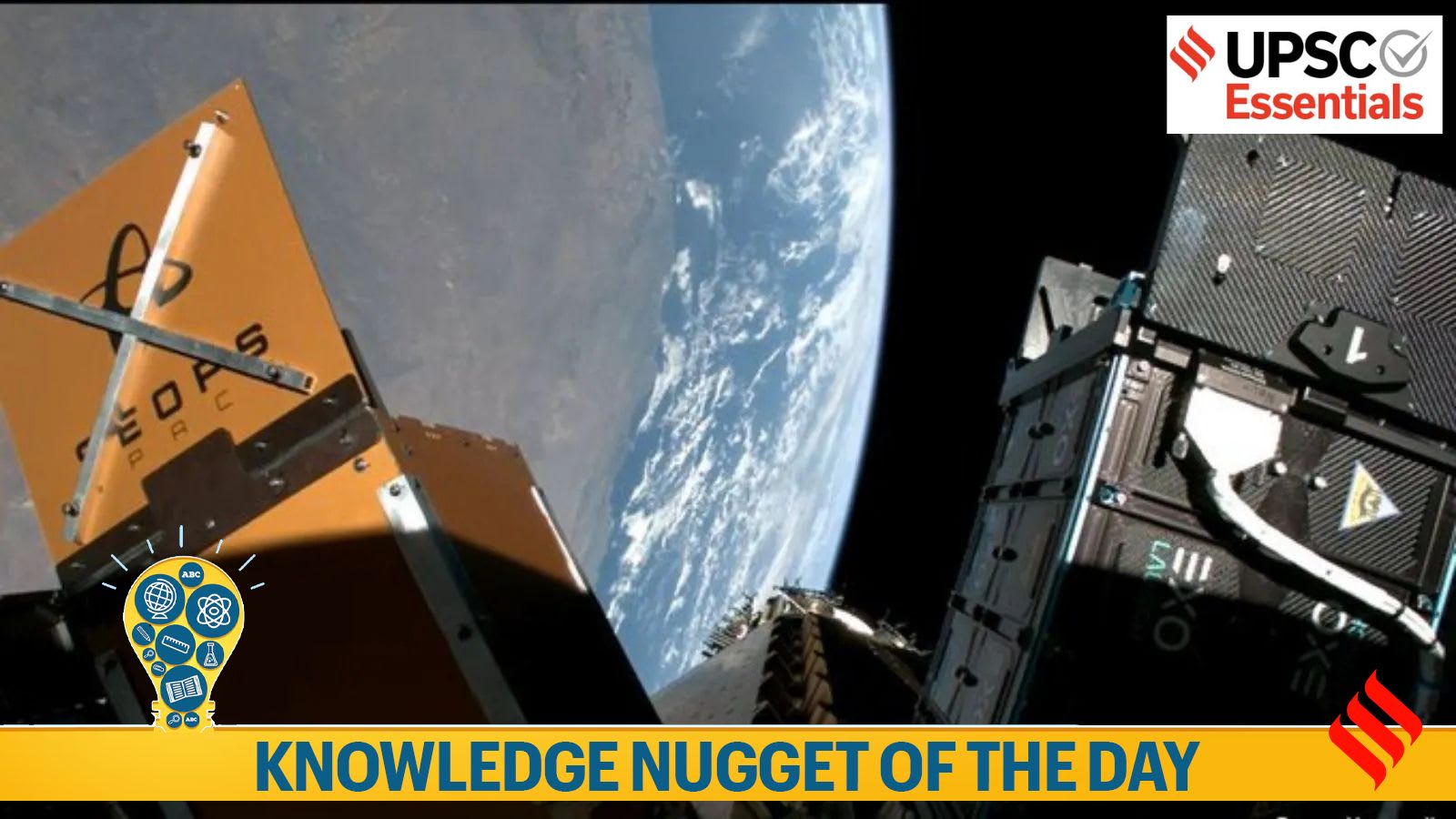
Take a look at the essential concepts, terms, quotes, or phenomena every day and brush up your knowledge. Here’s your knowledge nugget for today. World’s first commercial nuclear-powered satellite an...
The New Frontier of Orbital Energy: Analyzing the Shift to Nuclear Power
Recent launch activities by SpaceX have brought a critical engineering question to the forefront of public discourse: how do we power the next generation of satellites? While the majority of current orbital assets rely on photovoltaic cells to harness energy from the sun, the industry is witnessing a pivotal transition toward nuclear-powered systems. The mention of the world's first commercial nuclear-powered satellite signals a paradigm shift in how commercial entities approach long-term mission sustainability and power density in the vacuum of space.
The Limitations of Solar Energy in Deep Space
For decades, solar panels have been the gold standard for satellite power due to their reliability and lack of radioactive risk. However, solar energy suffers from a fundamental flaw: the inverse-square law. As satellites move further from the sun—such as missions to the outer planets or prolonged stays in the shadows of lunar craters—the available solar flux drops precipitously. Furthermore, solar arrays are bulky and susceptible to degradation from space weather and micrometeoroid impacts. For commercial satellites intended for high-bandwidth communications or complex on-orbit processing, the power-to-weight ratio of solar panels often becomes a limiting factor.
Understanding Nuclear Power in Orbit
Nuclear power for satellites typically manifests in two forms: Radioisotope Thermoelectric Generators (RTGs) and small-scale fission reactors. RTGs convert the heat released by the natural decay of radioactive isotopes (like Plutonium-238) into electricity. Unlike solar panels, RTGs provide a constant, unwavering stream of power regardless of light conditions or orbital position. The transition to commercial nuclear power is particularly significant because these technologies were previously the exclusive domain of national space agencies like NASA or Roscosmos. Bringing this capability to the commercial sector allows for a new class of satellites that can operate in the "dark" regions of the solar system or support high-energy payloads that solar power simply cannot sustain.
SpaceX as the Catalyst for Deployment
SpaceX plays a dual role in this evolution. As the primary launch provider for a vast array of commercial and government payloads, their Falcon and Starship vehicles provide the necessary lift capacity to move heavier, shielded nuclear power sources into orbit. The ability to launch larger masses more affordably reduces the prohibitive cost of the heavy radiation shielding required for nuclear satellites. By lowering the barrier to entry for orbital delivery, SpaceX is effectively enabling the hardware transition from chemical and solar energy to nuclear-thermal and nuclear-electric propulsion and power.
Regulatory Hurdles and Safety Implications
The move toward commercial nuclear power is not without significant risk. The primary concern is the "launch failure scenario," where a rocket carrying nuclear material could potentially disperse radioactive isotopes into the atmosphere or ocean. This necessitates rigorous safety protocols, specialized containment casks, and international regulatory oversight. The shift toward commercialization means that private companies must now navigate the complex intersection of aerospace law and nuclear non-proliferation treaties, ensuring that these power sources are used strictly for energy and not for weaponization.
Future Trends: Toward a Nuclear Space Economy
Looking forward, the successful deployment of commercial nuclear satellites will likely pave the way for permanent lunar bases and Mars colonies. Nuclear power is the only viable option for surviving the fourteen-day lunar night or powering the massive life-support systems required for human interplanetary travel. We can expect to see a trend where "power hubs" are established in orbit—nuclear stations that beam energy via microwaves or lasers to smaller, unmanned drones. This would create a decentralized energy grid in space, fundamentally changing the architecture of satellite constellations.
Summary
The intersection of SpaceX's launch capabilities and the advent of commercial nuclear-powered satellites represents a leap in space autonomy. By overcoming the inherent limitations of solar energy, the industry is moving toward a future where satellites are no longer tethered to the sun's proximity, enabling deeper exploration, more powerful instrumentation, and a sustainable infrastructure for the burgeoning space economy.