
The Great Decoupling
August 2026 marks a definitive turning point in how the world perceives power. For decades, the centralized grid was an invisible utility, a given of modern civilization that we trusted implicitly until it stopped working. Now, a new narrative is taking hold: the sovereign circuit. We are seeing a rapid migration of capital and engineering talent toward localized energy systems that allow communities, businesses, and high-net-worth individuals to opt out of the systemic fragility of national grids. This is not merely a technical upgrade; it is a psychological shift toward energy autonomy.
The numbers tell a story of aggressive acceleration. In 2024, the global microgrid market was valued at a respectable US$40.4 billion. Fast forward to the current projections, and that figure is expected to skyrocket to US$240.6 billion by the end of 2035. This isn't linear growth; it is a vertical climb. Why the sudden urgency? The delta between 2024 and 2026 reveals a world that has stopped asking if decentralized power is possible and started asking how quickly it can be deployed. The transition from a $40 billion niche to a quarter-trillion-dollar industry suggests that the market now views energy independence as a mandatory hedge against instability.
Projected Global Microgrid Market Growth (2024-2035)
Executive Insight
+18.4%
YTD Growth
Who is driving this surge? It is no longer just the remote village in a developing nation or the military base in a conflict zone. We are seeing the rise of the corporate campus and the luxury enclave as primary adopters. When energy becomes localized, it ceases to be a utility and becomes an asset. This shift transforms the act of generating power into a statement of resilience and status. If you own your electrons, you own your time and your security. This realization is fueling a gold rush in energy infrastructure that mirrors the early days of the internet's decentralized protocols.
Infrastructure as Autonomy
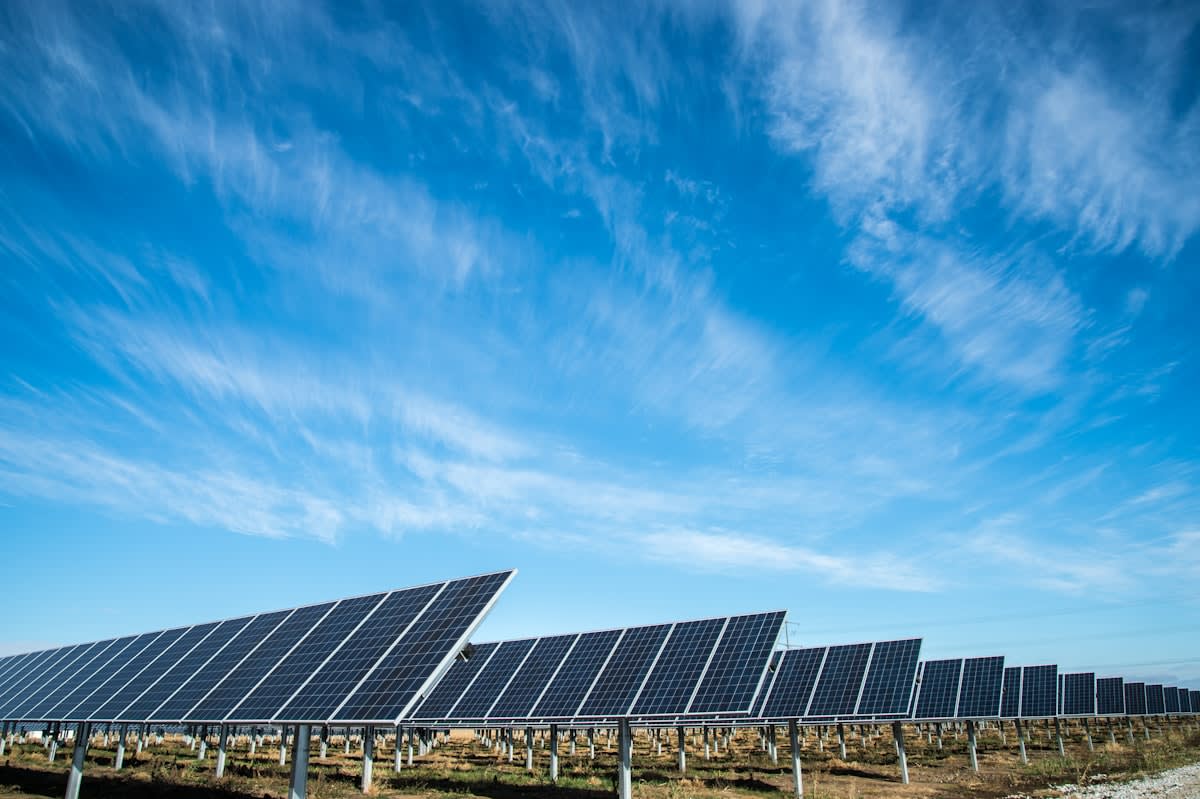
Look at the recent developments in the United States, specifically the Sonoma Clean Power project. The ribbon-cutting for their first local solar and storage project is a blueprint for this new era. By combining 4 MW of solar generation with 4 MW of energy storage, Sonoma is not just adding 'green' energy to the mix; they are creating a buffer. This specific pairing—generation plus storage—is the holy grail of the microgrid movement. Without storage, you are still a slave to the sun's schedule; with it, you possess a portable, reliable fortress of power.
Does this signify the end of the utility company? Not quite, but it certainly signals the end of their monopoly on reliability. When a local entity can balance its own load and store its own surplus, the centralized grid becomes a backup rather than a lifeline. This flip in the power dynamic is what makes the microgrid so attractive to the modern investor. It removes the single point of failure. In an uneven world, the ability to maintain operations while the surrounding region goes dark is the ultimate competitive advantage.
The Resilience Premium
The true value of a microgrid isn't found in the cost of the kilowatt-hour, but in the cost of the outage. For high-stakes industries, a single hour of downtime can cost millions, making a $240 billion market investment look like a bargain.
The Ownership Revolution
The movement is expanding beyond physical hardware into the realm of financial assets. In Vancouver, British Columbia, Stardust Solar Energy Inc. is positioning itself for long-term value through a strategy focused on decentralized energy asset ownership. This is a critical distinction. We are moving away from a model where you pay a monthly bill to a distant corporation and toward a model where you own the means of production. Stardust's approach suggests that the next generation of wealth will be built on the ownership of the energy nodes themselves.
Imagine a world where your home or business is not just a consumer of energy, but a micro-utility that sells excess power back to a peer-to-peer network. This decentralization of ownership democratizes the energy landscape, but it also creates a new class of 'energy lords.' Those who invested early in the infrastructure of localized generation and storage are now the ones holding the keys to the kingdom. The shift from 'user' to 'owner' is the core engine driving the current valuation spike in the microgrid sector.
"The transition toward decentralized energy asset ownership is not just about sustainability; it is about the fundamental reallocation of power—both electrical and political."— Industry Analysis, August 2026
This trend is gaining traction globally because it addresses a universal anxiety: the fragility of the system. Whether it is a corporate headquarters in Canada or a residential community in California, the desire is the same—to stop being a passenger in a failing system and start being the driver. The financialization of these assets through companies like Stardust ensures that the 'gold rush' is not just for engineers, but for investors looking for the next systemic shift in utility.
Designing for an Uneven World
The physical manifestation of this trend is being led by a new vanguard of architects and engineers. Experts like Mina Hasman and Adam Semel are arguing that we must design for security, resilience, and affordability in an increasingly uneven world. They posit that the strain on our existing power grids is no longer a problem that can be solved with more wires and larger plants. Instead, the solution lies in the very fabric of urban planning. Energy must be integrated into the architecture itself, turning buildings into power plants.
This architectural shift requires a complete rethink of how we build cities. If every block has its own microgrid, the city becomes a cellular organism rather than a dependent colony. This cellular structure is inherently more resilient to shocks—be they climate-driven or man-made. When the grid is fragmented by design, a failure in one sector does not trigger a cascading collapse. It is the difference between a single giant lightbulb and a million tiny LEDs; if one goes out, the room stays lit.
| Feature | Centralized Grid | Localized Microgrid |
|---|---|---|
| Failure Point | Single/Systemic | Distributed/Isolated |
| Ownership | Corporate/State | Private/Community |
| Resilience | Low (Cascading) | High (Cellular) |
| Cost Structure | Operational Expense | Capital Investment |
However, this transition is not without its frictions. The move toward localized independence creates a tension between the 'haves' and the 'have-nots' of energy. If the wealthy can afford to build their own resilient islands of power, who is left to fund the maintenance of the legacy grid? This is the paradox of the microgrid gold rush. As the most capable entities exit the system, the system itself may become more fragile for those who cannot afford to leave. The challenge for planners like Hasman and Semel is to ensure that resilience is not a luxury good, but a standard of urban living.

Ultimately, the surge toward microgrids is a symptom of a broader global trend: the pursuit of sovereignty. In an era of unpredictable geopolitical shifts and aging infrastructure, the most valuable currency is no longer just money, but the ability to maintain a standard of living regardless of external conditions. The microgrid is the physical manifestation of that desire. It is the ultimate status symbol because it represents the one thing money usually cannot buy—total independence from the system.