Parents carry vegetable peels to this school in Chennai
Source Entity
India Latest News: Top National Headlines Today & Breaking News | The Hindu
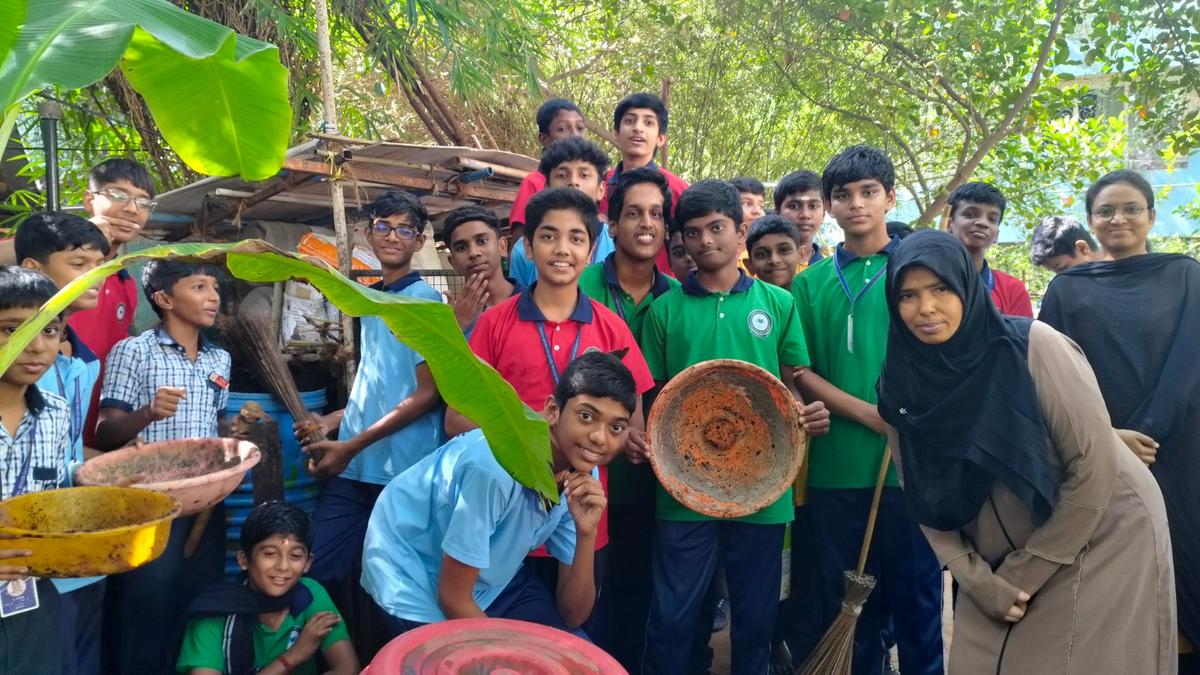
Fathima Central Senior Secondary School in Chennai is engaging parents and students in a hands-on sustainability project. The initiative encourages families to bring kitchen vegetable waste to school for vermicomposting, fostering environmental responsibility.
Cultivating Sustainability: Chennai School’s Innovative Waste Management Initiative
In a commendable effort to bridge the gap between classroom theory and real-world environmental action, Fathima Central Senior Secondary School in Saidapet, Chennai, has launched a unique community-based sustainability initiative. By involving parents in the daily lifecycle of waste, the school is transforming the mundane chore of kitchen disposal into a structured educational experience centered on vermicomposting.
The Mechanics of Community Composting
Since the beginning of the current academic year, the school has institutionalized a system where vegetable peels are diverted from landfills to the school’s own vermicomposter. Parents, such as Deepa B., have become active participants in this cycle, drying and transporting kitchen waste to the campus every Saturday. This practice not only reduces household waste but also provides a tangible lesson in the principles of a circular economy, where organic materials are returned to the earth rather than discarded.
Pedagogical Integration and Student Involvement
The initiative is deeply integrated into the school's curriculum, with students from classes IX and XI currently leading the effort. By rotating the responsibility across different grade levels—moving from senior students to those in classes V through VIII—the school ensures that environmental stewardship becomes a shared culture rather than an isolated project. This structural approach allows students to witness the biological breakdown of organic waste, reinforcing lessons on ecology and waste management.
Overcoming Logistical Hurdles
While the primary collection day is set for Saturdays, the school management has demonstrated flexibility to accommodate the needs of busy families. Some parents choose to drop off waste mid-week, reflecting a strong community buy-in and a desire to avoid the accumulation of waste at home. This level of cooperation suggests that the initiative has successfully moved beyond a mere school policy into a habit-forming practice for the families involved.
Broader Implications for Urban Waste Management
This program serves as a micro-model for how urban schools can tackle the growing challenge of solid waste management. By leveraging the existing network of students and parents, the school is effectively decentralizing waste processing. If replicated in other urban centers, such grassroots initiatives could significantly reduce the volume of organic waste reaching municipal landfills, thereby lowering the carbon footprint of entire neighborhoods.
Future Trends in Eco-Conscious Education
As climate change awareness grows, the integration of sustainability practices into daily school life is becoming a vital component of modern education. Fathima Central Senior Secondary School’s project highlights a trend toward 'living labs,' where the campus serves as an ecosystem for learning. Moving forward, the success of this program may encourage other CBSE-affiliated institutions to adopt similar waste-to-resource models, ultimately fostering a generation that views sustainability as a fundamental responsibility.
Verification Required?