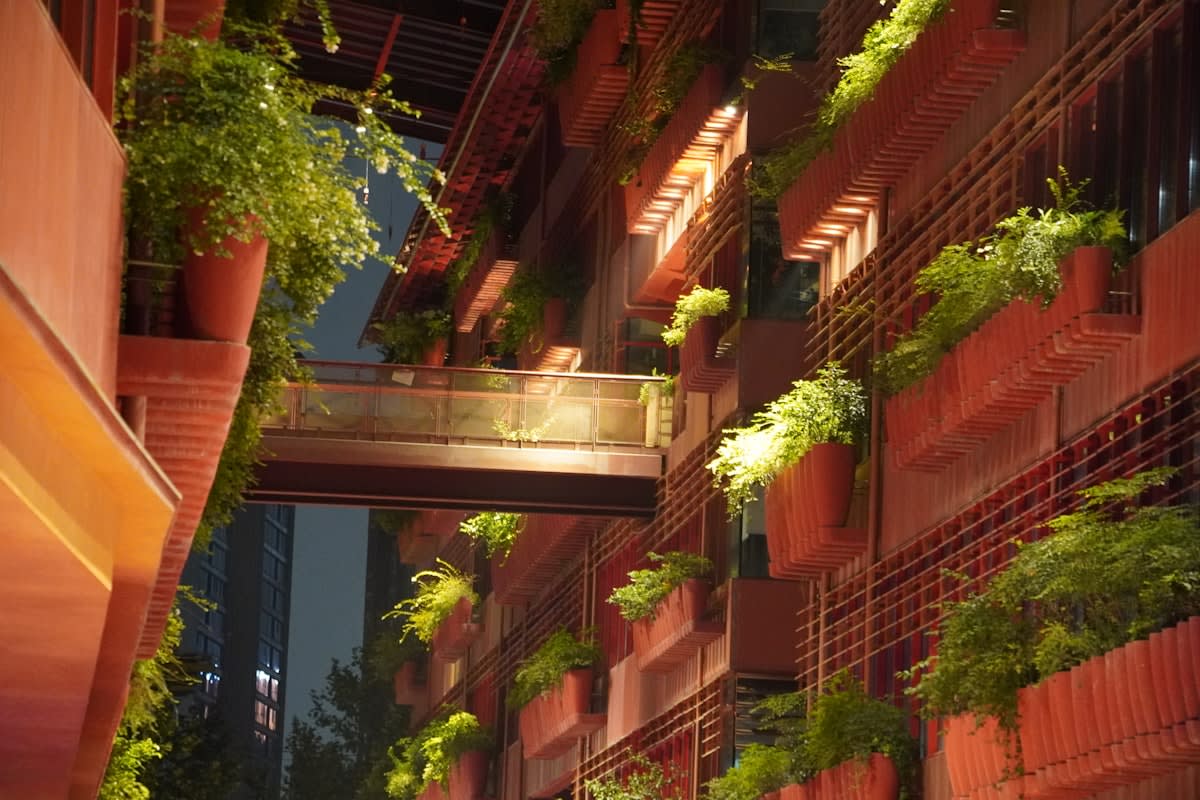
For too long, the conversation around urban living has been trapped in the sterile language of sustainability. We have been told that reducing our footprint—doing less harm—is the ultimate goal. But sustainability is a holding pattern. To truly thrive in an increasingly volatile urban landscape, we must shift toward regeneration. A regenerative home does not simply minimize its impact; it actively improves the surrounding environment, cleans the air, filters water, and restores the psychological well-being of its inhabitants. This is not a utopian fantasy but a technical shift in how we perceive the boundary between the built environment and the natural world.
The shift toward regenerative systems is driven by a realization that our centralized infrastructures are surprisingly fragile. When we rely entirely on massive, distant grids for our most basic needs, we inherit their vulnerabilities. Whether it is the instability of energy grids or the fragility of water systems, the urban dweller is often a passive consumer at the mercy of systemic failure. By turning a home into a micro-ecosystem, you transition from a consumer to a producer, creating a buffer of resilience that protects you and contributes to the health of the city at large.
Prerequisites for the Regenerative Transition
The Audit Phase
Before beginning your transformation, you must audit your space for light penetration, existing water drainage patterns, and your current level of dependence on municipal utilities. You cannot regenerate what you have not first mapped.
- A comprehensive map of sunlight exposure across different hours of the day in your living space.
- A baseline measurement of your monthly water and energy consumption to identify the largest areas of waste.
- An understanding of local biophilic plant species that can survive in your specific urban micro-climate.
- A willingness to move from a 'maintenance' mindset to a 'cultivation' mindset.
Transitioning your home requires more than just buying a few houseplants; it requires an architectural and psychological pivot. You are essentially attempting to mimic the functions of a forest or a wetland within a concrete shell. This means thinking about your home as a series of interlocking loops: carbon loops, water loops, and nutrient loops. If a resource enters your home and leaves as waste, the system is broken. In a regenerative home, waste is simply a resource in the wrong place.
Step-by-Step Implementation: Building Your Micro-Ecosystem
- Integrate Biophilic Design for Psychological Restoration: Start by breaking the visual and physical barriers between your interior and the natural world. As highlighted by Gillis and Gatersleben (2015), the integration of nature into the built environment is not merely aesthetic; it provides profound psychological benefits and enhances overall human health. Use organic shapes, maximize natural light, and introduce diverse greenery. This creates a biological feedback loop that reduces stress and increases cognitive function, turning your home into a sanctuary of recovery rather than just a place of shelter.
- Deploy Regenerative Housing Solutions: Look toward emerging models of resilient urban housing. Research by Enwin and Ikiriko (2024) in Nigeria emphasizes the necessity of regenerative sustainable urban housing solutions, particularly in developing nations where resource scarcity is acute. Implement these principles by using permeable materials, integrating vertical gardens that scrub urban pollutants from the air, and utilizing modular systems that can evolve as your ecosystem grows. The goal is to create a structure that behaves like a living organism, adapting to its environment rather than fighting against it.
- Decentralize and Secure Your Water Cycle: Move toward a system of water autonomy. The vulnerability of centralized water systems is no longer a theoretical risk. Between 2023 and 2024, the Iranian hacker group CyberAV3ngers targeted programmable logic controllers in water systems across the United States, including over 30 systems in Minnesota alone. With the EPA and White House noting that 70% of inspected utilities fail to meet necessary cybersecurity standards, the risk of systemic failure is high. Implement greywater recycling, rainwater harvesting, and biological filtration systems (like reed beds or hydroponic filters) to reduce your reliance on these fragile municipal networks.
- Establish a Closed-Loop Nutrient System: Transform your kitchen from a waste center into a nutrient hub. Use vermicomposting or Bokashi systems to turn organic waste into high-grade fertilizer for your biophilic installations. This eliminates the need for chemical fertilizers and prevents organic matter from ending up in landfills where it produces methane. By closing the nutrient loop, you ensure that the energy spent growing your food returns to the soil of your home ecosystem.

The synergy between these steps creates a compounding effect. When you combine biophilic design with decentralized water systems, you aren't just saving water; you are creating a humidified, oxygen-rich environment that supports more complex plant life, which in turn improves your mental health. This is the essence of a micro-ecosystem: every element supports every other element. The intelligence of the system lies in the relationships between the parts, not in the parts themselves.
Analyzing the Resilience Gap
Why is this shift urgent? Because the current model of urban living is built on a foundation of blind trust in centralized infrastructure. The recent cyberattacks on water systems in Minnesota and six other states serve as a stark warning. When critical infrastructure is hacked, the impact is immediate and systemic. While these specific attacks may not have resulted in widespread resident impact, the FBI and CISA have warned that the geopolitical motivations of actors like Iranian hackers make these systems prime targets. A regenerative home provides a layer of 'biological insurance.' If the city's water or energy fails, a home with its own filtration and energy-harvesting capabilities remains functional.
| System Component | Traditional Urban Approach | Regenerative Approach | Primary Benefit |
|---|---|---|---|
| Water | Centralized Municipal Supply | Harvesting + Bio-filtration | Resilience against cyber/physical failure |
| Air/Climate | HVAC + Air Purification | Biophilic Integration | Psychological health & natural scrubbing |
| Waste | Linear Disposal (Landfill) | Closed-Loop Composting | Nutrient regeneration |
| Housing | Static Construction | Adaptive Regenerative Design | Environmental restoration |
We must recognize that the 'smart home' trend has largely been a distraction, focusing on convenience and connectivity rather than actual resilience. A home that can tell you when you are out of milk but cannot filter its own water is not a smart home; it is a dependent home. True intelligence in architecture is found in the ability to sustain life independently of external shocks. By applying the regenerative housing solutions proposed for high-demand regions like Nigeria, urban dwellers in any part of the world can rebuild their relationship with the environment.

Common Pitfalls to Avoid
Many beginners make the mistake of treating regeneration as a series of additions rather than a systemic overhaul. Adding a few pots of ivy to a room with no natural light and poor ventilation is not biophilic design; it is a slow death sentence for the plants. You must address the fundamental environmental constraints of your space first. If you ignore the lighting and airflow, your micro-ecosystem will require constant artificial inputs, which defeats the purpose of regeneration.
Another frequent error is the 'technology trap.' There is a temptation to buy expensive, high-tech automated systems for hydroponics or water recycling. While these can be useful, they introduce new vulnerabilities—namely, the same cybersecurity risks that plague municipal systems. The most resilient regenerative homes prioritize biological solutions over digital ones. A reed bed is not hackable; a programmable logic controller is. Aim for low-tech, high-biology solutions wherever possible.
"The goal is to create resilient and regenerative sustainable urban housing solutions that meet the demands of the modern city while restoring the human connection to nature."— Derived from Enwin and Ikiriko (2024)
Finally, do not underestimate the psychological transition. Living in a regenerative home requires a shift in identity. You are no longer just a tenant or a homeowner; you are the steward of a living system. This requires patience and observation. You will have to learn the language of your plants and the rhythm of your water cycles. Those who treat this as a 'set it and forget it' project will find their ecosystems collapsing. Regeneration is an active, ongoing practice of partnership with nature.