
The Obsolescence of the Linear Farm
For a century, the industrial agricultural complex has operated on a primitive linear logic: input, extract, discard. We pump synthetic nitrogen into the soil, harvest the crop, and treat the remaining biomass as a liability to be burned, buried, or ignored. This is not just an environmental failure; it is a staggering financial inefficiency. Why are we paying for inputs and then paying again to dispose of the leftovers? The most productive farms of the next decade will stop viewing waste as a byproduct and start treating it as a misplaced asset.
The shift toward a circular harvest is often mislabeled as a 'green' initiative. Let us be clear: this is an economic imperative. When a farm captures its own nutrient loops, it decouples its profitability from the volatile pricing of global fertilizer markets. By integrating anaerobic digesters or insect-based protein converters, a farm transforms from a precarious price-taker into a self-sustaining resource hub. The goal is not merely to 'do less harm,' but to redesign the system so that the concept of waste ceases to exist entirely.
The Strategic Pivot
The core systemic shift is moving from waste management—the act of hiding trash—to resource recovery, the act of mining value from every single biological molecule.
Consider the current inefficiency of nitrogen cycling. In many traditional systems, up to 50% of applied synthetic nitrogen is lost to leaching or volatilization. That is not just a pollution problem; it is a direct leakage of capital. A circular system replaces this leakage with closed-loop biological recovery. Whether through advanced composting, precision bio-slurry application, or integrated aquaculture, the objective is to keep the nutrient in the system for as many cycles as possible before it exits.
The Biology of Profit: Turning Byproducts into Assets
The most disruptive element of the circular harvest is the rise of biological converters. Take the Black Soldier Fly (BSF). In Southeast Asia and parts of Europe, farmers are no longer paying to haul away organic waste. Instead, they feed that waste to BSF larvae, which convert low-value biomass into high-protein animal feed with incredible efficiency. This turns a cost center (waste disposal) into a revenue stream (protein production). Can we really justify the old model when the solution is literally flying right in front of us?
Then there is the energy play. Anaerobic digestion allows a farm to capture methane from livestock manure and crop residues, converting it into biogas for on-site electricity or refined biomethane for the grid. This creates a dual-win: the farm eliminates a potent greenhouse gas and generates a secondary income stream. In Northern Europe, this has already transformed the dairy farm from a struggling commodity producer into a decentralized energy plant. The farm is no longer just growing food; it is harvesting energy.
| Metric | Linear Model (Traditional) | Circular Model (Future) |
|---|---|---|
| Nutrient Sourcing | External Synthetic (High Cost) | Internal Recovery (Low Cost) |
| Waste Handling | Disposal Expense | Feedstock Generation |
| Revenue Streams | Single (Crop/Livestock) | Multiple (Food, Energy, Protein) |
| Resource Efficiency | 30-50% Leakage | 90%+ Retention |
| Market Dependence | High (Global Commodities) | Low (Self-Sufficient Loops) |
This economic restructuring is not limited to high-tech installations. In Sub-Saharan Africa, integrated crop-livestock systems have functioned as circular harvests for generations, though they are now being optimized with modern data. By using livestock to graze cover crops and return nutrients to the soil via manure, these farmers avoid the debt traps associated with synthetic inputs. The 'primitive' model was actually the strategic one; we are simply returning to it with better precision.
"The most successful farmers of 2050 will not be those who grow the most per acre, but those who lose the least per cycle."— Strategic Analysis of Ag-Tech Shifts
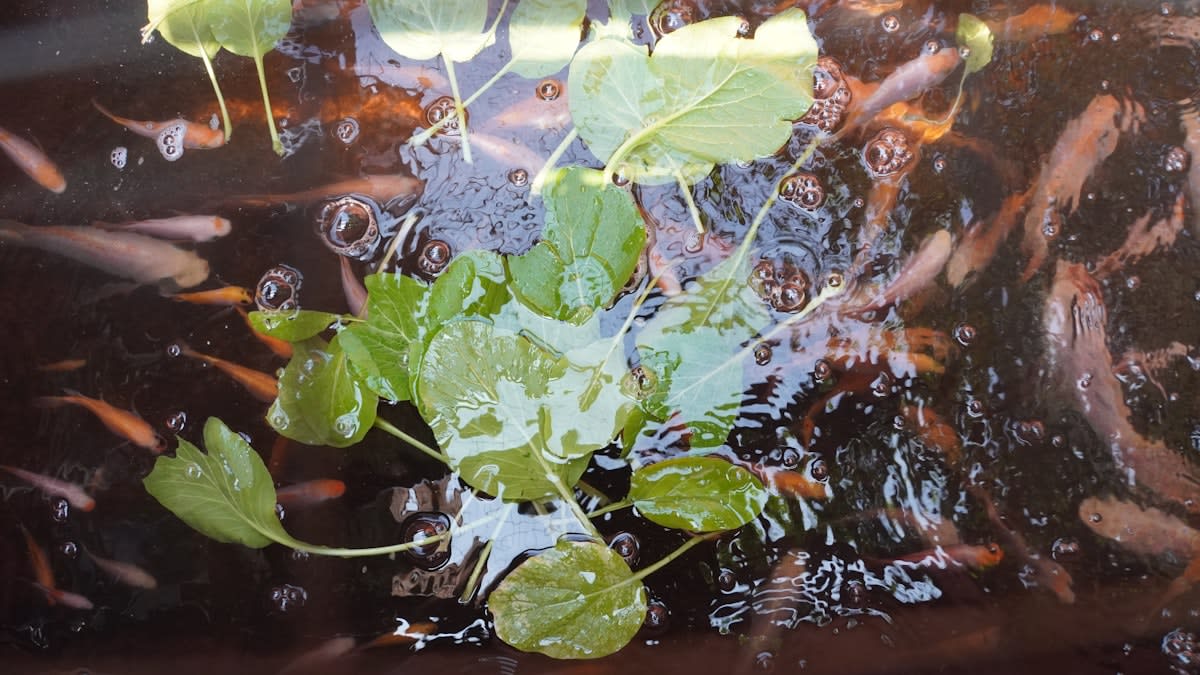
We must also address the role of water. In a linear system, water is used once and drained, often carrying pollutants with it. A circular harvest utilizes hydroponic and aquaponic loops where fish waste provides the nitrogen for plants, and plants filter the water for the fish. This reduces water consumption by up to 90% compared to traditional soil farming. In arid regions of the Middle East, this isn't a luxury—it is the only way to ensure food security without depleting ancient aquifers.
Structural Barriers and the Path to Adoption
If the economics are so compelling, why is the transition slow? The answer lies in regulatory inertia. Most global agricultural laws were written for the linear age. Waste is legally defined as something to be removed, not a resource to be traded. In many jurisdictions, moving 'waste' biomass across property lines requires permits that make circular collaboration nearly impossible. We are fighting a 21st-century biological revolution with 20th-century bureaucracy.
Furthermore, the capital expenditure (CAPEX) for circular infrastructure—like anaerobic digesters or precision nutrient sensors—is significant. Small-to-medium farmers cannot always justify the upfront cost, even if the operational expenditure (OPEX) drops drastically over five years. The solution is not subsidies, but a shift in how we value farmland. Land that is integrated into a circular loop is fundamentally more valuable than land that relies on external chemical life-support.
- Regulatory Reform: Reclassifying 'waste' as 'biological feedstock' to enable trade.
- Decentralized Infrastructure: Investing in modular digesters that serve clusters of small farms.
- Precision Monitoring: Using IoT sensors to map nutrient flows in real-time.
- Market Integration: Creating certifications for 'Zero-Waste' produce to capture premium pricing.
The final piece of the puzzle is data. You cannot close a loop if you cannot measure the leak. The integration of AI-driven nutrient tracking allows farmers to know exactly where phosphorus is accumulating and where it is lacking. This transforms farming from an intuitive art into a precise exercise in resource management. When the flow of every carbon molecule is tracked, waste becomes a visible error in the code of the farm.
The transition to a zero-waste harvest is inevitable because the alternative is bankruptcy. As the cost of synthetic inputs rises and the environmental cost of waste becomes a taxable liability, the linear farm will simply cease to be viable. The winners will be those who treat their farms as living ecosystems rather than extraction sites. They will see the beauty in the decay, the profit in the residue, and the resilience in the loop.