6-year-old discovers rare 200-million-year-old fossil of a jellyfish-like marine animal in Nebraska, US
Source Entity
Latest News: Todays Latest News Headlines from India & World | Hindustan Times | Hindustan Times
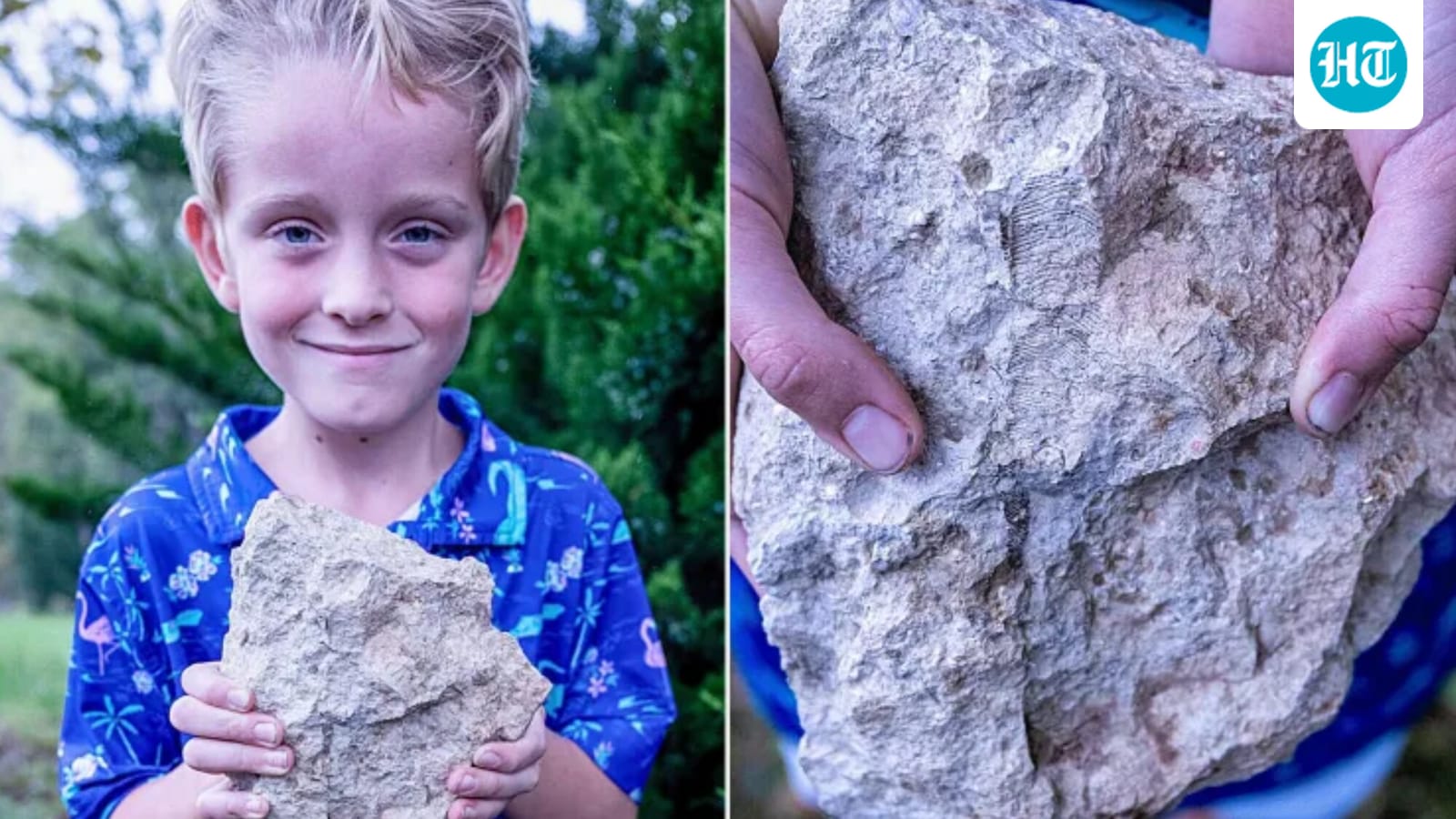
Six-year-old Leo Youngdahl discovered a rare 200-million-year-old fossil of a jellyfish-like marine animal in Nebraska. The find, made at Schramm Park State Recreation Area, is particularly significant as no similar specimens have been recorded in the state for over 55 years.
A Remarkable Discovery in the Nebraska Heartland
In an extraordinary turn of events, six-year-old Leo Youngdahl of Eagle, Nebraska, has etched his name into the annals of amateur paleontology. While participating in a 'Rafting and Rocks' event organized by the Nebraska Game and Parks Commission at the Schramm Park State Recreation Area near Gretna, young Leo stumbled upon a geological treasure. What began as a routine search for common crinoid fossils—the stem-like remains of ancient echinoderms—quickly transformed into a significant scientific event when he noticed a peculiar pattern resembling snake scales on a large rock.
The Significance of the Find
This discovery is not merely a hobbyist’s thrill; it is a rare window into the prehistoric past of the American Midwest. The fossil, identified as a jellyfish-like marine creature dating back approximately 200 million years, represents a find of notable rarity. According to reports from Outdoor Nebraska, the official publication of the state’s parks department, this specific type of fossil has not been documented within the state of Nebraska for more than 55 years. Such a long hiatus in discoveries makes this find a vital data point for paleontologists studying the region’s ancient marine history.
Geological Context of Nebraska
To understand the magnitude of this discovery, one must look at the geological makeup of Nebraska. Much of the state was covered by vast, shallow prehistoric seas during the Mesozoic Era. These ancient environments were teeming with life, yet the preservation of soft-bodied creatures like jellyfish is exceptionally rare. Because jellyfish lack hard skeletal structures, their fossilization requires perfect environmental conditions—typically rapid burial in fine-grained sediment—before the remains can decay or be scavenged.
The Role of Citizen Science
Leo Youngdahl’s contribution highlights the immense value of citizen science and public engagement in paleontology. By encouraging families and children to explore sites like Schramm Park, state agencies facilitate 'serendipitous science.' When a child with a keen eye identifies an anomaly in the landscape, it bridges the gap between public recreation and professional academic research. This interaction often leads to the recovery of specimens that might otherwise remain buried or erode into dust.
Future Implications for Research
As experts continue to analyze the imprint found by Leo, the implications for Nebraska's fossil record are promising. This discovery serves as a reminder that even well-surveyed areas can yield surprises. It encourages further exploration of the sedimentary layers within the region, potentially leading to a better understanding of the diversity and distribution of marine life in the ancient Western Interior Seaway. Leo’s discovery will likely inspire a new generation of young enthusiasts to look closer at the rocks beneath their feet, knowing that a piece of history could be just one turn of a stone away.
Verification Required?