
The Death of the Distance Gap
For a century, the industrial food model relied on a simple, brutal logic: grow one thing in massive quantities far away and ship it in. This monoculture mindset created a fragile chain where a single pest or a fuel spike could starve a city. But look closer at the modern urban landscape and you will see a quiet rebellion. We are witnessing the rise of the urban polyculture, a systemic shift where food production is integrated directly into the city's architecture and social fabric. Why settle for a concrete jungle when you can have a caloric one?
The acceleration is visible in the hard data. The global vertical farming market, once a niche curiosity for tech enthusiasts, was valued at USD 5.78 billion in 2025 and is projected to soar to USD 17.28 billion by 2035 (Source: EIN News, 2026). This is not just growth; it is a fundamental reallocation of where our food comes from. The compound annual growth rate of 10.7% between 2026 and 2035 signals that urban food-security policy is finally aligning with private capital. The distance gap is closing, and the city is starting to feed itself.
| Growth Driver | Estimated Market Impact (%) |
|---|---|
| Urban Food-Security Policy & Public Co-investment | 1.9% |
| LED Efficacy Gains & Falling Fixture Costs | 1.6% |
| Retailer Off-take & Private-label Contracts | 1.4% |
| Climate Volatility & Field-crop Yield Risk | 1.3% |
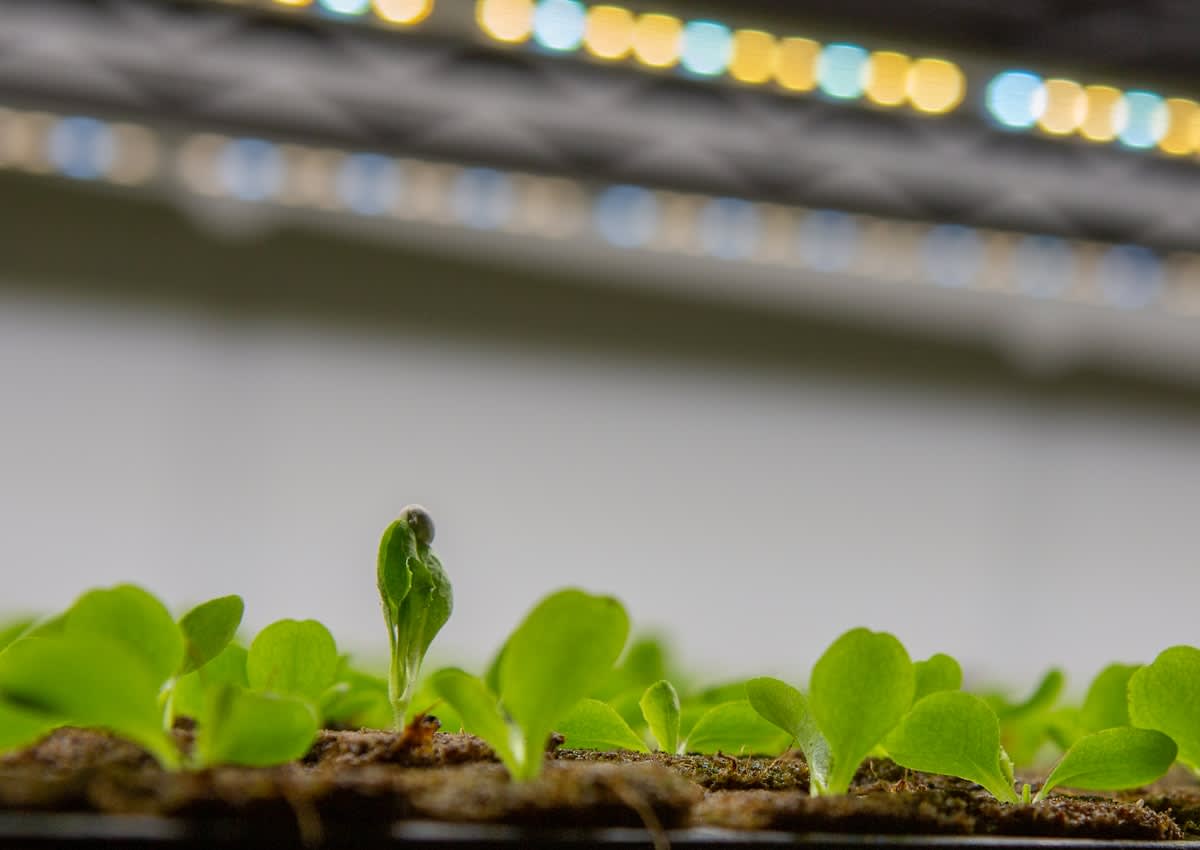
While the infrastructure is impressive, the actual crops tell a story of economic pragmatism. Lettuce and leafy greens remain the economic backbone of this movement, commanding a 33.6% crop share (Source: EIN News, 2026). However, the real trend to watch is the explosion of microgreens, which are growing at a 15.2% CAGR through 2035 (Source: EIN News, 2026). This shift is driven by high-end foodservice demand and the ability to achieve rapid turnover in tight urban spaces. It is a high-velocity agricultural model that mirrors the pace of the city itself.
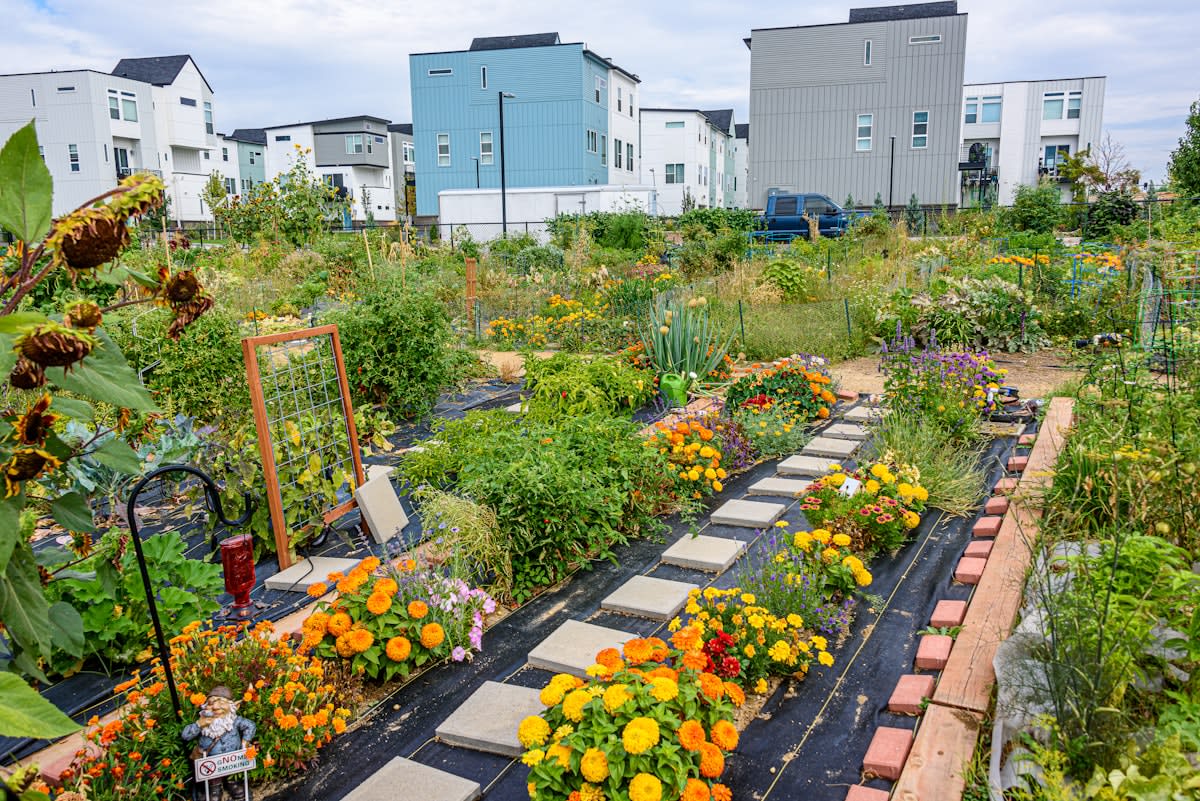
But vertical towers are only one half of the equation. The true 'polyculture' happens where the concrete meets the soil. We are seeing a surge in regenerative agriculture—a conservation management approach that emphasizes natural resources through improved soil health and water management (Source: Farm Bureau Intel Markets, 2026). This isn't just for the rural heartland; it is being adapted for urban fringes and vacant lots. In 2023 alone, farmers and ranchers enrolled nearly 70 million acres in these regenerative conservation practices (Source: Farm Bureau Intel Markets, 2026).
"A conservation management approach that emphasizes natural resources through improved soil health, water management, and natural vitality for the productivity and prosperity of the land."— USDA Definition of Regenerative Agriculture, cited in Farm Bureau Intel Markets (2026)
This shift toward regeneration is a direct response to the failure of the industrial monoculture. By diversifying crops and focusing on soil vitality, urban growers are creating resilient ecosystems that can withstand the climate volatility mentioned in the vertical farming data. It is a move from 'extracting' value from the land to 'investing' in it. The result is a city that doesn't just consume resources but actively regenerates them.
As these systems scale, they are creating an entirely new labor market. In south Phoenix, the Agroforest Workforce Development program at Spaces of Opportunity is proving that urban farming is a viable career path, not just a hobby. By connecting people with nature through agroforestry, the program provides internships and jobs that transition residents from urban decay to agricultural productivity (Source: ABC15 Arizona, 2026). This is where the trend becomes human: it is about workforce resilience as much as food resilience.
"It's really important to help encourage people who want to start businesses or even people that just want to plant in their own backyard, how to actually care and maintain those trees and plants."— Ellie Ferguson, Agroforestry Educator at Spaces of Opportunity
From a practitioner's perspective, the real friction isn't about whether this works, but how to balance the 'High-Tech' and the 'High-Touch.' On the ground, there is a heated debate between the proponents of precision AI-driven vertical farms and the advocates of soil-based permaculture. One group argues for total environmental control to maximize yield and minimize waste; the other argues that without soil microbes and biological diversity, we are just replacing one industrial monoculture with a sterile, electronic one. The most successful urban projects are those that hybridize these approaches, using AI for efficiency and agroforestry for ecological stability.
The Intelligence Layer: AI as the New Agronomist
The transition to urban polyculture is being accelerated by a new layer of intelligence. The AI Institute for Next Generation Food Systems at UC Davis is already demonstrating how artificial intelligence can cut losses in massive harvests, such as California's 13-million-ton tomato crop, and breed varieties that are resilient to a changing climate (Source: Fresno Bee, 2026). When this level of precision is applied to urban polycultures, the potential for efficiency is staggering. We are moving toward a world where AI can manage the complex interactions of a multi-species urban forest in real-time.
This is what experts call 'Smart Agronomy.' Recent research into emerging technologies and sustainable practices emphasizes that the future of the field lies in the intersection of AI and biological diversity (Source: International Journal of Education, Research, and Innovation Perspectives, 2024). By using AI to monitor soil health, water usage, and crop compatibility, urban farmers can mimic the efficiency of a monoculture while maintaining the resilience of a polyculture. It is the best of both worlds: industrial-scale precision with ecological-scale diversity.
The delta between today and twelve months ago is a marked shift in policy. We are seeing state legislators, particularly in regions like California, drafting rules that govern how data and technology infrastructure will move food from farms to consumers (Source: Fresno Bee, 2026). The conversation has moved from 'Can we grow food in cities?' to 'How do we regulate the AI and infrastructure that makes urban farming profitable?' This transition from proof-of-concept to policy-framework is the clearest indicator that the edible city is no longer a dream—it is an economic imperative.
Fact-Check & Accuracy Note
The key claims regarding vertical farming market valuations ($5.78B to $17.28B) and growth drivers are sourced from EIN News (2026). Statistics on regenerative agriculture (70 million acres) are attributed to the Farm Bureau Intel Markets (2026). AI applications in tomato harvests and crop breeding are based on reports from the UC Davis AI Institute via the Fresno Bee (2026). The workforce development data is sourced from ABC15 Arizona (2026). There is ongoing debate in the field regarding the energy trade-offs of vertical farming versus the land-use requirements of urban agroforestry.