
We cling to the delusion of linear progress. We imagine a steady climb from the cave to the cloud, a relentless accumulation of truth and technique. Yet, a cold look at history reveals a jagged sawtooth pattern. We reach a peak of systemic efficiency—think of the Roman mastery of hydraulic concrete or the sophisticated urban planning of the Indus Valley—and then we simply stop knowing how it was done. The knowledge doesn't just fade; it vanishes, leaving behind ruins that future generations treat as magic rather than engineering.
Why does this happen? The failure isn't usually a lack of documentation, but a collapse of the social architecture required to sustain that documentation. Knowledge is not a static asset stored in a book; it is a living practice embedded in a specific economic and social ecosystem. When the ecosystem shifts—through economic collapse, political upheaval, or a change in the dominant power structure—the 'manual' becomes useless because the tools, the materials, and the social incentives to maintain the skill have evaporated.
The Institutional Decay Cycle
The erasure of successful ideas often begins with the 'Expertise Trap.' As a society masters a specific technology, the knowledge becomes hyper-specialized and concentrated within a small guild or caste. This efficiency creates a fragile point of failure. If the lineage of transmission is broken—by a plague, a war, or a sudden shift in trade routes—the specialized knowledge dies with the practitioners. The remaining population sees the result of the work but possesses no understanding of the process, transforming a scientific achievement into a mysterious relic.
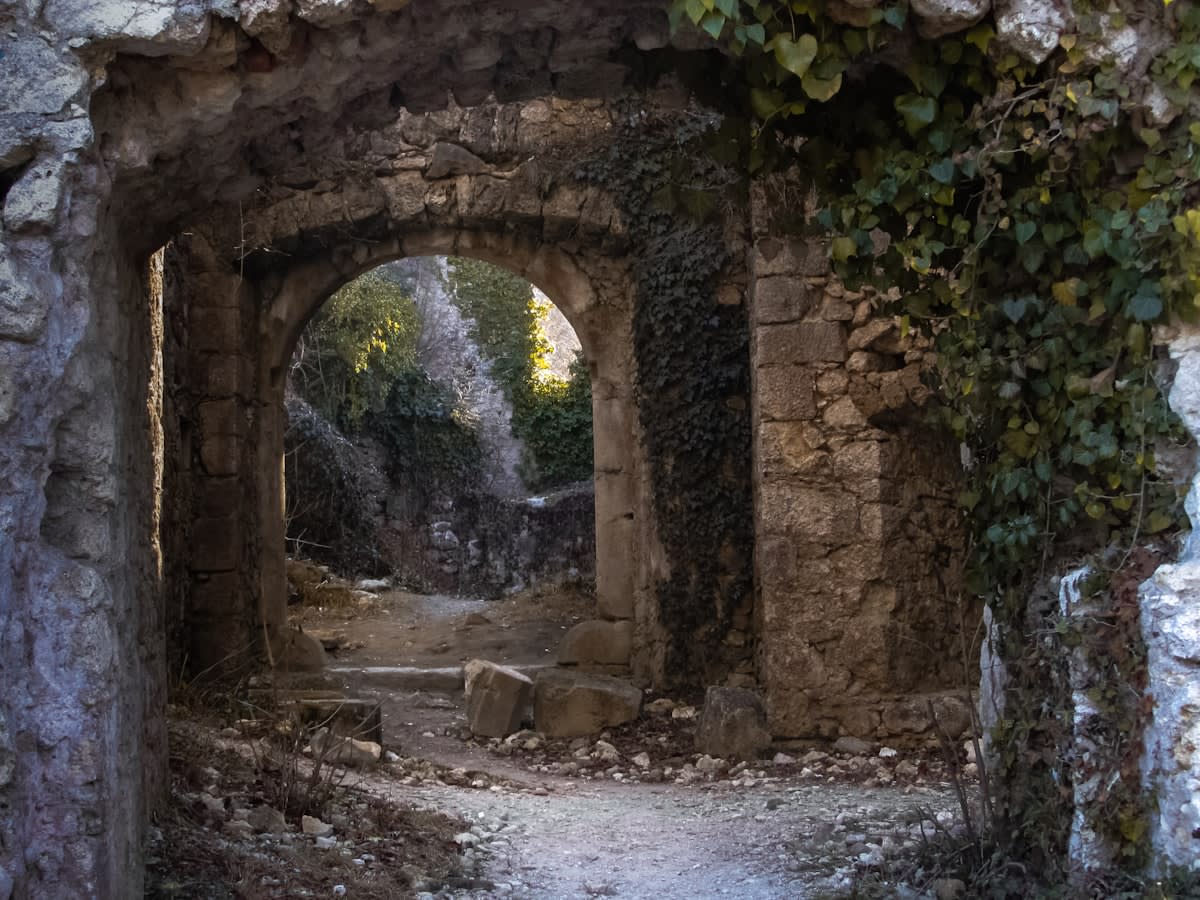
Consider the case of Roman maritime concrete. For centuries, the Romans built harbors and breakwaters that actually grew stronger in seawater. By the 5th century, this capability vanished from the Western world. It took nearly 1,500 years and a modern chemical analysis of volcanic ash to understand the precise reaction that allowed these structures to survive. We didn't lack the ruins; we lacked the systemic curiosity to reverse-engineer them because the prevailing intellectual paradigm had shifted toward different priorities.
"Forgetting is not a passive loss of data, but an active systemic preference for the new over the durable."— Strategic Analysis on Intellectual Cycles
This pattern repeats globally, regardless of the culture. In the Americas, the Maya developed astronomical calendars of breathtaking precision, tracking celestial bodies with an accuracy that rivaled modern observations. When the socio-political structures of the Classic Maya collapsed, the mathematical frameworks supporting these observations were largely erased or suppressed. The knowledge didn't disappear because the stars moved; it disappeared because the social architecture that valued that specific type of observation ceased to exist.
| Innovation | Erasure Trigger | Recovery Interval | Impact of Loss |
|---|---|---|---|
| Hydraulic Concrete | Imperial Collapse | 1,500 Years | Stagnation in maritime infrastructure |
| Greek Tragedy/Drama | Cultural Shift/Loss of Manuscripts | 1,800 Years | Loss of 90% of classical plays |
| Traditional Botanical Medicine | Industrialization/Urbanization | Ongoing | Loss of 60% of regional biodiversity knowledge |
| Antikythera-style Analog Computing | Technological Divergence | 2,000 Years | Delayed development of complex gearing |
The cost of these gaps is staggering. When we lose a successful idea, we don't just stop moving; we often spend centuries recreating the same wheel. This is the 'Innovation Tax' we pay for our systemic amnesia. We mistake the act of rediscovery for original invention, failing to realize that we are simply reclaiming a lost heritage. This cycle suggests that our current 'cutting-edge' technologies may one day become the 'mysterious relics' of a future era if we rely solely on digital storage without maintaining the living practice of the skill.
The Novelty Bias and the Cult of the New
Modernity has accelerated this cycle through a pathological obsession with novelty. We value the 'disruptive' over the 'durable.' In the current corporate and technological landscape, the goal is rarely to refine a successful idea to its absolute limit, but to pivot to the next trend. This creates a shallow layer of knowledge. We have more data than any previous civilization, yet we possess less 'deep knowledge'—the kind of intuitive, embodied understanding that allows a master builder to feel the strength of a stone or a navigator to read the wind.
Digital archives are often cited as the solution to this problem, but they may actually be the ultimate engine of forgetting. Digital data is fragile. It requires a specific stack of hardware, software, and energy to be legible. If the power grid fails or the file formats become obsolete, we aren't left with a faded parchment—we are left with a useless piece of silicon. We are building a library of glass, assuming the wind will never blow.
The Knowledge Decay Curve
Executive Insight
+18.4%
YTD Growth
However, there is a contrarian opportunity in this cycle. Every era of rediscovery acts as a catalyst for a leapfrog effect. When we rediscover an old idea, we do so through the lens of our current tools, often amplifying the original success. The Renaissance was not just a revival of Greek and Roman art; it was a synthesis of ancient wisdom and new mercantile wealth. By reclaiming the past, the thinkers of that era didn't just replicate the ancients—they surpassed them.

To break the cycle of erasure, we must shift our focus from storage to transmission. The only truly durable architecture of memory is the apprenticeship. Knowledge must be lived, practiced, and passed from person to person in a tangible way. We must stop treating history as a museum of dead ideas and start treating it as a laboratory of proven successes. The goal is not to avoid forgetting, but to ensure that what we remember is functional, not just ornamental.
The Paradox of Forgetting
Strategic amnesia can actually be a competitive advantage. By clearing away the 'clutter' of outdated dogmas, a society can occasionally make a radical jump in thinking that would have been impossible if they were too tethered to the 'correct' way of doing things from the previous century.
Ultimately, the architecture of forgetting is a mirror of our own priorities. We forget what we no longer value. If we continue to prioritize the quarterly growth of the new over the generational stability of the proven, we will continue to walk in circles. The challenge for the next century is to build a system of 'Active Memory'—one where the successful ideas of the past are not just archived, but integrated into the living fabric of our future.