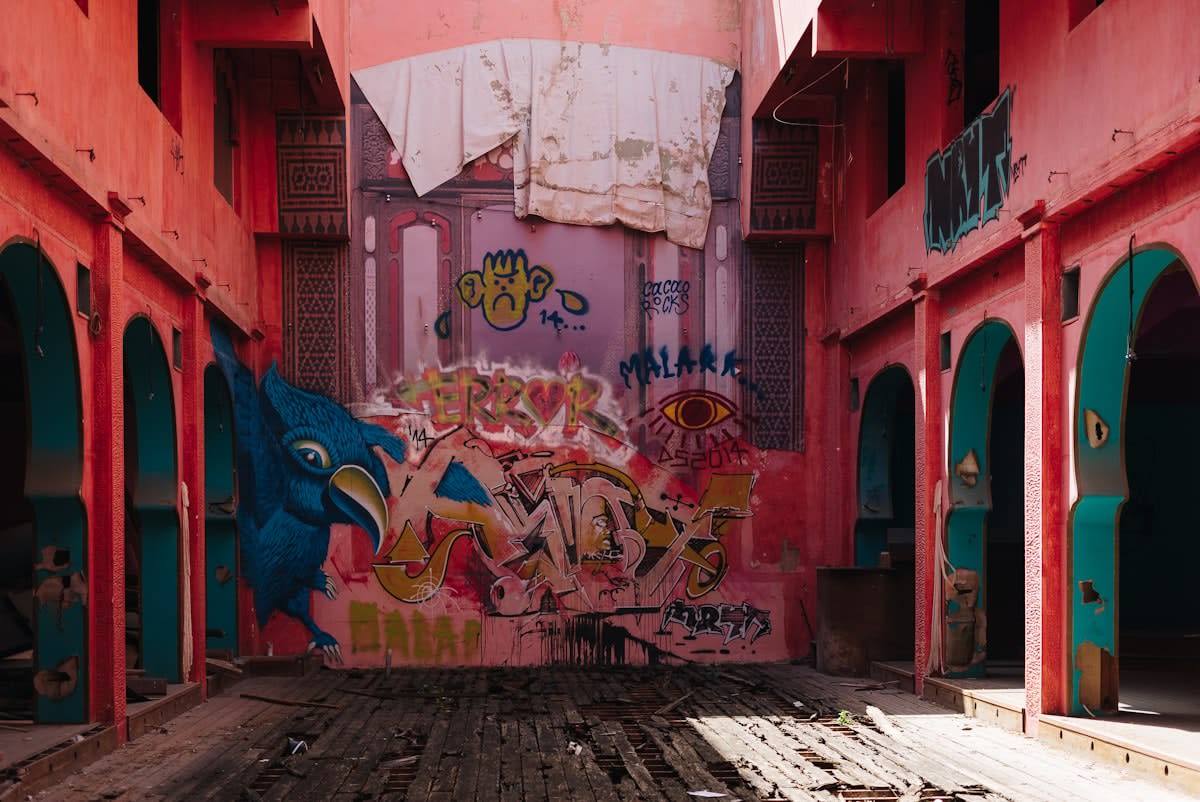
The Myth of the Natural Quiet
We often imagine the pre-industrial world as a place of inherent, effortless silence. This is a romantic fallacy. Pre-industrial cities were loud—clattering hooves, shouting vendors, the rhythmic strike of the blacksmith. But there is a fundamental difference between the noise of activity and the noise of infrastructure. Ancient urbanists didn't just hope for quiet; they engineered it. They treated silence not as the absence of sound, but as a spatial commodity to be protected and partitioned.
Why did we stop treating silence as a design requirement? The shift was systemic. As we moved from organic city growth to industrial zoning, we decoupled the place of production from the place of residence. However, we failed to decouple the sound. The roar of the machine age didn't stay in the factory; it bled into the streets, the bedrooms, and the psyche. We stopped building walls that blocked sound and started building lives that simply ignored it.
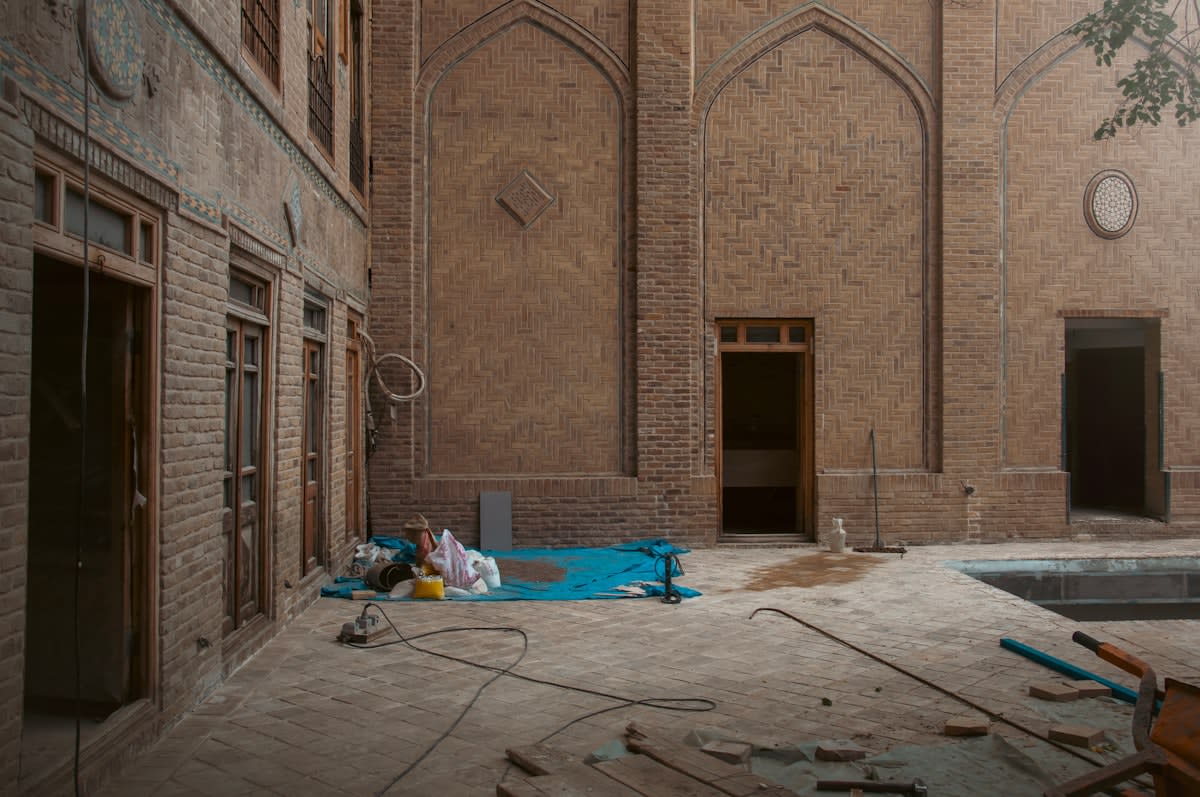
Consider the Riad of Morocco or the traditional courtyard houses of China. These weren't just aesthetic choices or responses to heat. They were acoustic bunkers. By orienting the living spaces inward toward a central void, architects created a physical buffer against the chaos of the street. The thick masonry walls absorbed external vibrations, while the interior garden acted as a sonic diffuser. The result was a binary experience: the high-energy noise of the public sphere and the curated silence of the private sanctuary.
In Japan, the engineering of silence took a more spiritual and precise form. Zen gardens and temple complexes utilized 'ma'—the space between things—to manipulate sound. By strategically placing gravel, water features, and bamboo groves, they didn't just eliminate noise; they replaced it with specific, intentional sounds that encouraged focus. This was acoustic zoning at its peak. They understood that total silence is oppressive, but curated silence is regenerative.
"The modern city does not offer silence; it offers a truce between competing noises."— Strategic Analyst Perspective
European monastic architecture followed a similar logic of spatial separation. The cloister was not merely a walkway for meditation; it was a structural tool designed to isolate the monk from the secular noise of the surrounding town. These complexes utilized heavy stone and specific geometric layouts to ensure that sound decayed rapidly before reaching the inner sanctums. They built the architecture of the void, recognizing that the ability to think deeply is directly proportional to the ability to control one's acoustic environment.
This historical approach reveals a critical insight: silence was once a managed resource. It was an asset that increased the value of a space. Today, we treat noise as an inevitable byproduct of progress, a cost of doing business in a globalized economy. We have shifted from a philosophy of exclusion—keeping noise out—to a philosophy of endurance—learning to live with it.
The transition from managed silence to ambient noise wasn't an accident; it was a design choice driven by the priorities of the Industrial Revolution.
The Great Decoupling: Industry and the Death of Zoning
When the steam engine and the internal combustion engine arrived, the scale of sound changed. We moved from intermittent, human-scale noise to constant, mechanical drones. The 19th-century city was not designed for this. The thin-walled tenements of the industrial era were acoustic sieves. For the first time in human history, the boundary between the public roar and the private retreat vanished. The sanctuary was breached.
This led to a psychological adaptation. We developed a cognitive filter that allows us to 'tune out' the hum of traffic or the whine of air conditioners. But this filtering isn't free. It requires a constant, subconscious expenditure of mental energy. We are perpetually processing noise, even when we think we aren't hearing it. This is the hidden tax of the modern city.
| Feature | Pre-Industrial Acoustic Logic | Modern Urban Acoustic Logic |
|---|---|---|
| Primary Goal | Spatial Exclusion (Keep noise out) | Acoustic Masking (Cover noise up) |
| Structural Tool | Thick masonry, internal courtyards | Double-glazing, white noise machines |
| Sound Profile | Intermittent and localized | Constant and ambient |
| Value Driver | Silence as a luxury asset | Connectivity as a luxury asset |
| Human Response | Active engagement with quiet | Passive endurance of noise |
The modern response to noise is fundamentally individualistic. We buy noise-canceling headphones. We install soundproofing foam in our home offices. We treat the symptom, not the system. By moving the solution to the ear level rather than the street level, we have abdicated our responsibility to design quiet cities. We've accepted a world where the only way to find silence is to electronically simulate it.

The data on this shift is stark. While the World Health Organization suggests a noise limit of 55 decibels (dB) for outdoor residential areas to prevent adverse health effects, many global hubs routinely average 70-85 dB. This 15-30 dB difference isn't linear; it's logarithmic. A 10 dB increase represents a ten-fold increase in sound intensity. We are living in an environment that is orders of magnitude louder than the architecture of our ancestors was ever designed to handle.
The Biological Cost
The 55dB Threshold: Beyond this level, the human body enters a state of low-level stress, increasing cortisol production and disrupting sleep cycles, regardless of whether the person is consciously 'bothered' by the noise.
What do we lose when we lose silence? We lose the capacity for deep, uninterrupted synthesis. The brain's default mode network, responsible for creativity and self-reflection, requires a low-stimulus environment to function optimally. In a world of constant acoustic input, we are perpetually in a state of reaction. We have traded the 'deep work' of the monastic cell for the 'shallow work' of the open-plan office.
This is not a crisis to be mourned, but an opportunity to be engineered. The resilience of the modern city depends on our ability to reintegrate acoustic intentionality. We don't need to return to the 12th century, but we can adopt its logic.
Imagine a city where green buffers aren't just for aesthetics, but are calculated as acoustic sponges. Imagine zoning laws that protect 'quiet zones' with the same rigor we protect historic landmarks. Imagine architecture that once again faces inward, creating pockets of stillness amidst the flow of commerce.
Beyond the Noise-Canceling Headphone
The path forward requires a contrarian shift in how we value urban space. We must stop viewing silence as a void to be filled and start viewing it as a structural necessity. The most successful cities of the next century will not be the ones with the fastest transit or the tallest towers, but the ones that provide their citizens with the ability to escape the noise without leaving the city.
We have the tools. We have the materials. We simply lack the will to prioritize the invisible. Silence is the ultimate luxury in a loud world. By reclaiming the architecture of quiet, we aren't just improving our health; we are reclaiming our cognitive autonomy.