
The Tyranny of the Immediate
Our current legal and political systems are designed for the sprint, not the marathon. The fiscal year, the four-year election cycle, and the quarterly earnings report have become the primary rhythms of human organization. This temporal myopia creates a systemic blind spot where any consequence manifesting beyond a decade is effectively invisible to the decision-maker. Why would a politician invest in a hundred-year forest when the reward only accrues to a successor they will never meet? The result is a governance model that optimizes for immediate stability while accumulating massive, invisible debts for the future.
Deep time thinking rejects this narrow window. It posits that the only way to survive the Anthropocene is to expand our legal horizon from years to millennia. This is not mere philosophy; it is a strategic necessity. When we treat the 10,000-year mark as a relevant data point, the very definition of ownership, liability, and rights begins to mutate. We stop asking how to maximize a resource today and start asking how to ensure the resource remains viable for a civilization that may not even speak our language.
"The crisis of the modern state is not a lack of resources, but a lack of time. We are attempting to solve geological problems with political calendars."— Strategic Analysis on Temporal Governance
This shift requires a fundamental dismantling of the 'presentist' bias. If the law recognizes the rights of a person today, why does it not recognize the rights of a citizen living in the year 12,024? The friction lies in the lack of a mechanism for future representation. Until the future has a seat at the table—legally, financially, and politically—we will continue to cannibalize tomorrow to pay for today's inefficiencies.
Engineering for the Unthinkable: The Onkalo Precedent
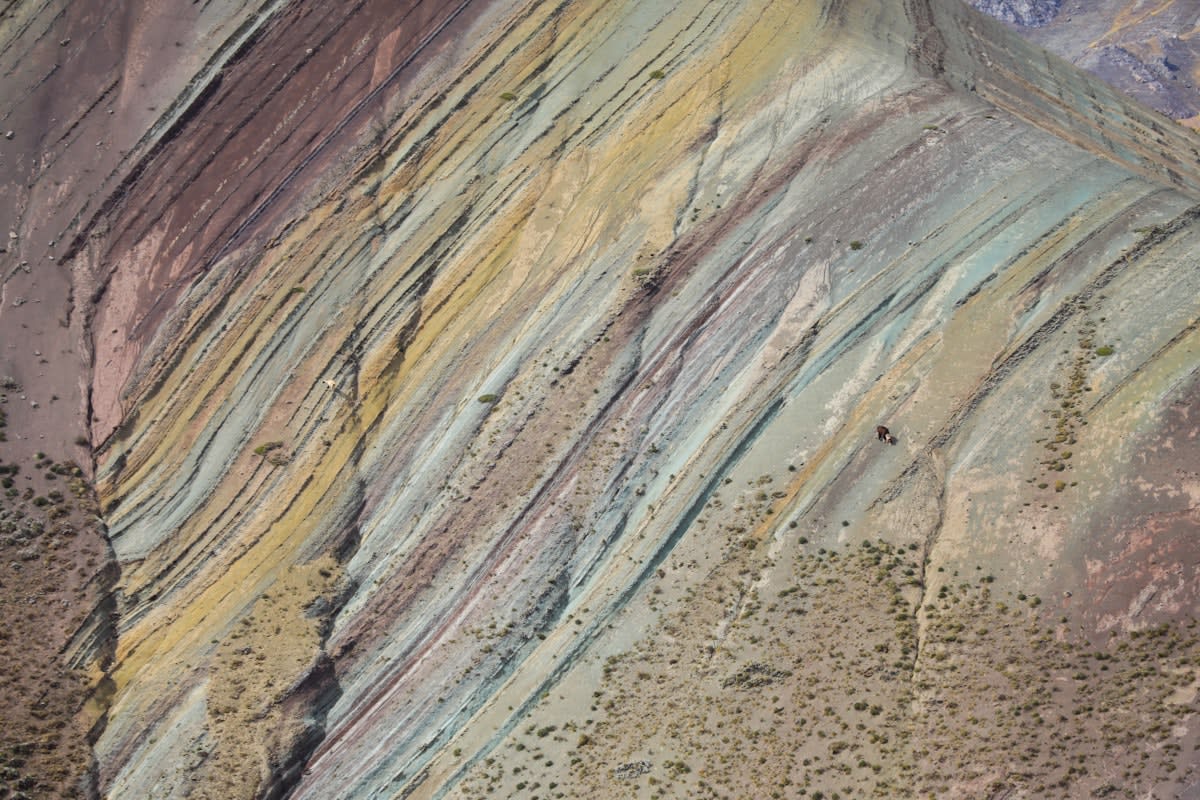
Nowhere is the 10,000-year mindset more visceral than in the management of high-level nuclear waste. In Finland, the Onkalo spent nuclear fuel repository is a masterclass in deep-time engineering. The goal is to isolate radioactive waste for 100,000 years. This is not just a technical challenge of copper canisters and bentonite clay; it is a semiotic and legal nightmare. How do you warn a human being 10,000 years from now—who may have forgotten the concept of radiation or the English language—that they should not dig here?
The Onkalo project forces a collision between law and geology. The legal frameworks governing the site must account for the shifting of tectonic plates and the rise and fall of entire empires. It transforms the state from a provider of services into a curator of hazards. This project proves that when the stakes are absolute, we are capable of planning beyond the lifespan of our current political ideologies. The question is why we reserve this rigor for our waste and not for our wealth or our environment.
| Metric | Short-Term Governance | Deep-Time Governance |
|---|---|---|
| Accountability Window | 2-6 Years | 100-10,000 Years |
| Primary Objective | Immediate Stability/Growth | Systemic Persistence |
| Success Indicator | GDP/Polling Data | Intergenerational Equity |
| Risk Profile | Reactive (Crisis Management) | Proactive (Anticipatory Law) |
| Legal Focus | Individual Rights | Species/Ecosystem Rights |
The divergence highlighted in the table above reveals a systemic failure. Short-term governance is a feedback loop of urgency, where the loudest current demand wins. Deep-time governance, conversely, treats the current generation as a temporary steward. This transition is where the real opportunity for resilience lies. By institutionalizing the long view, we move from a state of constant crisis management to a state of strategic endurance.
The Ancestral Blueprint: Indigenous Jurisprudence
While Western law is just now discovering deep time, many Indigenous cultures have operated on this frequency for millennia. The Haudenosaunee (Iroquois) Confederacy's Seventh Generation Principle is not a poetic metaphor; it is a decision-making framework. It mandates that any major decision be evaluated based on its impact seven generations into the future. This effectively extends the legal horizon to roughly 140-200 years, creating a built-in check against the impulses of the present.
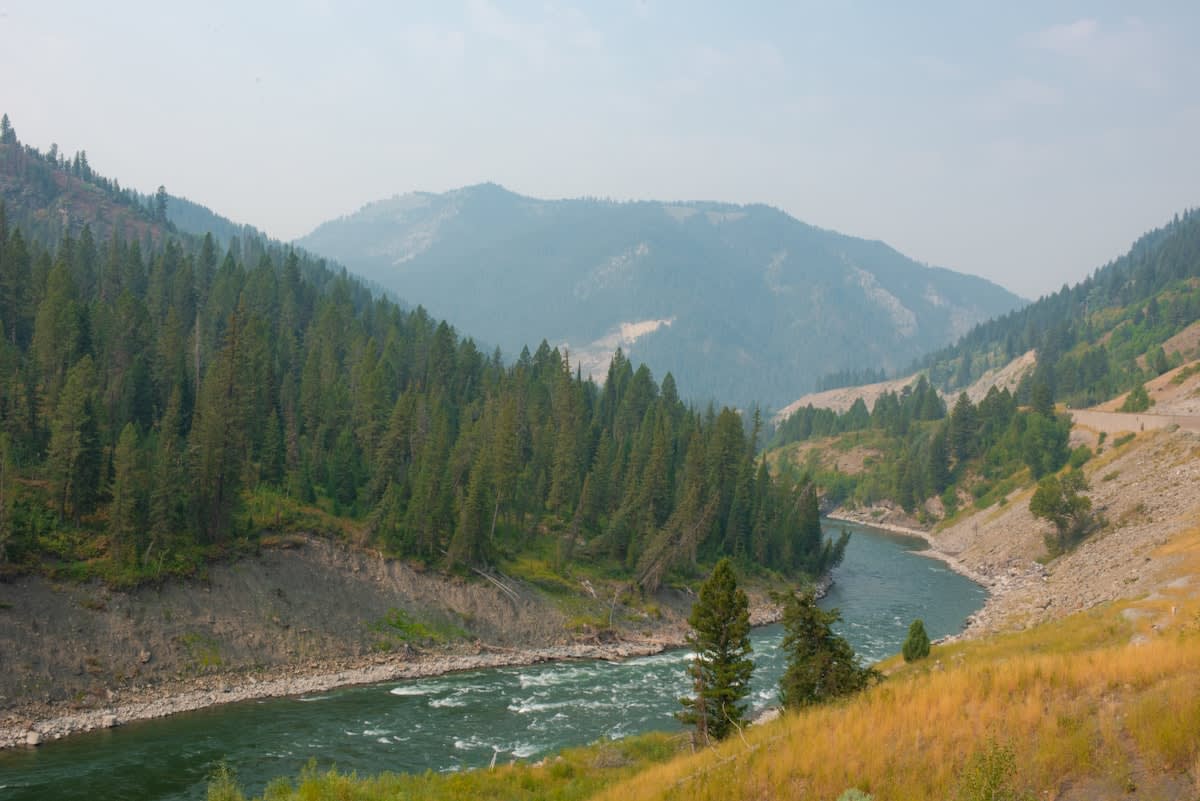
We are seeing this philosophy bleed into modern global law through the concept of legal personhood for nature. In New Zealand, the Whanganui River was granted legal personhood in 2017, recognizing the river as a living entity with its own rights. This move shifts the river from being a 'resource' to be exploited (a short-term view) to a 'relative' to be protected (a deep-time view). It changes the courtroom dynamic: the river is no longer the object of the lawsuit, but the plaintiff.
Does this sound radical? Perhaps. But the alternative is a legal system that continues to treat the planet as a liquidation sale. By integrating Indigenous temporalities, modern governance can move beyond the binary of 'economy vs. environment.' Instead, it can adopt a model of reciprocity where the law protects the continuity of life across eras, rather than the continuity of profit across quarters.
Financializing Eternity
The most potent application of deep-time thinking today is found in sovereign wealth funds. Norway's Government Pension Fund Global, valued at approximately 1.6 trillion USD, is designed as an intergenerational transfer mechanism. It converts the finite wealth of oil into a perpetual financial engine. The goal is not to spend the capital today, but to ensure that the wealth is available for future Norwegians long after the oil wells run dry.
This is a financial manifestation of the 10,000-year mindset. It recognizes that the current generation is merely the trustee of a larger asset. However, the challenge remains: how do we prevent future political volatility from raiding these funds? The answer lies in creating 'constitutional fences'—legal barriers that make it nearly impossible for a single administration to liquidate long-term assets for short-term political gain.
The Stewardship Paradox
The paradox of deep-time governance is that it requires the most rigid short-term protections to ensure long-term freedom. To protect the year 10,000, we must limit the power of the year 2024.
The endgame is a total redesign of the social contract. We are moving toward a 'Stewardship State,' where the primary metric of success is not growth, but persistence. In this model, laws are written to be durable, assets are managed for eternity, and the rights of the unborn are given equal weight to the rights of the living. It is a cold, demanding way to govern, but it is the only way to ensure there is a world left to govern.