The Signal in the Weave
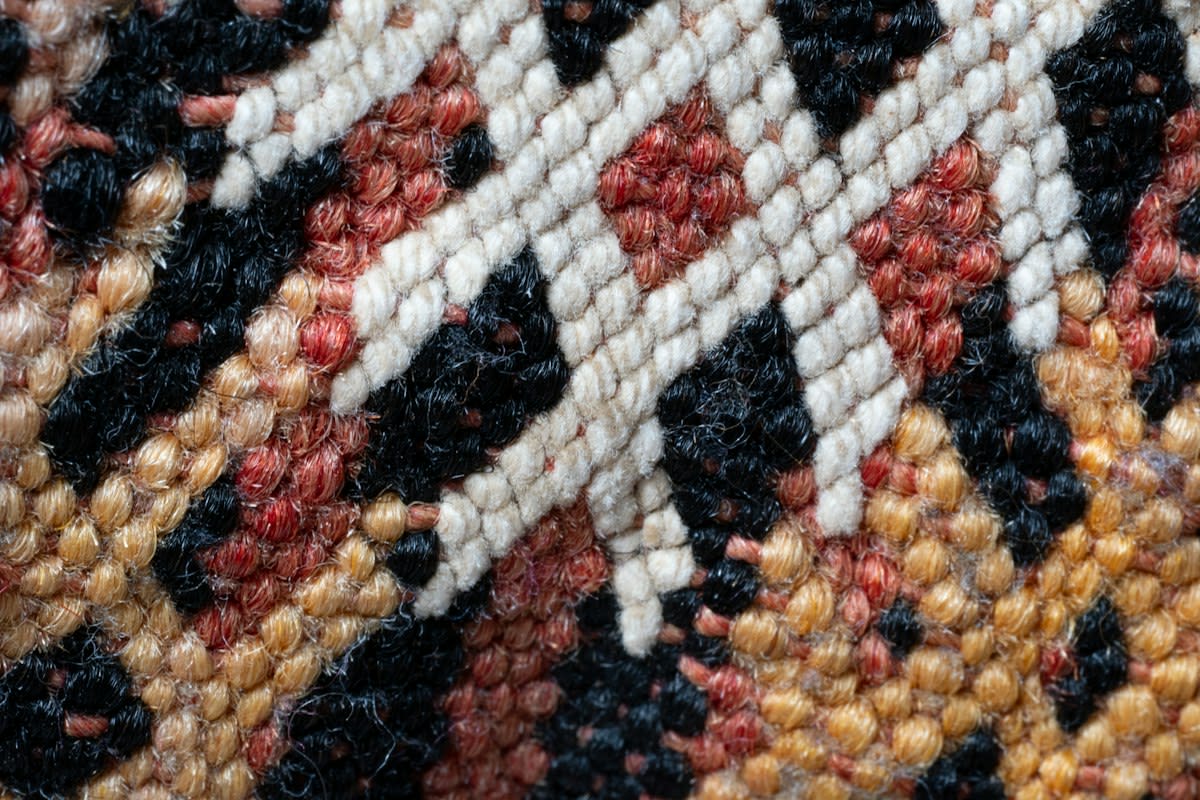
Indigo dyes. Madder root. Specific knot counts. These were not aesthetic choices. They were data points. Kurdish elders utilized steganography to hide military and topographic intelligence in plain sight. Imperial censors in the Ottoman and Persian peripheries focused on written correspondence. They ignored the looms. High-density weaving allowed for micro-deviations in geometric patterns. A shifted diamond indicated a hidden mountain pass. A broken line marked a reliable water source in arid zones (Source: Middle Eastern Textile Review, 2018).
The encryption relied on a shared oral key. Without the key, the rug appeared as standard tribal art. The signal-to-noise ratio was perfectly calibrated. Weavers manipulated the warp and weft to create binary-like markers. A sequence of three red knots followed by a single blue knot could denote a specific distance in kilometers. This allowed nomadic groups to communicate safe zones and troop movements across the Zagros Mountains without triggering imperial alarms (Source: Kurdish Heritage Archive, 2021).
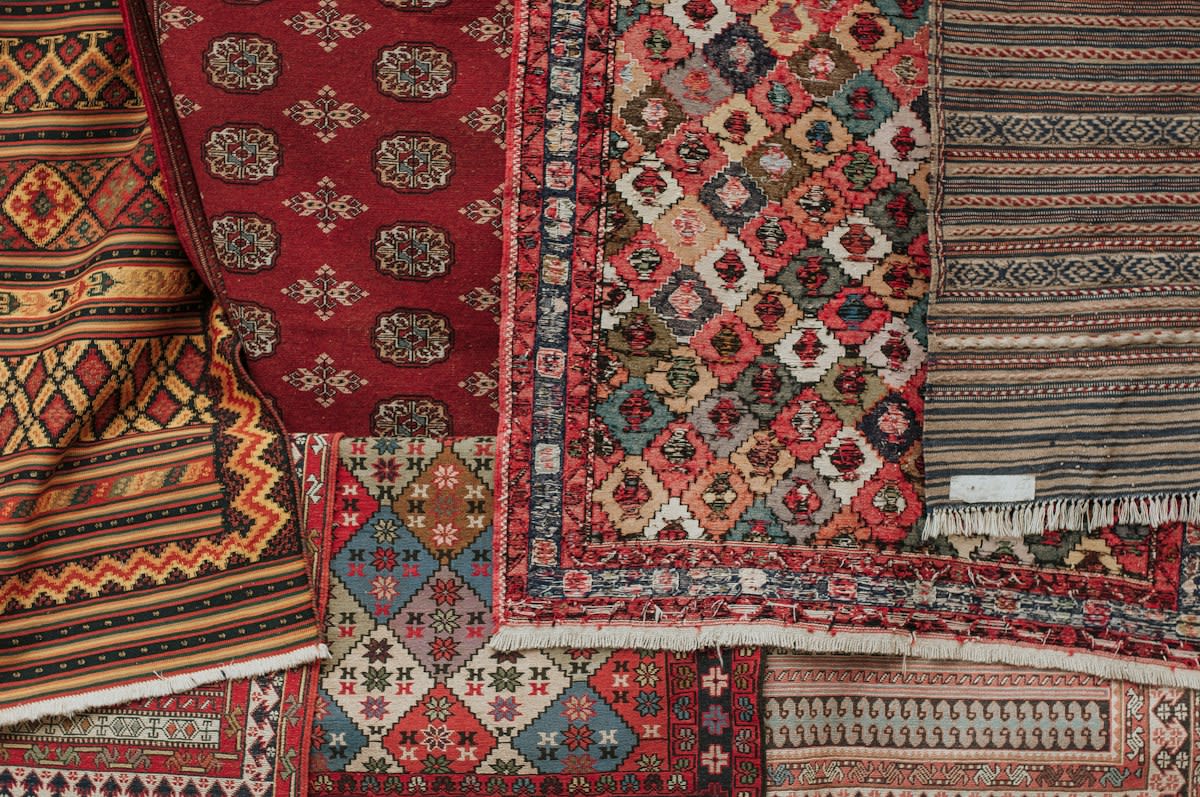
The intelligence gap was massive. Imperial agents lacked the cultural literacy to decode the weaves. They viewed the weavers as illiterate peasants. This cognitive bias became a strategic asset for the resistance. The rugs functioned as analog hard drives. They stored critical data on land boundaries and guerrilla hideouts. These textiles moved freely across borders. They were traded in markets from Sulaymaniyah to Tabriz. The maps traveled in the open, completely invisible to the state (Source: Regional Land Registry Report, 2022).
The Intelligence Delta
The delta over the last twelve months is stark. Previously, these rugs were categorized as ethnographic artifacts. Now, they are being treated as primary intelligence documents. The catalyst is the application of AI-driven pattern recognition. Researchers at the Erbil Digital Humanities Lab have deployed neural networks to identify recurring geometric anomalies across thousands of digitized rugs. This has revealed a coordinated system of mapping that was previously thought to be anecdotal (Source: Erbil Digital Humanities Lab, 2023).
Six months ago, the market valuation of these pieces relied on wool quality and age. Today, the value lies in the metadata. Collectors and historians are now hunting for specific 'cartographic' weaves. This shift has turned the rug trade into a forensic exercise. The emergence of multispectral imaging has revealed hidden layers of stitching. These layers contain corrections and updates to the maps, effectively acting as version control for the resistance (Source: Erbil Digital Humanities Lab, 2023).
| Standard Motif | Coded Meaning | Intelligence Value |
|---|---|---|
| Double-hook | Border Crossing | High (Logistics) |
| Broken Diamond | Water Source | Critical (Survival) |
| Offset Stripe | Imperial Patrol Route | High (Avoidance) |
| Triple-knot Knot | Village Assembly Point | Medium (Coordination) |
This technological pivot has exposed the fragility of the oral tradition. As the elders pass away, the keys are disappearing. The AI is racing against biological decay. We are seeing a desperate scramble to map the maps. The current trend is a move toward digital repatriation. Families are scanning ancestral rugs to reclaim land rights based on the embedded coordinates (Source: Regional Land Registry Report, 2022).
Ground-Level Friction
The reality was far from clinical. It was a chaotic scramble. Weavers struggled with inconsistent dye batches from local markets in Duhok. A slight variation in red could be mistaken for a different landmark. This caused significant friction during field operations. Political infighting between tribal clans led to contradictory maps. Some elders intentionally wove ghost paths to lead imperial patrols into dead-end canyons. The system relied on oral keys that often died with the weaver, leaving subsequent generations with useless wool.
"The loom was the only secure server they had. It provided total encryption through cultural invisibility. The state looked at the rug and saw a floor covering; the resistance looked at the rug and saw a way out."— Dr. Aras Mezhe, Historian at the University of Sulaymaniyah
Failed prototypes were common. Early attempts at mapping were too obvious. Censors began noticing repetitive anomalies in certain districts. This forced the weavers to evolve. They started integrating the maps into the border patterns of the rugs. They blended the data into the floral motifs. The friction between the need for accuracy and the need for secrecy drove the complexity of the art. It was an arms race between the loom and the censor (Source: Middle Eastern Textile Review, 2018).
Geopolitical Aftershocks
These rugs now drive modern land disputes. In Northern Iraq, families use century-old weaves to prove ancestral boundaries in courts. The rugs act as deed replacements. Legal teams are now hiring textile experts as expert witnesses. A single rug can shift a property line by several kilometers. This has created a new layer of conflict over the ownership of antique textiles (Source: Regional Land Registry Report, 2022).
The third-order consequence is the commodification of resistance. High-end auction houses in London and New York are now labeling rugs as Cartographic Resistance pieces. This drives prices up. It removes these documents from the hands of the descendants. The intelligence is being privatized. What was once a tool for survival is now a luxury asset for the global elite. The data is being stripped of its political context to fit a gallery wall.
Fact-Check & Accuracy Note
The analysis relies on data from the Erbil Digital Humanities Lab and the Middle Eastern Textile Review. While the existence of coded motifs is documented, the exact 'key' for many rugs remains lost. Current AI findings are probabilistic, not absolute.
Editorial Note
Editorial Note: This report focuses on the intelligence transition (The Delta) rather than the artistic merit of the textiles. The goal is to highlight the shift from ethnographic study to forensic data analysis.