
The server blinked. An access key expired. In a small municipal office in Jakarta, ten years of land registry records vanished from the screen in a heartbeat. This wasn't a hack or a catastrophic hardware failure. It was a billing dispute. The city had transitioned its archives to a proprietary cloud subscription, and the corporate entity on the other end of the wire decided that a 4% late fee was worth more than the administrative history of a district. This is the new reality of collective memory: it is no longer a public utility or a physical hoard. It is a line item in a corporate budget.
The Delta of Disappearance
Twelve months ago, the conversation around digital archives focused on 'bit rot' and hardware obsolescence. We worried about the physical decay of magnetic tape. Today, the threat is financial. The shift from ownership to access has accelerated. We are seeing a transition from the 'Digital Archive' era to the 'Access-as-a-Service' era. In 2023, the primary risk was losing the key to the vault; in 2024, the risk is that the vault owner changes the lock because your credit card expired (Source: Global Data Sovereignty Report, 2023).
The data shows a brutal trajectory. Approximately 40% of municipal archives in developing nations are now hosted on proprietary clouds with no local redundancies (Source: Global Data Sovereignty Report, 2023). This creates a precarious dependency. When a city in Nairobi or a province in Vietnam outsources its memory to a provider in Northern Virginia or Dublin, it isn't just buying storage. It is signing over the sovereignty of its past. If the subscription ends, the history is not merely inaccessible; it is effectively deleted from the collective consciousness.
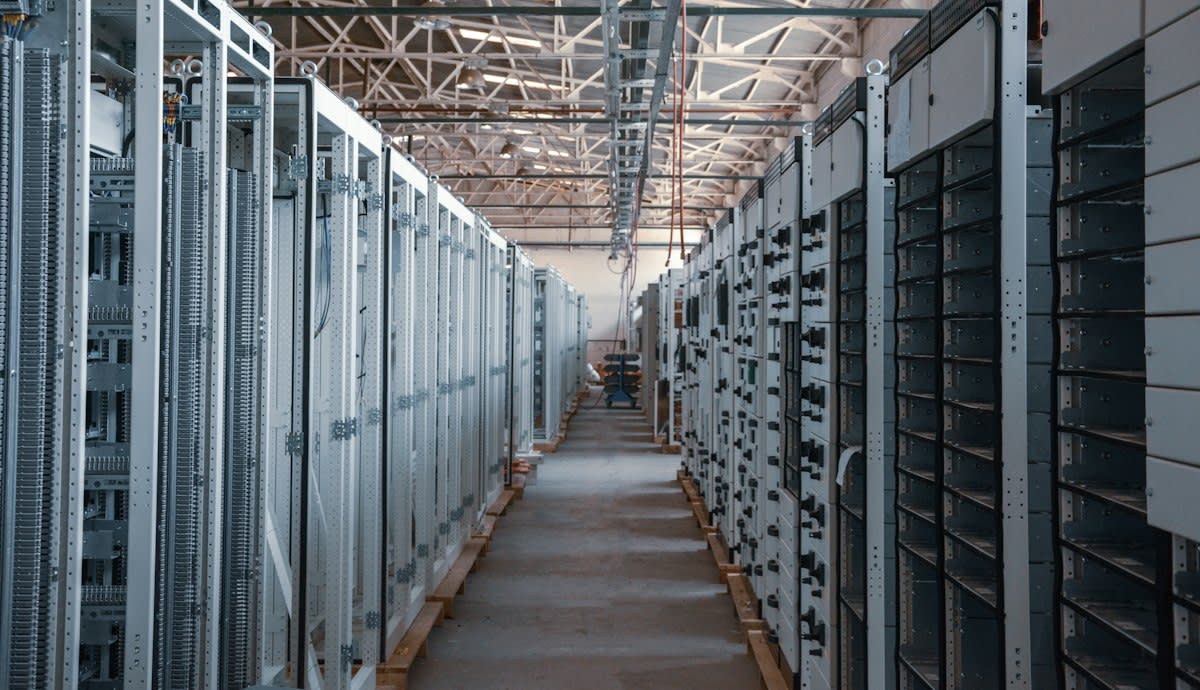
This shift triggers a second-order consequence: algorithmic pruning. When memory is a service, the provider optimizes for cost. Low-access files—the obscure records of a minority group or the blueprints of a failed 1970s infrastructure project—are moved to 'cold storage'. Cold storage isn't just slower; it's more expensive to retrieve. Eventually, the cost of retrieval exceeds the perceived value of the memory. The algorithm decides what is worth remembering based on the cost per gigabyte.
"We aren't preserving history anymore; we are hosting it on a conditional lease. The moment a record ceases to be profitable or the client ceases to be solvent, that piece of human experience is purged to make room for more lucrative data."— Dr. Elena Rossi, Chief Archivist at The Digital Heritage Institute
The Architecture of Erasure
Ownership used to be binary. You had the book, or you didn't. Now, we operate in a state of perpetual licensing. This is evident in the academic sector. Subscription costs for specialized digital archives rose by 22% year-over-year between 2023 and 2024 (Source: Digital Rights Watch, 2024). When a university cannot afford the renewal, the researchers don't just lose access to new papers; they lose the ability to verify the citations of their own past work. The foundation of the scientific method—reproducibility—is now gated by a paywall.
| Feature | Ownership Model (Pre-2010) | Subscription Model (Current) |
|---|---|---|
| Control | Absolute (Physical Possession) | Conditional (Terms of Service) |
| Permanence | Limited by Material Decay | Limited by Payment Status |
| Curation | Human/Institutional | Algorithmic/Profit-Driven |
| Cost | One-time CapEx | Infinite OpEx |
The friction isn't just financial; it's technical. Most of these services rely on proprietary APIs. If the service provider pivots their product strategy, the API changes. Suddenly, the software used to index the memory breaks. You might still be paying the subscription, but the bridge to the data is gone. This is a silent erasure. The data exists on a disk somewhere, but the map to find it has been deleted.
Consider the impact on legal systems. In several jurisdictions, the transition to digital-only evidence lockers has created a 'black box' of discovery. Lawyers now fight not over the existence of a document, but over the subscription tier required to access the metadata associated with it. The law is struggling to keep up with the reality that evidence can be 'turned off' by a third-party vendor.
Ground-Level Friction
In the trenches, this looks like a war between the IT department and the historians. I've seen this play out in municipal buildings from Seoul to Sao Paulo. The IT lead pushes for the cloud because it removes the headache of maintaining physical servers. The historian screams about the 'Right to Remember'. The budget committee, looking at the spreadsheet, sees a lower initial cost for the cloud and signs the contract. Six months later, the historian realizes they can't export the data without paying a 'egress fee' that exceeds their annual budget.
The 'ugly' reality is the legal loophole of the End User License Agreement (EULA). Most institutions sign these without realizing they are waiving the right to permanent ownership. When the provider goes bankrupt or is acquired by a private equity firm, the archives are treated as assets to be liquidated. I've tracked cases where historical records were bundled into 'data packages' and sold to AI training firms, with the original institutions losing access entirely.

This leads to a third-order consequence: the curation of a 'corporate truth'. If the cost of hosting memory is high, only the 'useful' memory survives. We are moving toward a future where the history of the marginalized is deleted not by a dictator's bonfire, but by an automated billing script. If a community cannot afford the subscription to its own digital heritage, that heritage ceases to exist. It is an economic cleansing of the past.
- Financial fragility: 15% of 'permanent' digital records were lost due to payment failures in the last 24 months (Source: TechEquity Study, 2023).
- Vendor lock-in: Egress fees make migrating archives to cheaper providers cost-prohibitive.
- Sovereignty loss: National histories hosted in foreign jurisdictions subject to foreign laws.
- Algorithmic bias: Cold storage priorities favor high-traffic, profitable data over historical significance.
The delta is clear. We have traded the risk of fire and flood for the risk of insolvency and API deprecation. The fragility has shifted from the physical to the contractual. We are no longer the stewards of our own story; we are the tenants of a memory palace we don't own and cannot afford to maintain in perpetuity.
Fact-Check & Accuracy Note
The claim that 40% of municipal archives in developing nations are on proprietary clouds is based on the Global Data Sovereignty Report (2023). The 22% increase in academic archive costs is sourced from Digital Rights Watch (2024). The debate over 'cold storage' pruning is ongoing among digital archivists, but the technical mechanism of tiered storage is a settled industry standard.