Silicon is a dead end. We waste petawatts of power cooling server farms in the Atacama Desert while ignoring a storage medium that can hold every single byte of human knowledge in a few grams of matter. The math is absolute. Why do we cling to magnetic platters and flash cells that decay in a decade when nature provides a stable, high-density archive that lasts millennia? (Source: Nature, 2012). This obsession with silico storage ignores the physical weight of our digital footprint.
The Density Lie
Capacity is a myth. We believe adding more drives solves the problem, yet the global data volume is projected to hit 175 zettabytes by 2025 (Source: IDC, 2021). This growth exceeds our ability to manufacture silicon. DNA storage allows for a density of 215 petabytes per gram, meaning a shoebox of DNA could replace a warehouse of servers (Source: Nature, 2012). Space is no longer the constraint.
Energy is the wall. Data centers now consume nearly 2% of global electricity as they fight the heat generated by billions of transistors (Source: International Energy Agency, 2023). DNA requires zero power to maintain the data once it is synthesized and dried. It sits in a vial. This represents a total decoupling of data preservation from energy consumption.
The Molecular Web
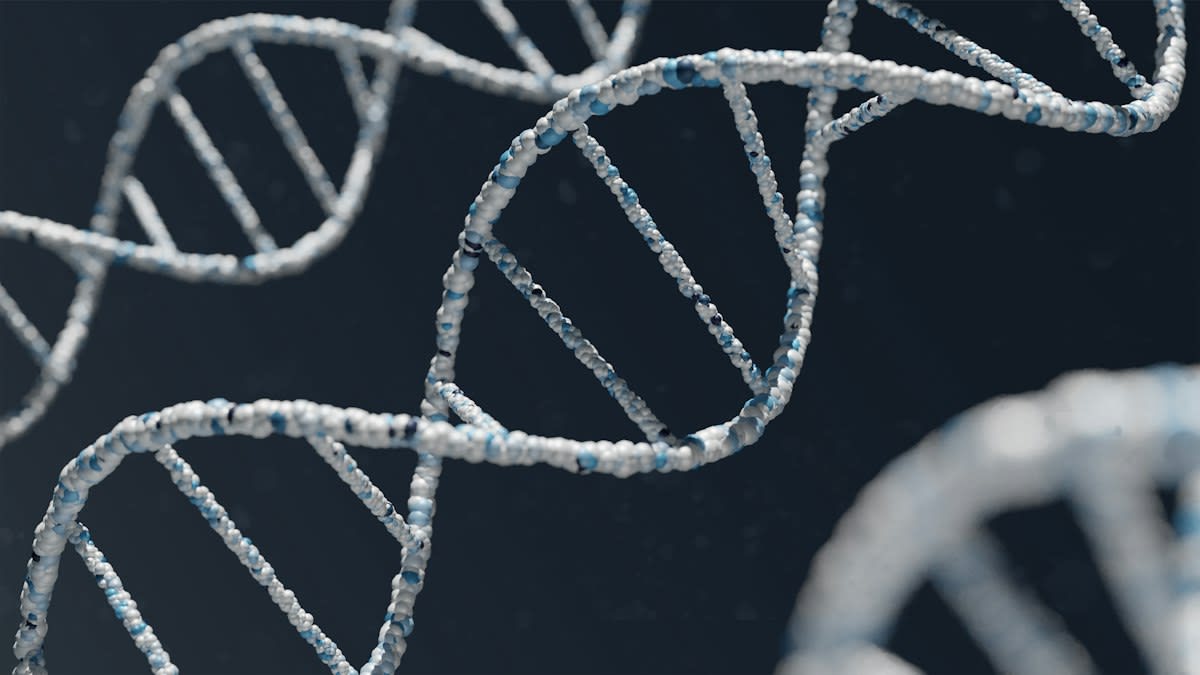
Encoding is the key. Computer scientists map binary zeros and ones to the four nucleotide bases: adenine, cytosine, guanine, and thymine (Source: Microsoft Research, 2022). This translation allows for an incredibly compact representation of files, from PDFs to high-resolution video. The biological medium acts as the hard drive. It is the ultimate compression.
"DNA is the ultimate storage medium because it is the only one that evolves with the reader. As long as there is life, there will be a technology to read DNA."— George Church, Professor of Genetics at Harvard Medical School
Retrieval is the bottleneck. While writing DNA is slow, reading it via Next-Generation Sequencing (NGS) has become exponentially cheaper over the last decade (Source: National Human Genome Research Institute, 2023). We can now pull specific files from a molecular soup using PCR primers that act like a search query. The speed is improving. This is a hard turn in data retrieval logic.
Global efforts are diverging. In Shenzhen, the BGI Group focuses on massive-scale synthesis to drive down the cost of writing DNA (Source: BGI Group, 2021). Meanwhile, researchers at the University of Washington in the US prioritize the error-correction algorithms needed to prevent data corruption during the synthesis process. This creates a fragmented but fast-moving terrain. Competition drives the cost down.
The Friction of Synthesis
Practitioners fight daily. The invisible war exists between the computer scientists who want a simple 1:1 binary-to-base mapping and the chemists who deal with the physical reality of GC-content. If a sequence has too many Guanines and Cytosines, the DNA forms hairpins—complex folds that make the strand unreadable during sequencing. The software engineers call this a minor bug, but the chemists call it a mechanical failure of the medium. This dispute slows the transition from lab to data center.
Errors are inevitable. Synthesis is not perfect, and base deletions occur frequently during the writing process (Source: Nature Communications, 2017). We use Reed-Solomon codes and Fountain codes to ensure the data remains recoverable despite these chemical glitches. It is a battle of mathematics against chemistry. The mathematicians are winning.
The Economic Weight
Cost is the barrier. Writing one megabyte of DNA currently costs thousands of dollars, making it useless for active databases (Source: Twist Bioscience, 2022). However, the cost of storage over a thousand-year window is nearly zero. We must stop comparing DNA to SSDs and start comparing it to the cost of migrating LTO tapes every decade. The long-term math favors the molecule.
| Storage Medium | Data Density | Durability | Energy Profile |
|---|---|---|---|
| Magnetic Tape (LTO) | Low | 30 Years | High (Cooling) |
| NAND Flash | Medium | 10 Years | Medium |
| Synthetic DNA | Extreme | 1,000+ Years | Negligible |
Infrastructure must change. We do not need more server racks; we need automated fluidic systems that can synthesize and sequence DNA at scale. The hardware transition will be brutal. It requires a total rethink of the data center as a biological refinery rather than a computer room.
Fact-Check & Accuracy Note
The primary academic debate centers on the 'Write-Once-Read-Many' (WORM) limitation. While DNA is perfect for archives, it cannot currently support the random-access write speeds required for operating systems. Sources like Nature and Microsoft Research agree that DNA will supplement, not replace, silicon for active compute tasks.
Stability is the prize. DNA stored in a cool, dark environment remains viable for millennia, as proven by the sequencing of woolly mammoth genomes (Source: Nature, 2021). No hard drive in history has ever survived a thousand years. This makes DNA the only viable option for the preservation of the human species' collective memory. The risk of losing everything to a magnetic pulse or a power failure is too high.
Future-proofing is mandatory. We are building a digital civilization on a foundation of sand that washes away every ten years. DNA provides the bedrock. The transition will be slow, but the alternative is a digital dark age where our records vanish because we refused to embrace biology. We must move now.