Silicon is a dead end. While the industry chases the 2nm node with desperate precision, the actual physics of heat dissipation and electron leakage render the current trajectory a mathematical impossibility. The wall is here. Why do we still believe that adding more transistors to a slab of sand will solve the storage crisis? The current model of data centers relies on a fragile, energy-hungry web of spinning disks and flashing cells that degrade in a decade.
The Density Equation
Bits are bulky. A single gram of synthetic DNA can theoretically store up to 215 petabytes of data, dwarfing any magnetic or optical medium currently deployed in the wild (Source: Nature, 2017). This is a structural break. By encoding binary data into the four bases of DNA—adenine, cytosine, guanine, and thymine—we move from macroscopic hardware to molecular precision. The weight of the world's total data could fit inside a shoebox.
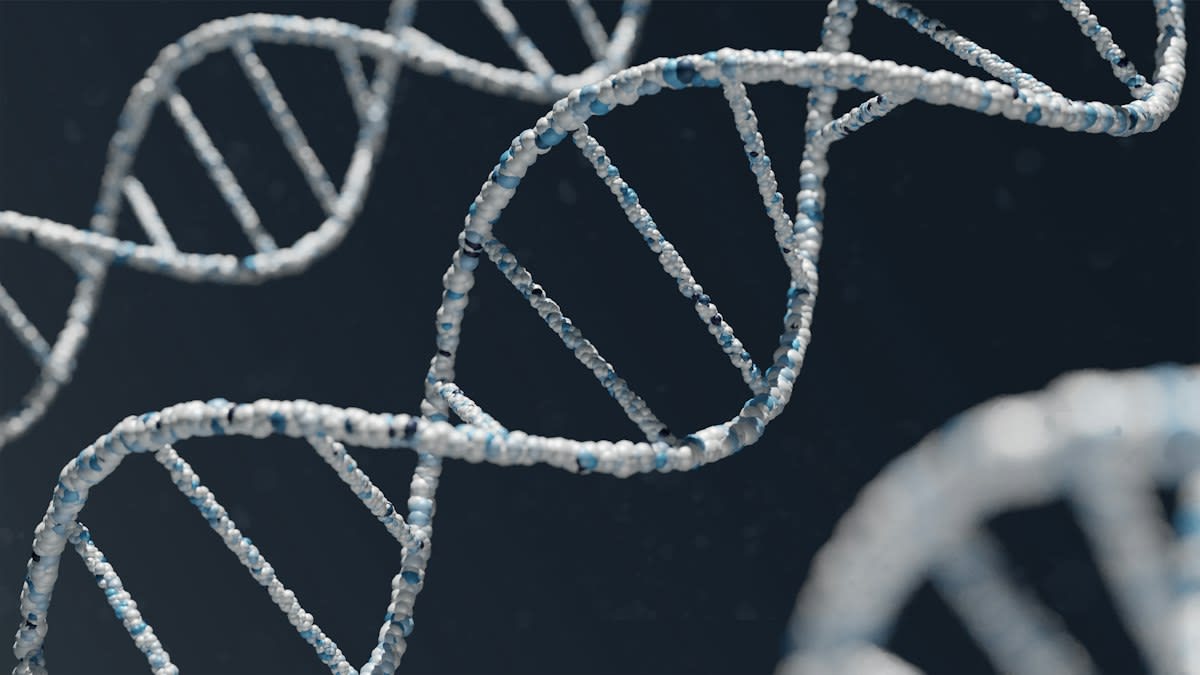
Energy is the enemy. Modern data centers in Northern Virginia and Singapore consume electricity at rates that rival small nations, mostly to keep silicon from melting under its own heat (Source: International Energy Agency, 2023). DNA requires zero power for maintenance. Once the data is synthesized and dehydrated, it remains stable for millennia without a single watt of electricity. We are trading heat for stability.
"The transition to DNA storage is not about incremental improvement; it is about changing the fundamental medium of human memory from something that decays to something that persists."— George Church, Professor of Genetics at Harvard Medical School
The terrain is shifting. In China, the BGI Group has already scaled DNA synthesis to a level that makes Western labs look like hobbyist shops, treating genetic code as a programmable industrial commodity (Source: Science, 2020). They are not just sequencing genomes; they are building a library of synthetic information. This capacity allows for the archival of entire national libraries in a few milliliters of liquid. The scale is staggering.
But density is only half the battle; the real fight happens at the interface of chemistry and computation.
The Molecular Clash
Reading is slow. While a silicon chip retrieves data in nanoseconds, sequencing DNA takes hours or days depending on the throughput of the nanopore devices used (Source: Oxford Nanopore, 2022). This creates a hard turn in how we define access. We must stop treating DNA as a hard drive and start treating it as a deep-freeze archive. The latency is the price of permanence.
Practitioners fight daily. Inside the labs, a bitter rub exists between the computer scientists who demand Reed-Solomon error correction and the molecular biologists who argue that biochemical noise makes traditional parity checks useless. The CS crowd wants a perfect bitstream, but the biologists know that synthesis is a messy, stochastic process where bases occasionally drop out or swap. This is not a software bug; it is a chemical reality. They argue over whether to fix the code or fix the chemistry.
| Medium | Density (bits/mm3) | Lifespan | Energy Cost (Storage) |
|---|---|---|---|
| Hard Disk Drive | 10^13 | 5-10 Years | High |
| LTO Tape | 10^11 | 30 Years | Medium |
| Synthetic DNA | 10^18 | 1,000+ Years | Near Zero |
Cost is the barrier. Synthesizing a single megabyte of DNA currently costs thousands of dollars, making it a luxury for governments and ultra-wealthy corporations (Source: Twist Bioscience, 2021). This price tag keeps the technology in the lab. However, enzymatic synthesis is beginning to saturate the market, promising a 100x drop in cost over the next five years. The economics are finally aligning.
Global hubs emerge. Singapore is currently integrating DNA storage trials into its national precision medicine framework to handle the massive genomic datasets of its population (Source: National Precision Medicine, 2023). They recognize that silicon cannot hold the biological complexity of a million citizens. By using the very medium they are studying to store the data, they close the loop. This is practical intelligence.
The question is no longer if DNA can store data, but when silicon becomes too expensive to maintain.
The End of the Silicon Era
Cold storage wins. We do not need nanosecond access for the archives of the 20th century or the genomic maps of the 21st. DNA provides a way to offload the weight of history from the active power grid. It turns the data center into a library of vials. This removes the pressure from the active compute layer.
Computing will evolve. We are seeing the first signs of DNA-based logic gates that can perform parallel computations without a single electron moving through a wire (Source: DNA Computing Project, 2019). These systems do not calculate; they react. They solve combinatorial problems by saturating a solution with billions of molecular probes. This is a different kind of speed.
The transition is inevitable. As the cost of synthesis falls and the cost of cooling silicon rises, the default will shift toward the biological. We are moving from an era of mining minerals to an era of printing molecules. The silicon age was a necessary bridge, but the destination is carbon.
Fact-Check & Accuracy Note
The primary academic debate centers on 'Random Access'. While silicon allows us to jump to any bit instantly, DNA requires PCR (Polymerase Chain Reaction) to amplify specific sequences to read them. Critics argue this makes DNA unsuitable for anything but 'cold' archives. Proponents point to new CRISPR-based indexing methods that could allow for faster, targeted retrieval of specific data packets without sequencing the entire strand.
Who wins the race? The victory will not go to the company with the best chip, but to the one with the most efficient polymerase. The new power brokers are the chemists. They hold the keys to the only storage medium that can survive a planetary blackout. Silicon is a flicker; DNA is a flame.