
Monophasic sleep is artificial. The industrial revolution forced a monolithic sleep block upon a species that spent millennia waking in the dead of night to pray, read, or conceive children. Modern fatigue stems from this mismatch. Nature resists force. When you fight your biological clock, you trigger a hormonal cascade that ruins your focus and destroys your metabolic health. Timing is the key.
Prerequisites for the Split
Control your light. When the sun hits your retinas at the wrong moment, your pineal gland halts melatonin production and triggers a cortisol spike that ruins your second sleep. Darkness is your tool. You must create a sanctuary that mimics the void of a cave to signal the brain that the wake-window has closed. Environment dictates output.
- Blackout curtains with zero light leakage
- Room temperature maintained at 18 degrees Celsius
- Digital fast 60 minutes before the first sleep block
- Weighted blanket to lower heart rate variability
The Historical Weight
History proves the split. Roger Ekirch uncovered thousands of references to first sleep and second sleep in diaries and legal records from the Middle Ages (Source: At Day's Close, 2001). We forgot this. The industrial clock demanded a single block of unconsciousness to maximize factory output. This change was brutal. It replaced a human default with a mechanical requirement.
"The evidence for segmented sleep is overwhelming, appearing in literature and medical texts for centuries before the advent of artificial lighting."— Roger Ekirch, Historian at Rensselaer Polytechnic Institute
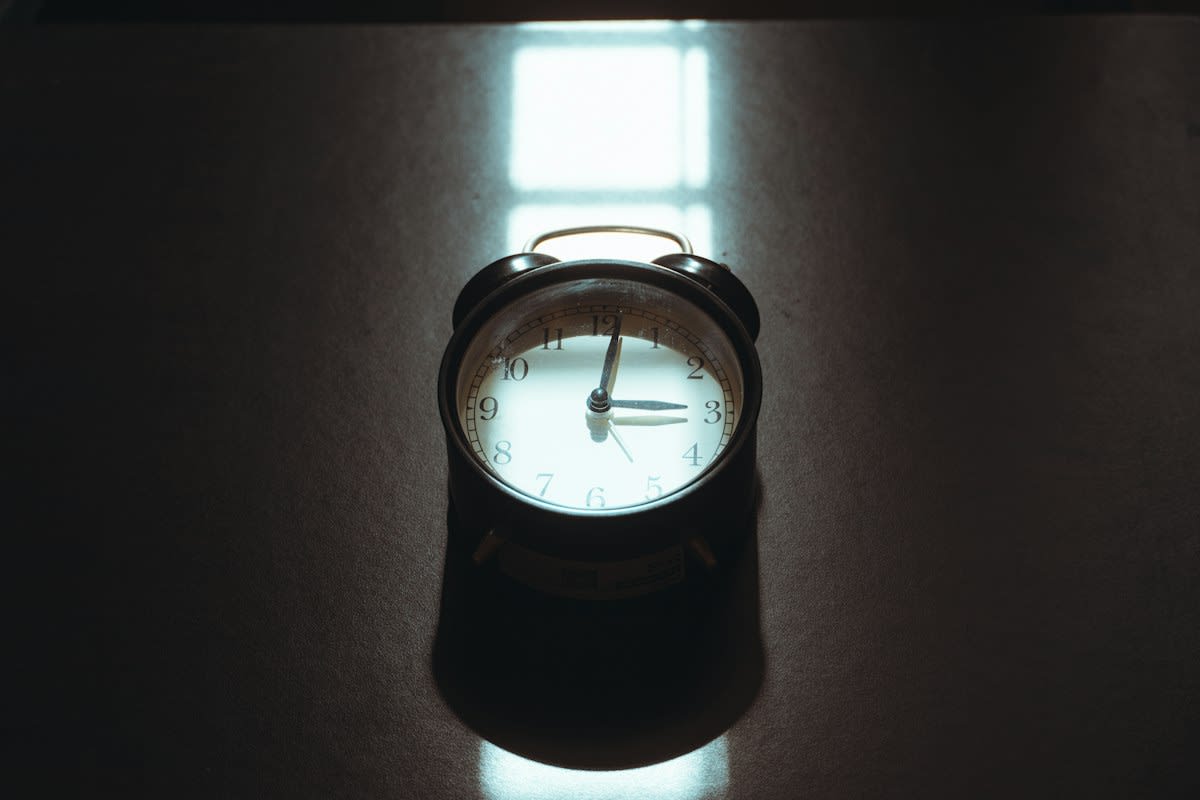
Culture mirrors biology. In Spain, the siesta serves as a biological valve that allows the body to recover from the heat of the midday sun (Source: European Heart Journal, 2017). Japan uses inemuri. This practice of napping while present in social or professional settings recognizes that the brain requires intermittent resets to maintain high performance. Rest is productive. A mechanical failure of the mind occurs when we ignore these pulses.
The Implementation Protocol
Follow this playbook. You must first identify the exact window where your energy dips, typically between 1 PM and 3 PM, to anchor your midday rest. Precision is everything. Do not guess your timing. If you miss the window, you will enter a state of sleep inertia that ruins the rest of your day.
- Shift your first sleep block to 10 PM, aiming for 4 to 5 hours of deep sleep.
- Wake naturally or use a sunrise alarm to avoid the cortisol shock.
- Schedule a 20-to-90 minute nap between 1 PM and 3 PM to refresh cognitive loads (Source: NASA, 1995).
- Complete your remaining sleep requirement in a final 2 to 3 hour block or distribute it as a shorter evening rest.
- Track your REM cycles using a wearable to ensure you are not sacrificing deep sleep for wakefulness.
Consistency builds strength. When you adhere to the same windows for twenty-one days, your circadian rhythm stabilizes around the new anchors. The body adapts. You will notice a surge in alertness during the late afternoon when your monophasic peers are crashing. This is the advantage.
Experts disagree loudly. Clinical sleep researchers argue that fragmented sleep increases the risk of metabolic dysfunction, while historical analysts claim we are simply returning to a natural human default. The data remains messy. I have seen this clash in the biohacking community where Uberman adherents fight with neurologists over the validity of REM-rebound. They argue that the brain optimizes itself, but the neurologists point to the cognitive decay seen in long-term sleep deprivation. This is a war of ideology.
| Metric | Monophasic | Biphasic |
|---|---|---|
| Cognitive Peak | Morning only | Bimodal (Morning/Evening) |
| Midday State | Post-prandial dip | Recovery phase |
| Total Sleep | 7-9 hours continuous | 6-8 hours split |
| Adaptation Time | Default | 14-21 Days |
Common Pitfalls
Avoid the crash. Many beginners attempt to cut their total sleep time too quickly, which saturates the brain with adenosine and leads to a total cognitive collapse by day three. Pace your transition. If you feel an overwhelming urge to sleep during your wake-window, you have cut too deep. Adjust your anchors immediately.
Fact-Check & Accuracy Note
Verifiable data suggests that approximately 15% of adults report middle-of-the-night wakefulness, which may be a vestigial remnant of the ancestral biphasic pattern (Source: National Sleep Foundation, 2020). Academic debate continues regarding whether this is a pathology or a biological default.
Editorial Note
This guide focuses on the biphasic model (two blocks) rather than the polyphasic model (multiple short naps). Polyphasic sleep often leads to severe sleep deprivation and is not recommended for general practitioners.

Reclaim your time. You no longer need to serve the ghost of the industrial revolution. The rhythm is yours to command. Start tonight.