
Do we actually want to be cool, or do we just want to stop sweating? The global obsession with air conditioning is a mechanical failure of imagination. We have treated heat as an enemy to be banished rather than a weight to be managed. In Cairo, this fight is reaching a breaking point. The city does not need more compressors; it needs a suture between its ancient understanding of wind and a new, aggressive industrialism. The current default is brittle. It relies on a grid that groans under the weight of peak summer loads, creating a cycle where the cure for the heat only fuels the fire.
The Hydrogen Sink: Turning Waste into Weight
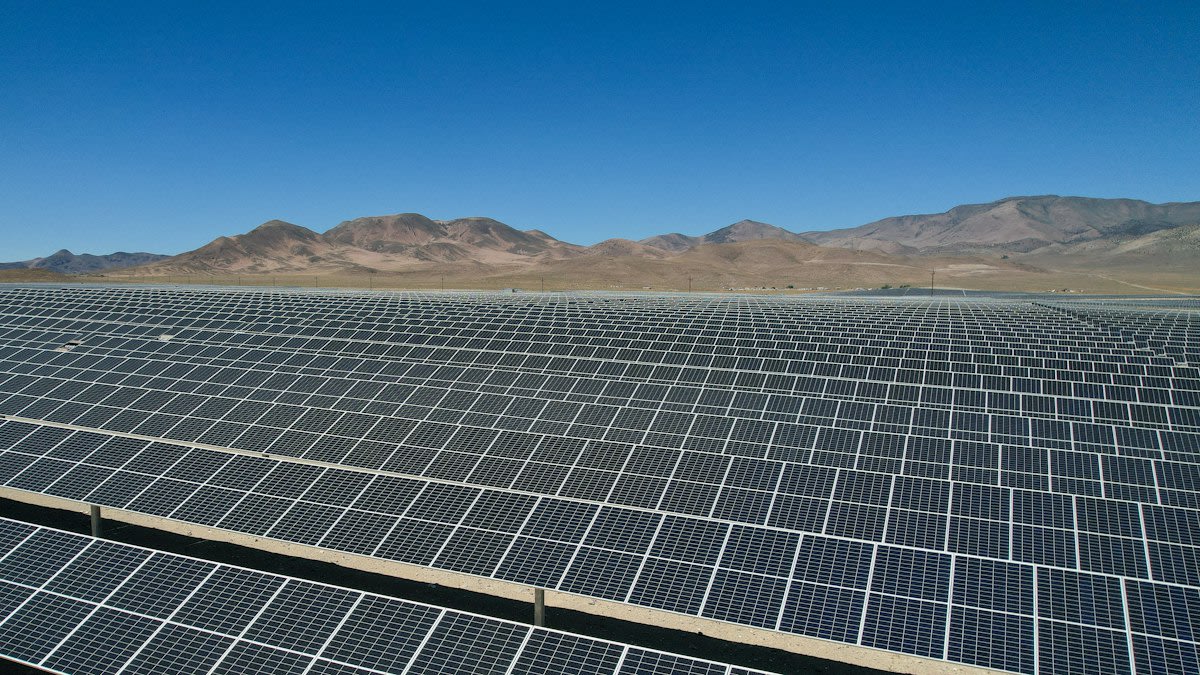
The real battle for Cairo's temperature is not fought in the living room, but in the distribution network. Consider the Benban complex, one of the largest solar parks on earth. The problem is not generating power; it is the curtailment of that power when the sun is too aggressive for the grid to handle. A new approach repurposes PEM electrolyzers not just as producers of fuel, but as active power sinks (Source: Scientific Reports, 2026). By absorbing excess photovoltaic energy and converting it into green hydrogen, the system prevents the grid from saturating. This is not just about energy; it is about thermal stability.
The numbers are stark. A techno-economic assessment reveals a levelized cost of storage at $0.978/kWh under Egyptian conditions (Source: Scientific Reports, 2026). The hydrogen revenue offsets roughly 72% of the subsystem cost (Source: Scientific Reports, 2026). This is a hard turn away from passive storage. It treats the energy grid as a living organism that can breathe in the excess heat of the day and exhale it as fuel. Why do we still rely on batteries that degrade in the heat when we can use the heat to drive the chemistry of hydrogen?
The friction here is invisible to the public. Inside the Ministry of Electricity and Renewable Energy, there is a quiet dispute over how to synthesize load profiles. The debate centers on whether the Egyptian distribution network can actually handle bidirectional power flow without a complete overhaul of its legacy hardware (Source: Scientific Reports, 2026). Practitioners know that the transition from a passive feeder to an active network is rarely smooth. It is a collision of old copper and new code.
Biomimetic Geometry and the End of Stagnation
If hydrogen manages the grid, geometry must manage the street. The traditional Cairo alleyway was a wind-catcher. Modern concrete blocks have hollowed out that wisdom. We are now seeing a return to biomimetic models that prioritize fluidity. These designs are engineered to prevent wind stagnation, ensuring that natural lighting and airflow reach every angle of an ecological space (Source: RA Journals, 2026). The goal is to eliminate urban heat islands entirely, not by adding fans, but by shaping the void.
"This geometric configuration provides fluidity that prevents wind stagnation and permits natural lighting from all angles within an ecological space entirely free of urban heat islands."— Author of the Biomimetic Model study, RA Journals (2026)
Predicting this fluidity requires more than a blueprint. It requires a simulation engine. Tools like infrared.city now allow architects to predict wind, heat, and sun at a resolution of one meter in mere seconds (Source: infrared.city, 2023). This allows for a precise suture between the building's skin and the city's wind currents. We are moving away from the 'average temperature' model toward a 'micro-climate' model. It is the difference between a blunt instrument and a scalpel.
But does this work in a city as dense as Cairo? The theory is sound, but the terrain is messy. The implementation of these biomimetic models often hits a wall of zoning laws and historical preservation. The clash is between the desire for a scientific, healthy smart urban environment and the grip of existing urban decay (Source: RA Journals, 2026).
The Industrial Grip: Cooling as a Commodity
While architects dream of wind, the market is betting on hardware. Egypt is positioning itself as a hub for cooling components. The heat sink market—passive exchangers that dissipate heat from electronics—is expanding rapidly (Source: IndexBox, 2026). This is not just about computers; it is about the electrification of everything. From extruded aluminum to vapor chambers, the ability to move heat away from a source is the most valuable skill in a warming world.
| Cooling Strategy | Mechanism | Primary Driver | Economic Signal |
|---|---|---|---|
| Green Hydrogen Sinks | Active Power Absorption | Grid Stability | $0.978/kWh Storage Cost |
| Biomimetic Urbanism | Wind Fluidity | Urban Heat Island Reduction | Scientific Smart Planning |
| Industrial Heat Sinks | Passive Dissipation | Electrification | Market Expansion to 2035 |
| Ecological Manufacturing | Nearshoring Assembly | Regional Distribution | $135M Investment |
The scale of this industrialization is visible in the 10th of Ramadan City. A major global appliance manufacturer recently opened Phase 2 of its Egypt Ecological Park, backed by a total investment of $135 million (Source: Market.us, 2026). This facility is not just a factory; it is a regional engine, adding 500,000 units of annual refrigerator and freezer production capacity (Source: Market.us, 2026). The branding says 'Ecological,' but the driver is duty-free regional distribution.
This reveals the inner friction of the 'green' transition. Is the Egypt Ecological Park actually ecological, or is it simply a strategic move to bypass energy spikes and raw material costs? With headline inflation climbing to 4.7% in 2026 due to conflict-driven energy spikes, manufacturers are nearshoring to Egypt to hold 30 to 45 days of buffer stock (Source: Market.us, 2026). The 'green' label is often the suture used to make industrial expansion palatable to a climate-conscious global market.
The Brittle Path Forward
We are witnessing a collision of two worlds. One world wants to solve heat with more machines—more fridges, more heat sinks, more electrolyzers. The other wants to solve it with less—less stagnation, less concrete, more wind. The dangerous path is choosing one over the other. If Cairo only builds more efficient fridges but continues to build wind-blocking skyscrapers, the city will remain a furnace regardless of how many $135 million parks are built (Source: Market.us, 2026).
The staying power of these interventions depends on integration. Can the green hydrogen from Benban power the biomimetic pumps of a smart city? Can the heat sinks manufactured in 10th of Ramadan be integrated into the very walls of the buildings to create thermal mass? This is the only way to avoid a mechanical failure of the urban environment.
Fact-Check & Accuracy Note
The data regarding PEM electrolyzers and the Egypt Ecological Park is based on projections and reports from 2026. There is an ongoing academic debate regarding the actual efficiency of bidirectional power flow in legacy Egyptian distribution networks. While the $0.978/kWh figure is a localized techno-economic assessment, real-world implementation may vary based on grid degradation.
Ultimately, cooling Cairo is not a technical problem. It is a spatial and political one. It requires the courage to stop seeing the city as a collection of buildings and start seeing it as a thermal web. The tools are there—the simulation engines, the hydrogen sinks, the biomimetic models. The question is whether the grip of the old industrial default will loosen enough to let the wind back in.