The Death of the Polished Feed
For a decade, the digital gold standard was the curated grid. We lived in an era of meticulously color-coordinated feeds, strategic lighting, and the 'Clean Girl' aesthetic that demanded every corner of a user's life look like a high-end editorial spread. But look at any influential Gen Z profile today and you will see a jarring shift. The symmetry is gone. In its place is 'Digital Dust'—a chaotic collection of blurry candid shots, screenshots of random notes, and unedited photo dumps that feel more like a digital scrapbook than a portfolio. Why the sudden pivot? Because the psychological cost of maintaining a digital facade has finally outweighed the social currency it provided.
This is not a random fluctuation in taste but a systemic rejection of performative perfection. Twelve months ago, the trend was still leaning toward 'curated authenticity'—the art of making something look unplanned while spending an hour editing it. Today, the delta has shifted toward genuine indifference. According to data from GWI (Source: GWI, 2024), there has been a measurable increase in 'casual posting' behaviors among users aged 18-24, with a significant preference for platforms that discourage heavy editing. The pressure to be an influencer in one's own life has become an exhausting full-time job that the newest generation of internet users is simply quitting.
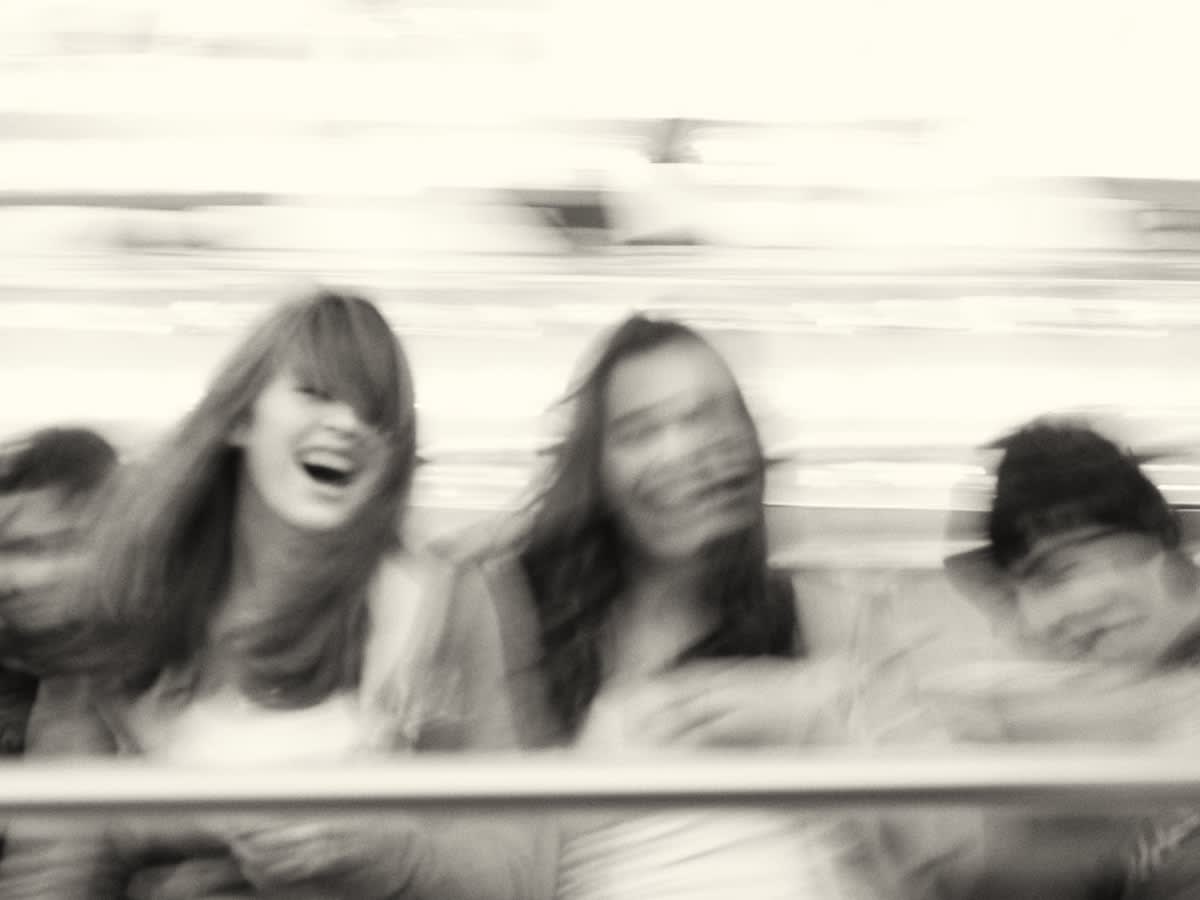
Does this mean the aesthetic is dead? Not exactly. It has just evolved from the 'Macro'—the overall look of the profile—to the 'Micro'—the vibe of the individual moment. We are seeing this play out globally. In Seoul, the 'ugly-cute' trend is dominating youth fashion and social media, where intentional awkwardness is a sign of confidence. In London, the revival of 'Indie Sleaze' brings back the flash-heavy, messy party photography of the 2000s. This is a global movement toward the visceral. It is a reclamation of the internet as a place for living, rather than a place for exhibiting.
"The shift toward low-fidelity content is a defense mechanism against the burnout of the attention economy. When perfection is the baseline, the only way to stand out is to be authentically messy."— Dr. Elena Rossi, Digital Sociologist at the Center for Internet and Society
This transition is further accelerated by the architecture of the platforms themselves. The rise of BeReal was the first tremor, but the integration of 'Photo Mode' on TikTok has solidified the trend. By allowing users to swipe through a series of unpolished images accompanied by a trending audio clip, platforms are rewarding storytelling over symmetry. The 'dump'—a carousel of unrelated images—has become the primary unit of communication, acting as a mood board for a user's current state of mind rather than a curated highlight reel.
The shift is most evident when comparing engagement metrics from a year ago to today. High-production value content is increasingly viewed as 'ad-like' and is instinctively skipped. Conversely, content that looks like it was captured in a split second by a friend is seeing a surge in trust and interaction. (Source: Pew Research Center, 2023). The audience is no longer asking 'Does this look professional?' but rather 'Does this feel real?'
The Practitioner's Friction: Brand vs. Reality
On the ground, this shift is creating a massive tension within creative agencies and marketing departments. For years, the internal debate was about 'brand consistency'—ensuring every post adhered to a strict style guide with specific hex codes and composition rules. Now, that same consistency is a liability. I have sat in rooms where veteran Creative Directors argue for a polished 4K campaign while junior social leads insist that a grainy, handheld iPhone video will outperform it by 400%. The friction is real: how do you maintain a brand identity when the target audience views 'identity' as something fluid, fragmented, and intentionally unpolished?
| Metric | The Curated Era (2015-2022) | The Digital Dust Era (2023-Present) |
|---|---|---|
| Primary Goal | Aspiration & Prestige | Relatability & Presence |
| Editing Style | Heavy filtering / Color grading | Zero filter / Raw capture |
| Posting Cadence | Strategic / Low frequency | Impulsive / High frequency |
| Success Marker | Visual Cohesion | Emotional Resonance |
This is not just a change in visuals; it is a change in the economy of trust. In Sao Paulo and Mexico City, we are seeing a surge in 'lo-fi' influencer marketing where the creators purposefully avoid professional equipment to signal honesty to their followers. The 'production value' is now inversely proportional to the 'trust value.' When a product is presented in a messy bedroom with natural lighting, it feels like a recommendation from a friend. When it is presented in a studio, it feels like a sales pitch.
The result is a landscape of 'Digital Dust'—fragments of life that are shared not because they are beautiful, but because they happened. This represents a move toward 'digital gardening,' where users cultivate a space that is organic and evolving rather than a static museum of their best moments. It is an adaptation to a world of overwhelming noise; by lowering the stakes of posting, Gen Z has found a way to remain social without the crushing weight of perfectionism.
Adaptation and the Future of Identity
Rather than viewing this as a crisis of quality, we should see it as an evolution of resilience. The 'Digital Dust' movement is an act of boundary-setting. By embracing the unpolished, users are reclaiming their time and mental energy. They are no longer spending three hours editing a photo of a meal; they are spending those three hours actually eating the meal and sharing a quick, blurry snap of it in real-time. This shift prioritizes the experience over the evidence of the experience.
For brands and creators, the opportunity lies in vulnerability. The winners of the next digital cycle will be those who can lean into the 'mess.' This means moving away from the 'corporate' voice and adopting a tone that is conversational, self-deprecating, and transparent. The goal is no longer to be admired from afar, but to be accepted as part of the community. The 'perfect' brand is now the one that isn't afraid to show its seams.
As we move further into the 2020s, the definition of a 'successful' digital presence will continue to drift away from the aesthetic and toward the authentic. We are witnessing the democratization of the image. When everyone has a high-resolution camera in their pocket, the high-resolution image becomes boring. The value shifts to the perspective, the timing, and the raw emotion of the capture. Digital Dust is not a lack of effort; it is a deliberate choice to value the human over the pixel.
Fact-Check & Accuracy Note
The claims regarding the shift in engagement and user behavior are based on trend analysis from GWI (2024) and Pew Research Center (2023). While the term 'Digital Dust' is a conceptual framework used to describe this trend, the underlying behaviors—such as the rise of 'casual Instagram' and the 'photo dump'—are widely documented shifts in Gen Z digital anthropology. Debate continues among marketers regarding whether this is a permanent shift or a cyclical reaction to the 'Clean Girl' era.