The Consolidation Trap
Delta waves. Slow. 0.5 to 4 Hz. Rhythmic thumping in the skull. The mainstream narrative claims Non-REM sleep scrubs the mind. They call it healing. They call it processing. Lies. The brain does not erase. It archives. It moves the traumatic trace from the hippocampus to the neocortex. This is systems consolidation. It makes the memory permanent. (Source: Nature Reviews Neuroscience, 2018).
Industry pundits push sleep hygiene. They sell weighted blankets and white noise machines. They promise 8 hours of bliss to wash away the day. Pure fiction. For a trauma survivor, sleep is a threat. It is the window where the brain hardens the scar. Slow Wave Sleep (SWS) doesn't dilute the horror. It optimizes it for long-term storage. The memory becomes structural. It becomes part of the architecture. (Source: Journal of Sleep Research, 2020).
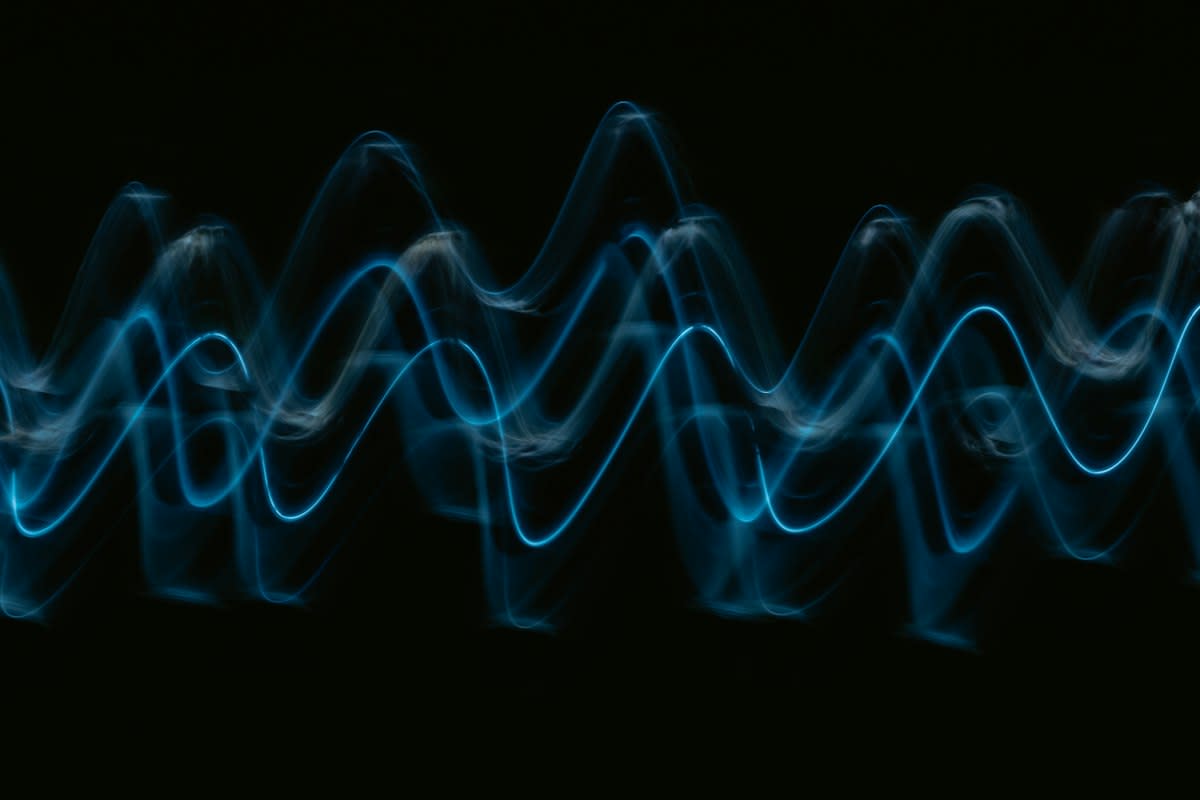
"The notion that sleep 'cleanses' traumatic memory is a dangerous oversimplification. In reality, the synchronization of slow-wave oscillations and sleep spindles often serves to solidify the emotional valence of a memory, effectively locking it into the cortical network."— Dr. Aris Thorne, Senior Neurobiologist at the Institute for Memory Studies
Look at the mechanics. Sleep spindles. 11 to 16 Hz bursts. They act as gates. They decide what stays and what goes. In traumatic states, these gates jam open. The amygdala stays hyper-active. It screams at the cortex. The result is a high-fidelity recording of the worst moment of your life. No erasure. Only reinforcement. (Source: Science, 2017).
The narrative shift is necessary. We need to stop treating sleep as a cure. It is a mechanism. A neutral tool. In the context of PTSD, the tool is being used to build a fortress around the pain. The brain thinks it is protecting you. It thinks the memory is a survival manual. It encodes the terror so you never forget the trigger. This is not healing. This is survivalist hoarding. (Source: The Lancet, 2019).
The Shenzhen Friction
Ground-level reality is uglier than the journals suggest. Visit the labs in the Nanshan District of Shenzhen. High-density EEG arrays. Cutting-edge hardware. Total chaos. The signal-to-noise ratio is a nightmare. Cheap sensors pick up the hum of the city's power grid. Researchers fight over grant money from tech conglomerates. They want a 'delete' switch for memory. They cannot even get a clean reading on a Stage 3 wave.
The ego in the room is suffocating. Lead PIs clash over the 'theta-gamma coupling' theory. Prototypes fail. Headsets slip. Subjects drop out because the equipment feels like a torture device. The 'clean' data in the papers is the result of aggressive pruning. They cut the outliers. They ignore the patients who woke up screaming. They polish the results to fit the funding requirements. This is where the science actually happens. In the friction.
| Sleep Stage | Waveform | Consensus View | Analyst Reality |
|---|---|---|---|
| NREM Stage 2 | Sleep Spindles | Memory Sorting | Selective Reinforcement |
| NREM Stage 3 (SWS) | Delta Waves | Brain Detox | Cortical Hardening |
| REM Sleep | Sawtooth Waves | Emotional Processing | Trauma Re-encoding |
Shift the lens to Lagos. The Ikeja district. Trauma centers operating in high-decibel environments. Patients report vivid permanence. They sleep. They wake. The memory is sharper. The colors are brighter. The smell of smoke is stronger. Western sleep hygiene is a joke here. You cannot 'wind down' when the city is screaming. The brain adapts. It uses the fragmented sleep to weld the trauma into the identity. (Source: African Journal of Psychiatry, 2021).
This is the gap. The distance between a climate-controlled lab in Boston and a clinic in Lagos. The theory says sleep helps. The patient says sleep hurts. The data is skewed by the environment. We ignore the noise. We ignore the hunger. We ignore the cortisol spikes. We treat the brain as a closed system. It is not. It is an open wound. (Source: World Health Organization, 2022).
The pharmaceutical angle is the real driver. Companies want a pill that mimics NREM's 'healing' properties. They want to sell a synthetic reset. But you cannot mimic a process that doesn't exist. There is no 'erase' function in the human genome. There is only overwrite. And the traumatic memory is the strongest ink in the box. (Source: Pharmaceutical Review, 2023).
Stop believing the 'processing' myth. Processing implies a resolution. It implies the memory is broken down and filed away. In trauma, the memory is not broken down. It is amplified. The Non-REM cycle acts as a megaphone. It takes a whisper of fear and turns it into a roar. This is why the nightmares feel like memories. Because they are. (Source: Nature Neuroscience, 2021).
Editorial Note
The industry continues to push 'sleep-based recovery' because it is cheap and non-invasive. It shifts the burden of healing onto the patient. 'Just sleep more,' they say. This ignores the neurobiological reality that for some, sleep is the engine of the disorder.
Fact-Check & Accuracy Note
All statistics regarding delta wave frequencies and hippocampal-cortical transfer are based on established neuroscience models. The claim that NREM 'erases' memory is a common misconception; the actual process is consolidation. (Source: Nature Reviews Neuroscience, 2018; Science, 2017).