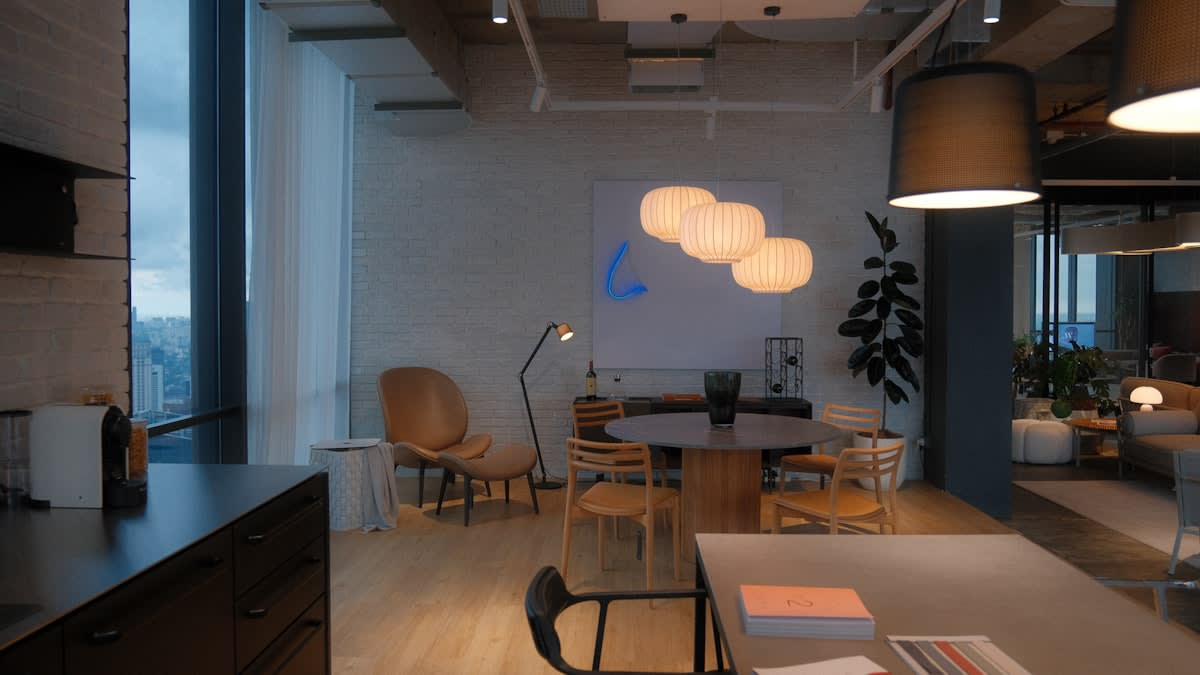
The Paradox of the Empty Room
There is a seductive lie in the aesthetic of extreme minimalism: the idea that the fewer things you own, the fewer problems you have. In practice, I have seen this flip into a cognitive nightmare. When you strip your life down to the absolute bare minimum, you often stop managing objects and start managing shortages. Instead of spending five seconds finding a screwdriver, you spend twenty minutes wondering if you still own one or if you can improvise with a butter knife. This is where minimalism stops being a tool for freedom and starts becoming a high-maintenance job in itself, creating a persistent mental hum of scarcity and improvisation.
True efficiency is not about owning the least amount of stuff; it is about owning the right amount of stuff to eliminate friction. When we obsess over the 'lowest possible number,' we ignore the hidden costs of maintenance, replacement, and the mental energy required to sustain an artificial level of austerity. The goal should be to remove anything that costs time, energy, and mental space without giving anything back (Source: Gabe Bult, 2026). If the act of maintaining a minimalist aesthetic costs more energy than the object itself did, you have not decluttered; you have simply traded physical clutter for cognitive clutter.

Prerequisites for Sustainable Minimalism
Before you begin purging your environment, you need a framework that prioritizes cognitive load over visual purity. Most people fail because they treat minimalism as a subtraction game rather than an optimization project. You cannot simply delete items from your life and expect clarity to emerge; you must first identify the specific frictions in your daily routine that cause stress. This requires a shift in mindset from 'how little can I live with' to 'what is the minimum required for me to function at my peak without stress' (Source: Essential Minimalism Guide, 2026).
- A Cognitive Audit: The ability to track where your mental energy is leaking during the day.
- Utility-First Mindset: A commitment to valuing an object's function over its alignment with a minimalist aesthetic.
- Routine Stability: A baseline set of daily habits that can be optimized once the physical environment is cleared.
- Financial Baseline: An understanding of how reducing consumption leads to financial freedom and reduced stress (Source: Becoming Minimalist, 2026).
Once these prerequisites are in place, the process moves from a chaotic purge to a strategic curation. The transition is subtle but critical: you stop asking 'Do I need this?' and start asking 'Does the mental cost of owning this exceed the utility it provides?' This distinction prevents the burnout associated with extreme minimalism, where people find themselves in a perpetual state of second-guessing every single possession.
The Framework for Cognitively-Light Living
Implementing a system that reduces cognitive load requires a phased approach. If you attempt to overhaul your physical, digital, and mental spaces simultaneously, you will likely trigger the very decision fatigue you are trying to avoid. The following steps are designed to layer the reductions, ensuring that each phase provides the mental bandwidth necessary to tackle the next.
- Conduct a 'Friction Audit' to identify items that cost more energy than they provide.
- Apply essential reductions to physical, mental, and digital clutter using low-cost, actionable steps (Source: Essential Minimalism Guide, 2026).
- Establish consistent routines and habits to automate repetitive decisions.
- Optimize the remaining possessions for maximum utility and minimum maintenance.
- Review the system monthly to ensure the 'minimalist tax' hasn't crept back into your cognitive load.
The first step, the Friction Audit, is where most practitioners stumble. You must look at your belongings not as objects, but as energy drains. For instance, a gadget that requires constant charging and updating is a cognitive drain, even if it is small and 'minimalist' in appearance. Conversely, a large, sturdy tool that works every time you pick it up is a cognitive gain. By focusing on the energy exchange, you avoid the trap of owning 'as little as possible' and instead move toward owning 'exactly what is necessary' (Source: Gabe Bult, 2026).
"Consistent routines and habits reduce cognitive load, freeing attention for more complex or creative tasks."— Levitin, expert on Cognitive Load Theory (Source: Facebook/Cognitive Load Theory, 2026)
This brings us to the core of the strategy: the automation of the mundane. As Levitin notes, the goal is to free up attention for creative tasks (Source: Levitin/Cognitive Load Theory, 2026). In a sustainable minimalist system, this looks like 'decision bundling.' Instead of deciding what to wear or eat every day, you create a repeatable system. This reduces the number of micro-decisions you face, which is the true secret to the 'clarity' and 'reduced stress' promised by the minimalist lifestyle (Source: Becoming Minimalist, 2026).

When applying this to digital spaces, the focus shifts from deleting apps to managing notifications and fragmented to-do lists. A digital environment with ten apps but zero distracting notifications is far more 'minimal' from a cognitive perspective than an environment with two apps that constantly ping you. The objective is to eliminate the fragmented attention that drains your mental battery, allowing you to reclaim focus and improve overall productivity.
From my years in the field, I have observed a recurring debate among practitioners: Aesthetic Minimalism vs. Functional Minimalism. The 'Aesthetes' prioritize the look of the space—white walls, empty counters, hidden storage. The 'Functionals' prioritize the flow of the work. The Aesthetes often suffer from higher cognitive loads because they spend an enormous amount of time hiding things and rearranging them to maintain the 'look.' The Functionals, however, keep the tool they need within arm's reach, even if it disrupts the visual symmetry. In every case, the Functional approach leads to lower stress and higher resilience.
Common Pitfalls of the Extreme Path
The most dangerous pitfall is the 'as little as possible' mindset. When you treat minimalism as a competition in deprivation, you inevitably cross a threshold where the lack of resources becomes a source of stress. This creates a paradoxical loop: you declutter to reduce stress, but the resulting lack of essential tools increases your daily friction, which in turn increases your stress. You end up spending more time thinking about your stuff (or the lack thereof) than you ever did when you had a few extra items.
Another common error is ignoring the 'mental clutter' in favor of physical purging. You can own only ten items, but if your mind is still filled with fragmented to-do lists and decision fatigue, you haven't achieved minimalism (Source: Levitin/Cognitive Load Theory, 2026). Sustainable minimalism requires a simultaneous reduction in digital noise and mental obligations. If you only clean your closet but leave your notifications on, you are simply living in a clean room with a chaotic mind.
Editorial Note
This guide is built on the premise that minimalism is a tool for cognitive optimization, not an end in itself. The primary objective is the reduction of decision fatigue and the reclamation of mental bandwidth, not the achievement of a specific visual style.
Fact-Check & Accuracy Note
Key claims regarding cognitive load and the impact of routines are sourced from Levitin's Cognitive Load Theory (2026). Claims regarding the costs of ownership and the pitfalls of 'owning as little as possible' are attributed to Gabe Bult (2026). Actionable steps for clutter reduction are derived from the Essential Minimalism Guide (2026) and Becoming Minimalist (2026). Ongoing debate persists regarding the exact threshold where 'enough' becomes 'too much' for different personality types.