
For three decades, the 'Global Citizen' was the ultimate status symbol. It was the person with a passport full of stamps, a LinkedIn profile spanning four continents, and a wardrobe of brands that looked the same in Singapore as they did in Sao Paulo. This identity wasn't just about travel; it was a philosophical bet that economic integration would inevitably lead to cultural convergence. We believed that the friction of borders would simply evaporate under the heat of digital connectivity and free trade. But that bet is currently being settled, and the house is winning.
What we are witnessing is not a sudden crash, but a quiet, systemic decoupling. The dream of a borderless world is collapsing not because people have stopped liking other cultures, but because the systemic foundations of globalism—just-in-time supply chains and unconditional multilateralism—have proven too brittle. The shift toward localization is a survival mechanism. It is an admission that resilience is more valuable than efficiency. When the systems that connect us become liabilities, the local becomes the only reliable sanctuary.
The Efficiency Trap: From Just-in-Time to Just-in-Case
The economic engine of the global citizen was built on the obsession with the lowest possible cost. For years, corporations chased the cheapest labor and the leanest inventories, creating a web of interdependence so complex that no single entity truly understood it. This 'efficiency' worked perfectly in a world of geopolitical stability. However, the reality of the last few years has exposed the fragility of this model. We saw how a single blockage in a canal or a regional lockdown could paralyze global industries. The logic has now pivoted from 'Just-in-Time' to 'Just-in-Case.'
This pivot is manifesting as 'friend-shoring' and 'near-shoring.' According to the World Trade Organization's 2023 World Trade Report, there is a measurable trend toward trade diversification, where nations prioritize security and political alignment over pure cost-optimization (Source: WTO, 2023). This isn't about stopping trade; it's about shortening the leash. By bringing production closer to home or within trusted regional blocs, states are effectively insulating themselves from the volatility of a truly globalized market.
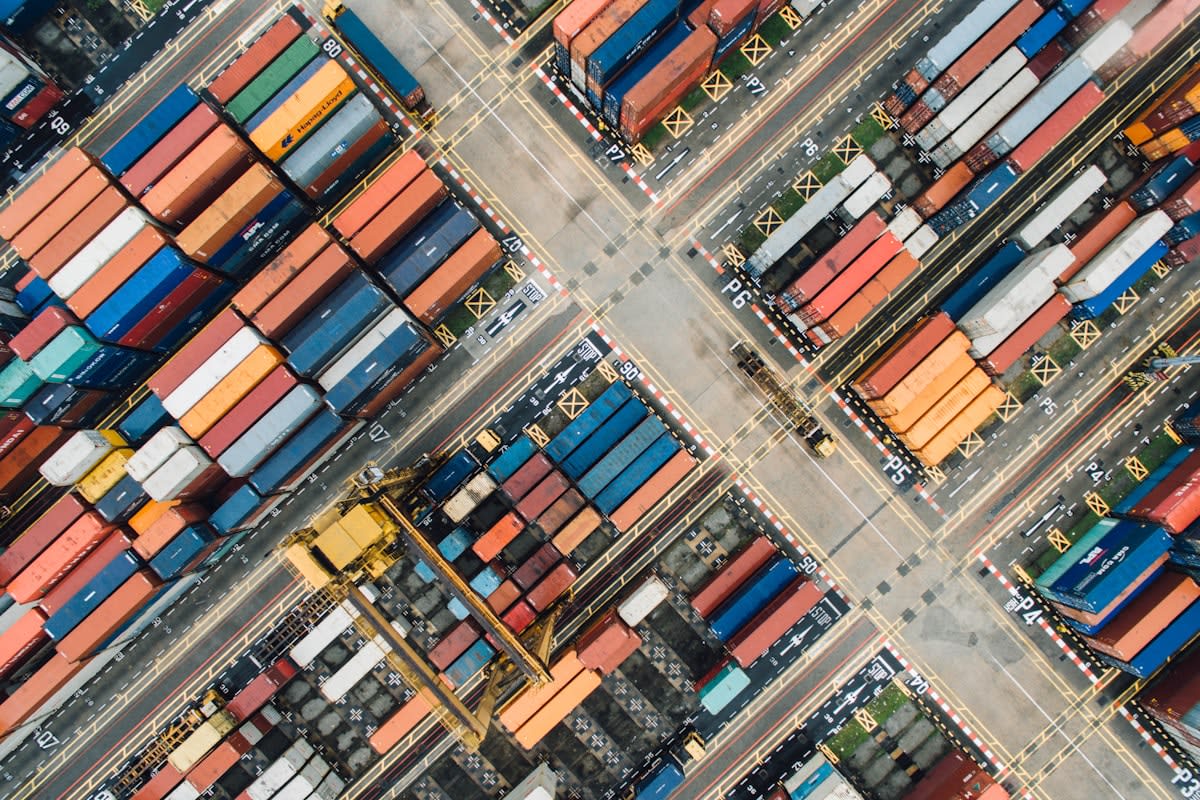
Why does this matter for the individual? Because the economic infrastructure of our lives dictates our psychological boundaries. When your clothes, your food, and your technology are sourced from a regional hub rather than a distant, opaque global network, your relationship with 'the world' changes. The global citizen was a passenger on a ship of efficiency; the new regionalist is an architect of stability. The focus is shifting from the abstract 'global' to the tangible 'nearby.'
| Dimension | The Globalist Dream (1990-2015) | The Localized Reality (2020-Present) |
|---|---|---|
| Supply Chain Logic | Cost-Optimization (Just-in-Time) | Risk-Mitigation (Just-in-Case) |
| Cultural Identity | Cosmopolitan Homogenization | Hyper-Regional Specificity |
| Governance | Multilateralism & Global Accords | Strategic Autonomy & Regional Blocs |
| Labor Market | Global Talent Arbitrage | Localized Skill Ecosystems |
| Value Driver | Scale and Reach | Resilience and Trust |
This transition creates a fascinating tension in how we perceive value. For years, 'global' was a synonym for 'premium.' A global brand was a mark of quality and prestige. Today, we see the opposite. 'Local,' 'artisanal,' and 'regionally sourced' have become the new luxury markers. This isn't just a marketing trend; it's a psychological reaction to the sterility of globalism. People are craving the friction of the specific over the smoothness of the universal.
The Practitioner's Friction: The War Between HQ and the Field
Having spent over a decade advising firms on international expansion, I have seen this conflict play out in boardrooms across three continents. The tension usually exists between the 'Global CMO' at headquarters and the 'Regional Manager' on the ground. The CMO wants a unified brand voice—a single set of guidelines that ensures the customer experience is identical in Berlin, Bangkok, and Buenos Aires. They view localization as a dilution of the brand. The Regional Manager, however, knows that the 'Global SOP' is a fantasy that fails the moment it hits a local cultural nuance or a specific regulatory hurdle.
The real debate in the field today isn't about whether to localize, but how much autonomy to grant the periphery. We are seeing a move toward 'Glocal' models, but with a heavy tilt toward the 'local.' The practitioners who are winning are those who treat the global brand as a loose framework rather than a rigid script. They recognize that the era of the 'cookie-cutter' global rollout is dead. The friction is no longer a bug to be eliminated; it is the primary source of competitive advantage.
"The obsession with scalability has blinded us to the power of specificity. In a world of infinite digital clones, the only thing that cannot be replicated is the local context."— Dr. Elena Rossi, Senior Fellow in Economic Sociology at the European University Institute
This shift extends into the labor market. The 'digital nomad' was the poster child of the global citizen era—working from a beach in Bali for a company in San Francisco. While that lifestyle persists, we are seeing a resurgence in the value of 'deep local knowledge.' Companies are realizing that a remote worker with a laptop is not the same as a local expert with a network. The ability to navigate the unwritten rules of a specific region is becoming a higher-valued skill than the ability to operate in a generic, globalized corporate environment.

Cultural Sovereignty and the End of Homogenization
For a while, the world seemed to be heading toward a 'monoculture.' We ate the same fast food, watched the same streaming shows, and used the same social platforms. But this homogenization created a vacuum of identity. When everything is the same everywhere, nothing is special anywhere. The collapse of the global citizen dream is, in many ways, a reclamation of cultural sovereignty. We are seeing a surge in regional pride and a desire to protect local languages, traditions, and consumption patterns from the flattening effect of global platforms.
This is not the same as the aggressive nationalism of the past. Instead, it is a form of 'cultural resilience.' It is the realization that a diverse ecosystem of local cultures is more robust than a single, fragile global monoculture. By investing in local narratives and regional identities, societies are creating a buffer against the shocks of a volatile world. The goal is no longer to be a 'citizen of the world,' but to be a rooted citizen of a specific place who is capable of engaging with the world on their own terms.
Consider the rise of regional digital ecosystems. For years, a handful of Silicon Valley giants dominated the global internet. Now, we see the emergence of 'sovereign clouds' and regional platforms that cater specifically to local laws, languages, and social norms. This fragmentation is often framed as a 'splinternet,' but from a localization perspective, it is an evolution. It is the digital world finally catching up to the reality that humans are not generic units of consumption, but situated beings with specific contexts.
- Shift from global efficiency to regional resilience in supply chains.
- Transition of 'local' from a niche market to a luxury and stability marker.
- The rise of 'Strategic Autonomy' over multilateral dependence in governance.
- The replacement of the 'Global Citizen' identity with rooted, regional identities.
- The movement from brand homogenization to hyper-local relevance.
Is this a dark turn toward isolationism? Hardly. The most successful actors in this new era are not those who build walls, but those who build bridges between strong, autonomous hubs. The future isn't a world of closed borders, but a world of 'interconnected localisms.' We are moving toward a model of 'modular globalization,' where we connect and disconnect with different regions based on trust, shared values, and mutual resilience rather than a blind drive for the lowest price.
The 'Global Citizen' was a beautiful, if naive, dream. It imagined a world where the friction of being human—our differences, our histories, our geographies—could be smoothed over by a credit card and a high-speed internet connection. But friction is where the heat is. Friction is where identity is formed. By embracing localization, we are not losing the world; we are finally learning how to live in it without erasing ourselves.
Fact-Check & Accuracy Note
Key claims regarding the shift in trade patterns are sourced from the World Trade Organization's 2023 World Trade Report. The sociological analysis of 'cultural resilience' and the 'efficiency vs. resilience' framework reflects ongoing debates within economic sociology and supply chain management. The specific transition from 'Just-in-Time' to 'Just-in-Case' is a widely recognized shift in industrial logistics since 2020.