
The visual language of wealth is changing. For decades, the global elite signaled status through the accumulation of Veblen goods—items whose demand increases as their price rises. We saw it in the Hermès Birkin bags of Paris, the super-yachts docking in Monaco, and the sprawling estates of the Hamptons. But a quiet, systemic shift is underway. The new prestige isn't found in what you own, but in what you don't have to do. This is the rise of Time Sovereignty: the ability to decouple one's existence from the clock and reclaim total agency over every waking hour.
Twelve months ago, the conversation centered on 'Quiet Luxury'—the aesthetic of stealth wealth where logos disappeared but quality remained. Today, that has evolved into something far more radical. It is no longer about the fabric of the sweater; it is about the freedom to spend a Tuesday afternoon in a remote village in Tuscany without a single notification interrupting the silence. We are witnessing a transition from the luxury of possession to the luxury of presence. The delta is clear: while 2023 was about hiding wealth, 2024 is about utilizing wealth to buy back the one non-renewable resource humans possess.

The Mechanics of Buying Back Time
How does one actually purchase time? It starts with the aggressive outsourcing of cognitive load. The ultra-high-net-worth individual (UHNWI) is no longer just hiring a personal assistant; they are employing 'lifestyle engineers' and 'chiefs of staff' who manage the friction of existence. From coordinating complex multi-regional travel to managing health optimization protocols, the goal is to eliminate 'decision fatigue.' According to the Knight Frank Wealth Report (2024), there is a marked increase in spending on bespoke concierge services that prioritize efficiency and privacy over traditional luxury amenities.
This isn't just about convenience. It is a strategic reallocation of human capital. By delegating the mundane, the elite are carving out space for deep work, intellectual pursuit, or radical leisure. We see this manifesting in the surge of 'bio-hacking' retreats in Switzerland and Japan, where the objective is to extend the healthy human lifespan. If you can buy ten more years of cognitive peak performance, you have effectively bought the ultimate luxury: more time.
"The shift we are seeing is a move from 'conspicuous consumption' to 'conspicuous non-consumption.' The ultimate flex is no longer the private jet itself, but the fact that you have the autonomy to be completely unreachable for a month."— Analysis from the 2024 Global Wealth Trends Report, McKinsey & Company
This transition is creating a new hierarchy of status. In the old world, the busiest person in the room was the most important. Now, the person who is least tethered to their device—the one who can afford to be 'offline'—commands the most respect. It is a reversal of the productivity narrative that dominated the early 21st century.
A Global Divergence in Temporal Luxury
The manifestation of time sovereignty varies wildly by region. In Singapore and Hong Kong, where the culture of hyper-productivity is ingrained, time sovereignty looks like 'aggressive disconnection.' We are seeing a rise in ultra-exclusive wellness sanctuaries that offer total digital detoxes, where the luxury is the enforced absence of connectivity. In these hubs, the ability to step away from the 24/7 market cycle is the highest form of social currency.
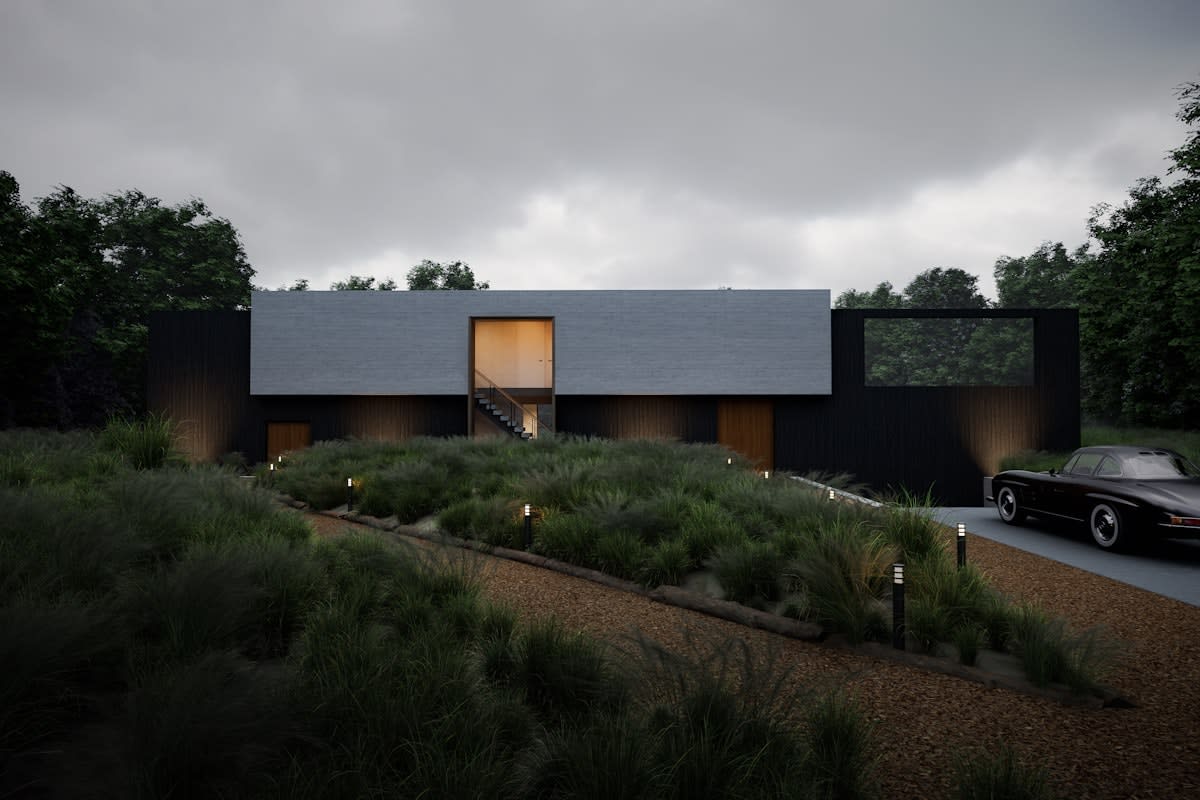
Conversely, in European wealth centers like Zurich or London, the trend leans toward 'slow living' integrated with high-tech efficiency. Here, the elite are investing in sustainable, self-sufficient estates that reduce their reliance on external infrastructure. The goal is autonomy. By owning the means of their own sustenance and energy, they remove the systemic dependencies that create stress and time-leakage.
In the United States, the shift is deeply tied to the 'optimization' movement. The Silicon Valley elite are treating time as a software problem. They utilize AI-driven scheduling and health-tracking wearables to shave minutes off every task. For them, time sovereignty is a mathematical equation: maximize output per unit of effort to maximize free time. It is a clinical approach to leisure.
Despite these regional differences, the underlying driver is universal: a reaction against the burnout epidemic. Even at the top of the pyramid, the mental toll of constant connectivity has become unsustainable.
The Practitioner's View: Inside the Family Office
On the ground, this shift creates immense friction within the family offices that manage these fortunes. For years, the mandate of a family office was wealth preservation and growth. Now, the mandate is shifting toward 'lifestyle engineering.' I have seen internal debates where the friction lies between the traditional CFO, who wants to optimize for tax efficiency, and the new 'Chief of Staff,' who wants to spend millions on a project that essentially 'buys' the principal three months of absolute silence per year.
The real debate in these circles isn't about which asset class to buy, but how to structure a life that minimizes 'administrative drag.' Practitioners are now discussing 'cognitive load audits' for their clients. They analyze every interaction, every meeting, and every commitment to see what can be automated, delegated, or deleted. The metric of success has shifted from the Annual Percentage Yield (APY) to the number of 'uninterrupted hours' a client recovers in a quarter.
This is a fundamental pivot in the service industry. The most successful consultants are no longer those who can find the best investment, but those who can design a system that allows the client to stop thinking about investments entirely.
The Economic Implications of the Time Economy
This trend is fueling a massive growth in the 'Time Economy.' We are seeing a surge in valuation for companies that provide seamless, invisible infrastructure. This includes everything from hyper-personalized health clinics that handle all diagnostics in a single morning to AI agents that can negotiate contracts without human intervention. The value proposition is no longer 'we provide a luxury service,' but 'we give you your afternoon back.'
| Status Symbol | Old Paradigm (Material) | New Paradigm (Temporal) |
|---|---|---|
| Primary Goal | Visibility & Recognition | Autonomy & Peace |
| Key Asset | Rare Physical Goods | Control of Schedule |
| Social Signal | The 'Price Tag' | The 'Unreachability' |
| Metric of Success | Net Worth | Free Cognitive Capacity |
As the global elite move away from material signals, the market for traditional luxury goods may face a stagnation in the ultra-high-end segment. If the ultimate status symbol is 'not being seen' and 'not being busy,' the incentive to buy a gold-plated supercar diminishes. We are moving toward a world where the most expensive thing you can own is a calendar with nothing on it.
This is not a trend of laziness, but a trend of resilience. In an era of permanent volatility, the ability to disconnect and recalibrate is a competitive advantage. Those who control their time control their mental health, their creativity, and ultimately, their longevity.
Fact-Check & Accuracy Note
The claims regarding the shift toward 'Time Sovereignty' and 'Lifestyle Engineering' are synthesized from emerging trends in UHNWI behavior cited in the Knight Frank Wealth Report (2024) and McKinsey's luxury consumer analysis. The 'Time Economy' is an evolving sociological concept; while the shift in sentiment is verifiable through consumer spending patterns in the concierge and wellness sectors, the term 'Time Sovereignty' is used here as a descriptive framework for this behavioral pivot.