
The Death of the Public Scoreboard
Why do we still believe that visibility equals power? For decades, the global elite chased the top of the Forbes list as if it were a trophy. Now, that visibility is a tether. It is a liability. When your net worth is a public ticker, you are not an owner; you are a data point for speculators and a target for volatility. The trend has shifted. The truly powerful are no longer interested in being ranked; they are interested in disappearing.
Look at the wreckage of public valuation. Larry Ellison, the Oracle co-founder, provides a stark case study in this volatility. In September 2025, Ellison briefly claimed the title of the world's richest person after Oracle shares surged 40% in a single day (Source: Business Insider, 2026). Fast forward to November 2026, and the narrative has inverted. His net worth crashed by 49.2%, a staggering $159 billion decline, dropping him to ninth on the rich list (Source: Business Insider, 2026). This is the danger of the public paper trail. One announcement—like Oracle's plan to issue $20 billion in new shares and bonds—can siphon billions in perceived value overnight as investors fret over the costs of AI data center expansion (Source: Business Insider, 2026).
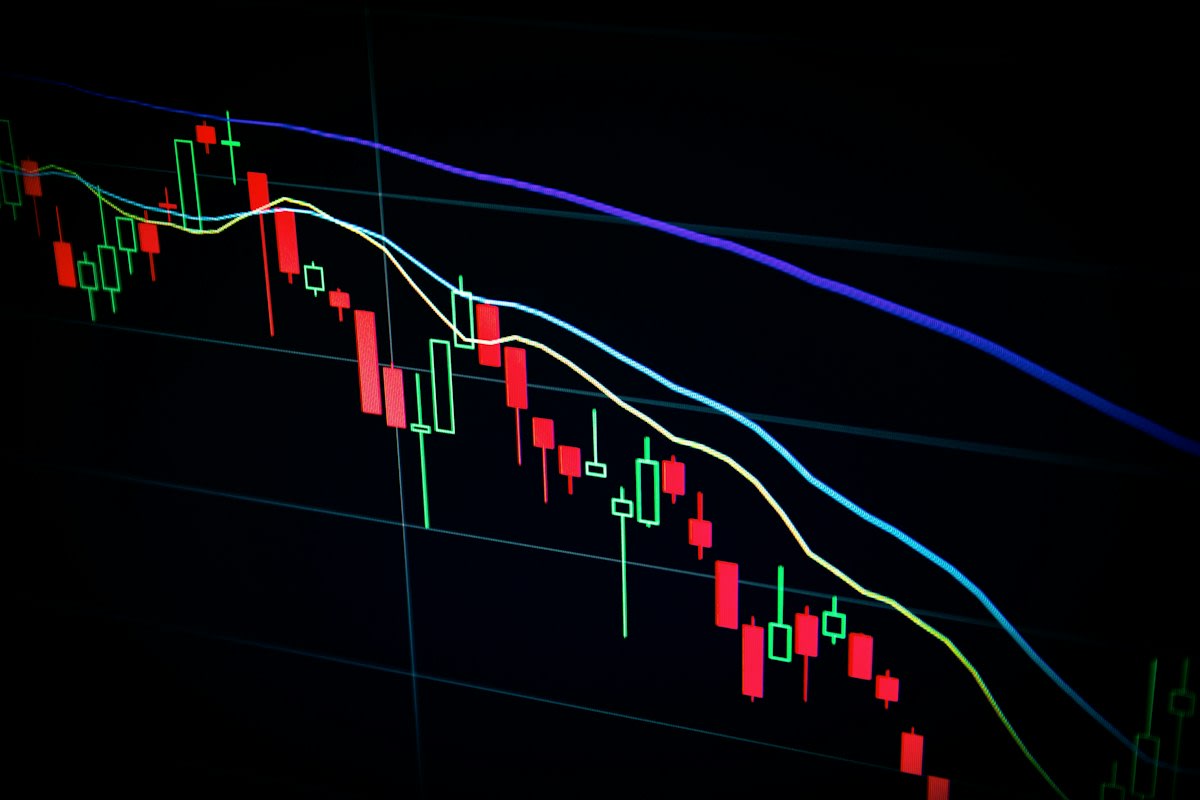
The delta between 2025 and 2026 is clear. A year ago, the market rewarded the loud, AI-driven expansion. Today, it punishes the over-extended. This instability is driving a hard turn toward wealth invisibility. If your assets are tied to a public ticker, you are subject to the whims of a market that reacts with mechanical failure to the slightest hint of infrastructure overspend. The move is simple: erase the trail. Move the assets. Fade into the background.
The Stealth Mode Mandate
Invisibility is not just about hiding money; it is about hiding intent. We see this emerging in the startup ecosystems of Asia. In India, the pet food and appliance startup Smylo is currently raising $3.2 million for expansion, yet it continues to operate in stealth mode (Source: Indian Retailer, 2026). Why the secrecy? The founder, an alumnus of the Indian School of Business with a pedigree from Dyson, Walmart, and Nestle, understands a critical asymmetry. By remaining invisible, a company can develop premium consumer appliances without alerting competitors to its product engineering breakthroughs until the moment of launch in 2027 (Source: Indian Retailer, 2026).
This is the new status symbol. The ability to secure millions in capital without a public press release. The capacity to build a global footprint while remaining a ghost in the machine. It is a strategic lag. By the time the market notices the player, the player has already captured the terrain. This is not about modesty. It is about the tactical advantage of the unknown.
"The Triton team is a strong strategic fit for Marsh Agency as we continue to expand our capabilities to serve clients with a wide range of personal risks."— Pete Walther, President and CEO of Marsh Agency’s Private Client Services
This drive for invisibility extends into the very insurance policies that protect these assets. The recent acquisition of Triton Insurance Agency by Marsh highlights a growing demand for hyper-specialized, discreet risk management (Source: Insurance Journal, 2026). Triton specializes in marine and yacht insurance for high-net-worth individuals, focusing on hull and other marine coverage (Source: Insurance Journal, 2026). For the ultra-wealthy, a yacht is not just a luxury; it is a mobile, private jurisdiction. Insuring these assets through specialized agencies allows for a layer of separation between the owner's public identity and their physical assets.

The Psychology of the Invisible Asset
Is wealth management a financial exercise or a psychological one? In South Korea, the conversation is shifting toward the internal state of the investor. Professor Kwon Young-chan, a counseling psychologist, argues that high self-esteem is the actual key to successful wealth management (Source: Star News Korea, 2026). He posits that psychological resilience is the first condition for happy success (Source: Star News Korea, 2026). This suggests a growing realization: the stress of maintaining a public image of wealth is a drain on the very resilience required to manage it.
When wealth is invisible, the ego is decoupled from the asset. The investor is no longer performing for a public audience. This creates a mental buffer. Instead of reacting to the noise of the rich list, the invisible wealthy focus on the long-term tether of their holdings. They avoid the collision between their private life and their public valuation.
As a practitioner in the high-net-worth space, I have seen the internal friction this causes. There is a constant war between the legacy wealth managers—who still believe in the prestige of the 'family name'—and the new guard, who view a searchable name as a security flaw. I have sat in rooms where founders argue with their VCs; the VC wants a loud 'funding announcement' to signal market dominance, while the founder wants to keep the round quiet to avoid tipping off incumbents. The friction is real. The winners are those who successfully negotiate their way into the shadows.
| Metric | Public Wealth (The Old Status) | Invisible Wealth (The New Status) |
|---|---|---|
| Primary Signal | Billionaire Index Ranking | Stealth Mode Operations |
| Risk Profile | Market Volatility (e.g., Oracle share drops) | Asymmetric Information Advantage |
| Asset Protection | Standard Corporate Disclosure | Specialized Marine/Private Agency (Triton/Marsh) |
| Psychological Focus | External Validation/Prestige | Internal Resilience (Kwon Young-chan model) |
Ultimately, the erasing of the digital paper trail is an adaptation. In an era of total transparency, the only remaining luxury is privacy. The transition from the 'loud' wealth of 2025 to the 'stealth' wealth of 2026 is not a trend; it is a survival mechanism. Those who continue to treat their net worth as a public scoreboard will find themselves siphoned by the same volatility that crashed the Oracle empire.
Fact-Check & Accuracy Note
This analysis relies on data from Business Insider regarding Larry Ellison's net worth fluctuations (2026), Indian Retailer's report on Smylo's stealth funding (2026), and Insurance Journal's coverage of the Marsh-Triton acquisition (2026). Academic debate continues regarding the correlation between psychological resilience and financial success, as highlighted by the work of Professor Kwon Young-chan in South Korea.
Editorial Note
Editorial Note: The shift toward 'stealth mode' is particularly prevalent in the AI infrastructure and premium consumer hardware sectors, where first-mover advantage is often compromised by early public disclosure.