'World Cup lost its credibility': Blatter says politics overshadowed football
Source Entity
TOI SPORTS DESK
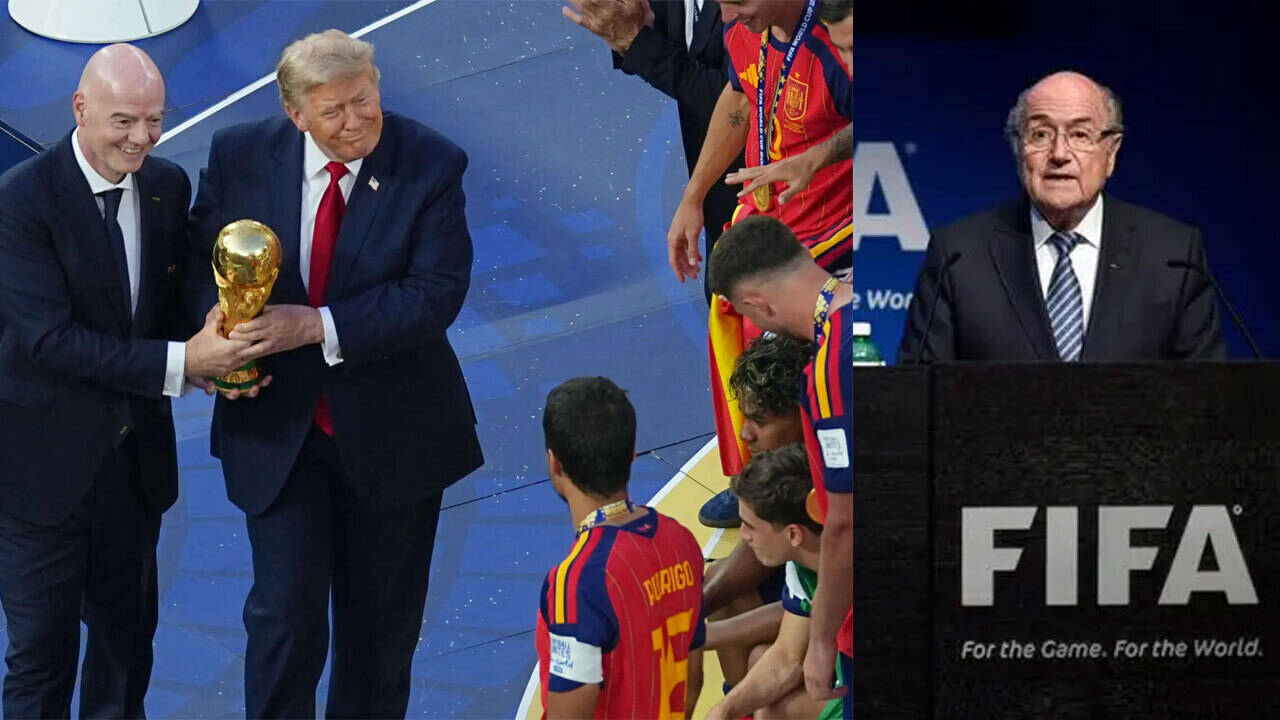
The 2026 World Cup has been marred by allegations of political influence and biased officiating. Former FIFA president Sepp Blatter questioned the tournament's credibility, while Cristiano Ronaldo sparked controversy by engaging with social media posts alleging FIFA favoritism toward Argentina.
The 2026 World Cup: A Tournament Defined by Controversy
The 2026 FIFA World Cup, designed as a grand spectacle with an expanded 48-team format, has concluded amidst a firestorm of skepticism regarding its integrity. While FIFA president Gianni Infantino has lauded the event for achieving record-breaking attendance and viewership figures, the public perception has been significantly dampened by persistent allegations of political interference and uneven officiating. The tournament, which saw Spain emerge victorious over Argentina in a grueling final, has left the footballing world divided over whether the expansion of the format diluted the sport's quality or if external influences compromised the competitive balance.
The Shadow of Allegations
One of the most notable incidents involving the tournament’s perception occurred when Cristiano Ronaldo’s official Instagram account liked a post suggesting that FIFA had actively aided Argentina’s journey to the final. Although Ronaldo has remained silent regarding this digital interaction, the move served as a lightning rod for fans who felt that Argentina’s path—characterized by dramatic, high-stakes matches—was facilitated by preferential treatment. This instance highlights the growing intersection between star-power influence and the erosion of trust in global sporting governance, where social media engagement by high-profile athletes can shift the public discourse instantly.
Blatter’s Critique and Institutional Crisis
Former FIFA president Sepp Blatter has added his voice to the chorus of critics, explicitly stating that the tournament has lost its credibility due to overarching political influence. Blatter’s call for fans and associations to "reclaim football" suggests a deep-seated institutional crisis that transcends simple refereeing errors. By pointing to political overshadowing, Blatter touches upon the long-standing tension between FIFA’s administrative ambitions and the autonomy of the game itself, a theme that has historically haunted the organization during major international cycles.
The Impact of the 48-Team Format
Beyond the controversies, the logistical shift to a 48-team tournament remains a subject of intense debate. While Infantino points to the commercial success and global engagement as proof of progress, the on-field reality was often overshadowed by the narrative of a "rigged" or politically charged environment. The defeat of Argentina by Spain in extra time during the final provided a dramatic conclusion to the tournament, yet the victory was quickly contextualized by the preceding allegations of bias, preventing the match from being remembered solely for its technical merits.
Future Implications for FIFA
Looking forward, the 2026 tournament serves as a cautionary tale for FIFA. The organization now faces the difficult task of restoring its image in the eyes of players and fans who feel that commercial expansion has come at the cost of competitive purity. The combination of high-profile social media dissent and public criticism from former leadership suggests that the governing body will need to implement more transparent processes if it hopes to maintain the prestige of future World Cups. The legacy of this tournament will likely be defined not by the goals scored or the trophy lifted by Spain, but by the ongoing struggle to reconcile the business of football with the sport's integrity.
Multiple Citing Sources