Aadhaar card not valid document to determine age: Supreme Court
Source Entity
India Latest News: Top National Headlines Today & Breaking News | The Hindu
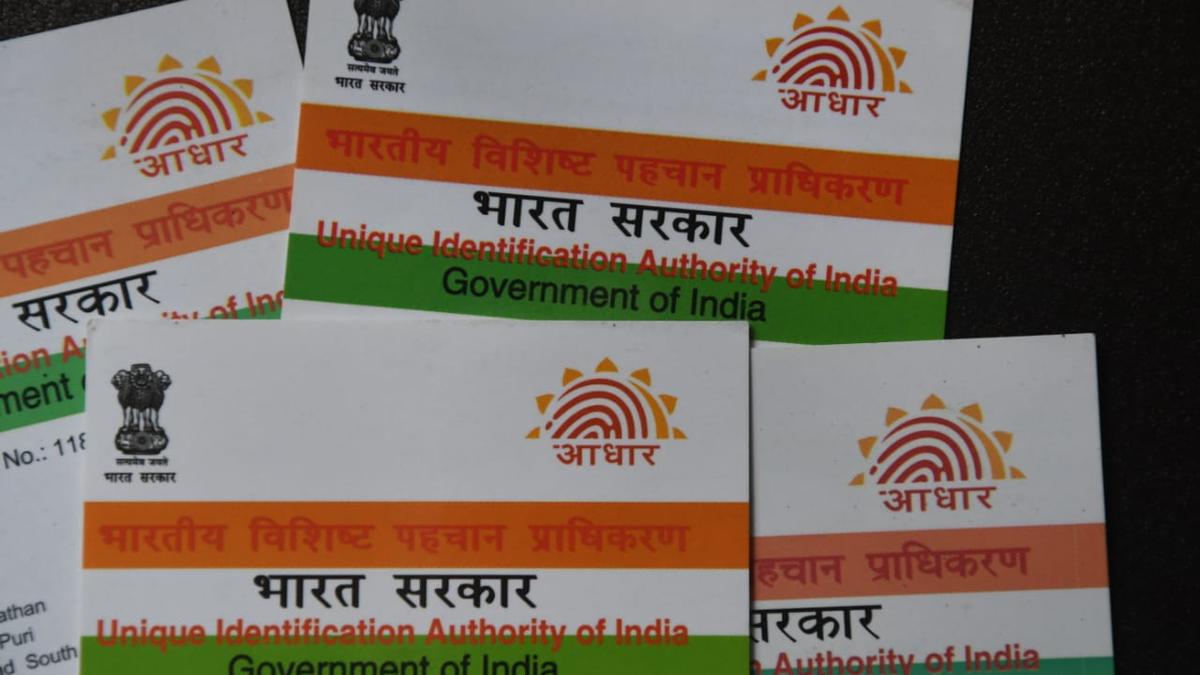
The Supreme Court and Karnataka state authorities have clarified that Aadhaar cards are not valid proof of age for legal purposes. Officials must now rely on school certificates, birth certificates, or medical records to verify age in cases involving compensation or marriage registration.
The Legal Status of Aadhaar as Proof of Age
Recent judicial and administrative actions have solidified a critical legal distinction: the Aadhaar card, while a robust tool for identity verification, is not a valid document for determining an individual's date of birth or age. This clarification stems from a recent Supreme Court ruling involving a road accident compensation case and a concurrent administrative directive from the Karnataka Department of Stamps and Registration regarding marriage documentation.
Supreme Court Intervention
A bench comprising Justices Sanjay Karol and Ujjal Bhuyan recently set aside a Punjab and Haryana High Court order that had relied on an Aadhaar card to determine the age of a deceased road accident victim. The Supreme Court emphasized that the Unique Identification Authority of India (UIDAI) itself has clarified, via circulars referencing Ministry of Electronics and Information Technology memoranda, that Aadhaar is strictly for identity verification. The Court mandated that age determination must follow the statutory hierarchy established under the Juvenile Justice (Care and Protection of Children) Act, 2015, specifically prioritizing school leaving certificates.
Curbing Child Marriage in Karnataka
Parallel to the judicial shift, the Karnataka Department of Stamps and Registration has prohibited the use of Aadhaar for age verification in marriage registrations. This move was prompted by systemic issues where discrepancies between Aadhaar data and actual birth records facilitated child marriages. By mandating the use of birth certificates, school records, or medical certificates—as outlined in the Prohibition of Child Marriage (Karnataka) Rules, 2014—the state aims to create a more rigorous and reliable documentation trail.
The Hierarchy of Evidence
Both the Supreme Court and state authorities are reinforcing a standardized hierarchy of documentary evidence. In the Indian legal context, the school leaving certificate is often prioritized due to its historical reliability and the formal administrative process required to alter it. By stripping Aadhaar of its 'proof of age' status, the legal system is effectively correcting a trend of over-reliance on a digital identity tool that was never intended to serve as a primary record of birth.
Broader Implications and Future Trends
This trend signals a broader push toward administrative accuracy in public records. As India continues to digitize, the distinction between 'proof of identity' (who you are) and 'proof of age' (when you were born) is becoming legally paramount. We can expect future judicial precedents to continue narrowing the scope of Aadhaar to its original intent, while simultaneously strengthening the reliance on traditional, secondary-verified documents like birth certificates to prevent fraud in sensitive areas such as insurance claims, legal marriages, and judicial age-determination proceedings.
Verification Required?