Over 82,000 sign AAP's petition against mandatory E20 fuel
Source Entity
TOI NEWS DESK
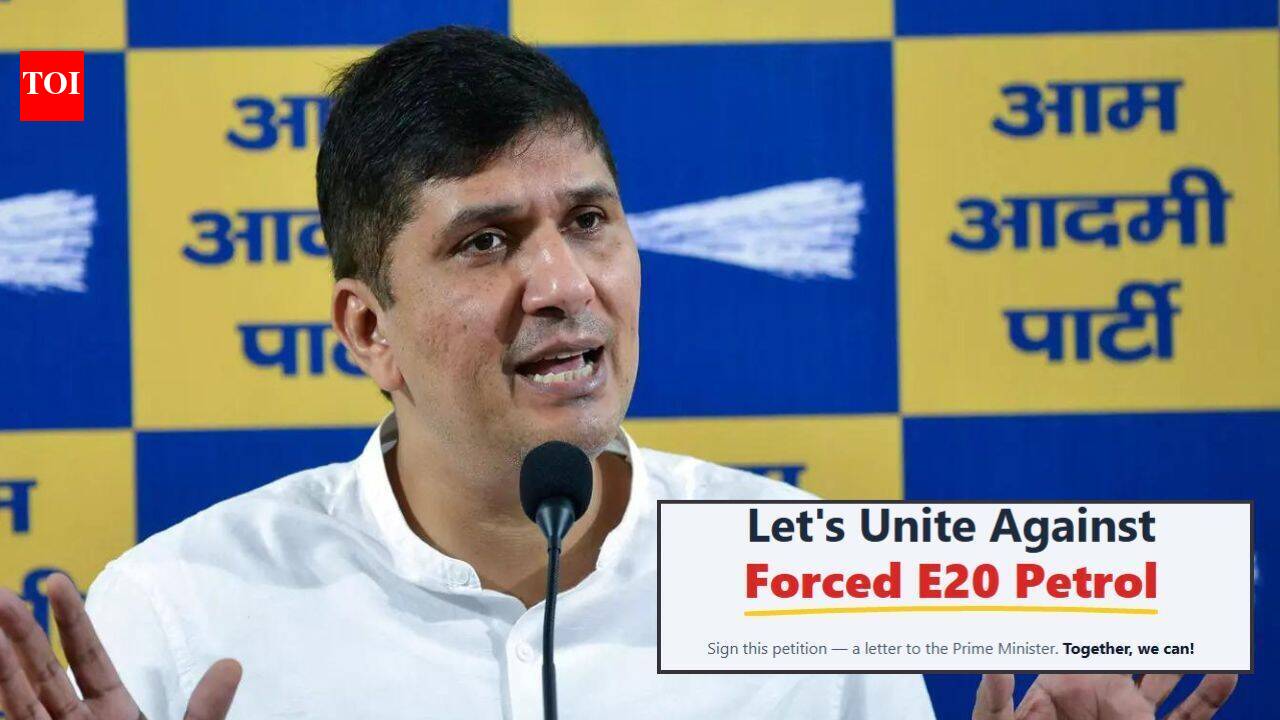
The Aam Aadmi Party (AAP) has garnered over 82,000 signatures on a petition opposing the mandatory implementation of E20 fuel (a 20% ethanol-gasoline blend) in India, citing concerns over vehicle compatibility and consumer costs.
The Pushback Against E20 Fuel: Analyzing AAP's Petition
In a significant move highlighting the friction between national environmental policy and consumer practicality, the Aam Aadmi Party (AAP) has reported that over 82,000 citizens have signed a petition against the mandatory rollout of E20 fuel. E20 fuel, which consists of a blend of 20% ethanol and 80% gasoline, is a cornerstone of the Indian government's strategy to reduce dependence on crude oil imports and lower carbon emissions. However, the scale of this petition suggests a growing anxiety among vehicle owners regarding the technical and economic viability of this transition.
The Technical Conflict: Engine Compatibility and Performance
One of the primary drivers behind the petition is the concern over vehicle compatibility. Most older internal combustion engines (ICE) in India were not designed to handle high concentrations of ethanol. Ethanol is hygroscopic, meaning it absorbs water, and it can be corrosive to certain rubber seals, gaskets, and metal components within older fuel systems. For the millions of Indians driving non-E20 compliant vehicles, the mandatory shift poses a risk of premature engine wear and costly repairs. This technical gap creates a divide where newer vehicle owners may be fine, but a vast segment of the population feels left behind by a rapid policy shift.
The Economic Paradox: Energy Density and Fuel Efficiency
Beyond mechanical failure, there is a critical argument regarding fuel efficiency. Ethanol has a lower energy density compared to pure gasoline. This means that a vehicle running on E20 fuel typically requires more fuel to cover the same distance than it would with E10 or pure petrol. For the average commuter, this translates to a decrease in mileage, effectively increasing the cost of travel despite the government's intent to stabilize fuel prices through domestic production. The AAP petition taps into this economic frustration, framing the E20 mandate as an indirect financial burden on the middle and lower-income classes.
The 'Food vs. Fuel' Debate and Agricultural Impact
While the government promotes ethanol blending as a boon for sugarcane and grain farmers, the petition reflects a broader skepticism regarding food security. The production of ethanol requires massive quantities of feedstock, primarily corn and sugarcane. Critics argue that diverting these resources toward fuel production could lead to inflation in food prices and jeopardize food security. By opposing the mandatory nature of E20, the movement highlights the tension between achieving 'Green Energy' targets and maintaining stable food supply chains, suggesting that the environmental gain may come at a steep socio-economic cost.
Political Mobilization and Policy Implications
From a political standpoint, AAP's campaign is a strategic attempt to mobilize the urban middle class, a demographic highly sensitive to vehicle maintenance costs and fuel prices. By positioning themselves as the protectors of the consumer against a 'forced' transition, AAP is challenging the central government's top-down approach to the Ethanol Blending Program (EBP). This movement indicates that while the public generally supports environmental sustainability, there is strong resistance to policies that impose immediate personal financial loss or technical risk without adequate transition support or subsidies for vehicle upgrades.
Conclusion: Balancing Sustainability with Practicality
The surge in signatures for the AAP petition serves as a critical feedback loop for policymakers. While the transition to E20 is essential for India's long-term goal of reducing its oil import bill and meeting climate commitments, the current unrest suggests that the implementation lacks a sufficient 'safety net' for existing vehicle owners. Moving forward, the government may need to consider phased implementation, providing incentives for engine modifications, or ensuring a steady supply of lower-blend fuels to prevent widespread consumer dissatisfaction and mechanical failure across the country's fleet.