Does AfD's big win in Germany signal a 'far right' uprising in Europe?
Source Entity
NIRMALYA DUTTA
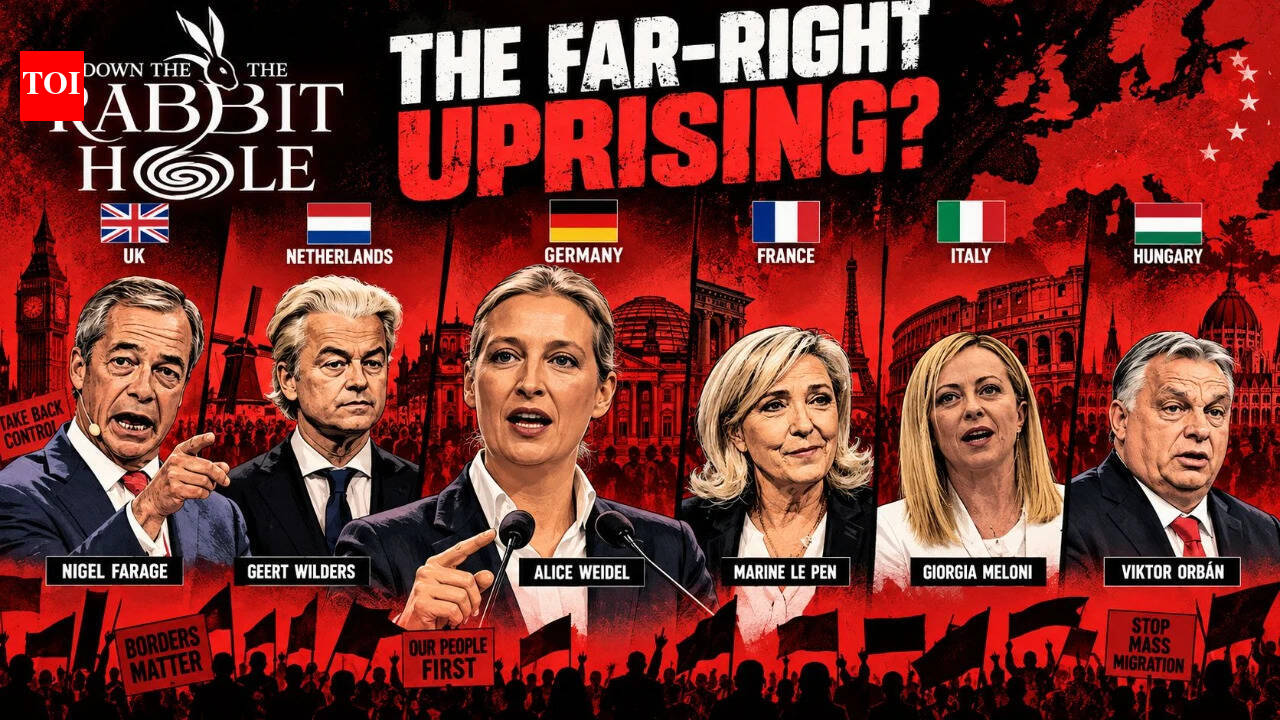
The rise of the AfD and similar European movements reflects a growing disconnect between establishment politics and voter priorities. This trend suggests a linguistic and political shift where voters increasingly reject the labels used by traditional power structures to dismiss their concerns.
The Shifting Landscape of European Politics
The recent electoral successes of the Alternative for Germany (AfD) have ignited a fierce debate regarding the trajectory of European politics. By channeling the spirit of Otto von Bismarck’s observation that politics is the "art of the possible," the modern establishment has arguably failed to address the tangible concerns of the electorate. Instead, current political discourse is often characterized by a tendency to dismiss voter demands as irresponsible or nativist, effectively creating a barrier between the governing class and the governed.
The Vocabulary of Control
Drawing on the theories of Noam Chomsky, it becomes evident that language is being utilized as a tool for social management. Terms such as "far right" are frequently deployed by the establishment to marginalize political dissent. When these labels are used ad nauseam, they lose their descriptive utility and transition into tools of containment, intended to stifle debate on sensitive issues like immigration, national identity, and economic sovereignty.
Defining the Populist Surge
Figures such as Alice Weidel, Marine Le Pen, Geert Wilders, and Viktor Orbán represent a diverse spectrum of political thought that is collectively categorized by opponents as a "far-right uprising." However, the core of this movement is better defined as populist, seeking to reclaim the political agency that many voters feel has been surrendered to supra-national institutions and technocratic governance. The AfD, specifically, has gained momentum by positioning itself as the only party willing to openly acknowledge the systemic problems that the establishment refuses to address.
The Clash of Ideologies
This phenomenon reflects the tension described in 'The Open Society and Its Enemies,' where the desire for security and traditional stability clashes with the liberal international order. As these parties gain electoral traction, the European establishment finds itself in a precarious position. The refusal to engage with the root causes of voter dissatisfaction—often dismissed under the banner of combating "far-right" ideologies—has only served to deepen the divide and increase the appeal of anti-establishment rhetoric.
Conclusion: A Crisis of Representation
The rise of the AfD and its counterparts across Europe is less about a sudden ideological shift and more about a fundamental crisis of representation. By focusing on the labeling of these parties rather than the substance of their platforms, political elites are missing the forest for the trees. As long as the gap between the "art of the possible" and the reality of the voter experience remains, the momentum of these populist movements is unlikely to dissipate, signaling a long-term restructuring of the European political map.