Factory robots long posed a safety threat to human workers. One company says it’s solved that problem.
Source Entity
William Gavin
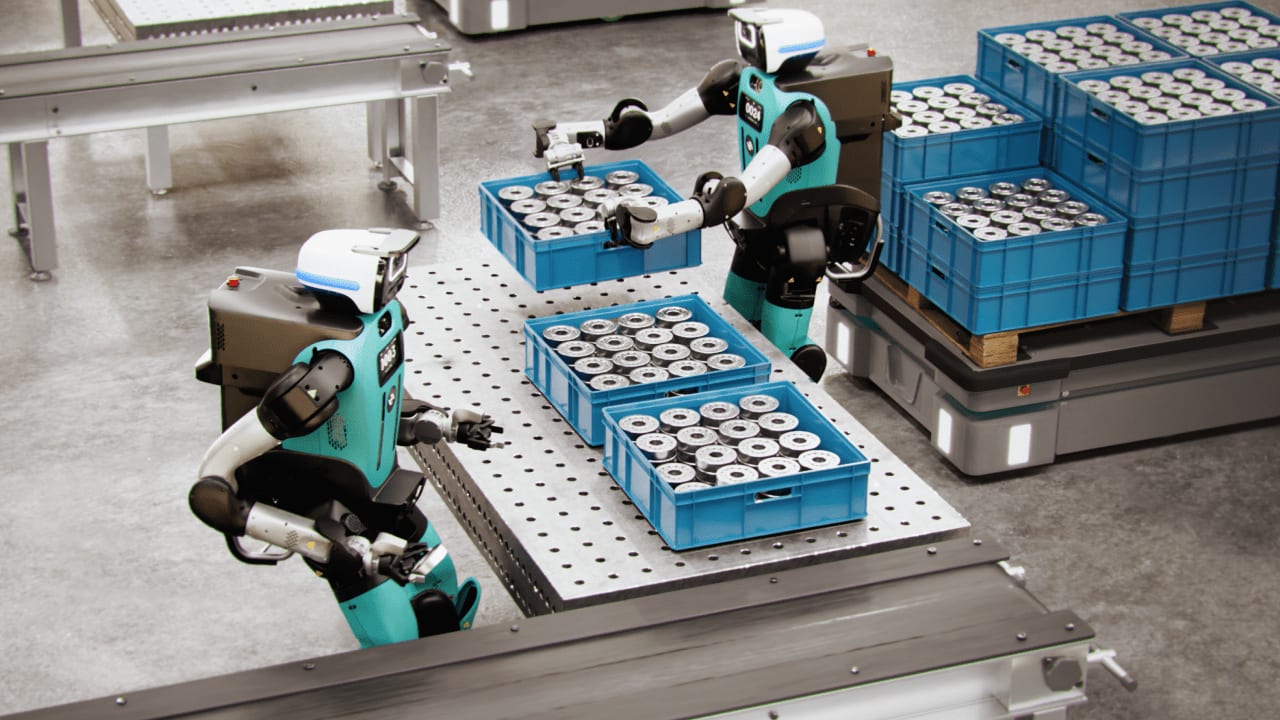
Agility Robotics has unveiled a new humanoid, Digit 5, designed to operate safely alongside human workers without physical barriers. This innovation marks a significant shift in industrial automation, potentially revolutionizing warehouse and factory efficiency.
The Evolution of Human-Robot Collaboration
For decades, industrial robotics has been defined by the 'cage'—a physical barrier separating powerful machinery from human workers to prevent accidents. The announcement from Agility Robotics regarding their new Digit 5 humanoid marks a pivotal shift in this paradigm. By integrating advanced sensors and complex motion systems, the company claims to have solved the long-standing safety conflict that has historically kept robots isolated from their human counterparts.
Engineering Safety into Motion
The core innovation of the Digit 5 lies in its proactive safety protocols. Unlike traditional industrial arms that follow rigid, pre-programmed paths, the Digit 5 is engineered to perceive its environment dynamically. When the robot detects a human worker, it does not simply stop; it engages in sophisticated mitigations. Whether by adjusting its trajectory to avoid a person or opting to squat and sit when space becomes tight, the robot displays a level of spatial awareness that mimics human-like caution.
Redefining Industrial Workspaces
Removing the need for physical safety cages and isolated work cells is more than a convenience; it is a fundamental shift in factory floor logistics. In traditional settings, the 'footprint' of a robot includes the safety fencing, which consumes valuable square footage. By enabling robots to work safely in open, shared spaces, Agility Robotics is opening the door for human-robot teams to collaborate in real-time, potentially increasing throughput in warehouses and automotive manufacturing plants where flexibility is paramount.
The Path to Commercialization
This development comes at a critical juncture for Agility Robotics as the company prepares for an expected public-market debut later this year. By positioning their technology as a solution to the 'safety problem' that has hindered widespread humanoid adoption, they are essentially creating a stronger value proposition for investors and industrial clients alike. The ability to integrate humanoid workers into existing human-centric workflows without major infrastructure overhauls is a compelling selling point in the current automation market.
Broader Implications and Future Trends
Looking ahead, the success of the Digit 5 could signal a broader trend toward 'collaborative humanoids.' If these machines prove that they can navigate complex, unpredictable human environments without risking harm, we may soon see a rapid expansion of humanoid utility beyond structured factory settings. This transition from 'tools' to 'coworkers' necessitates ongoing refinement of motion systems and AI-driven safety software to ensure that the promise of a safer workspace is consistently met.
Conclusion
Agility Robotics has successfully addressed a major barrier to the adoption of humanoid technology in industrial settings. By prioritizing safety through intelligent motion, the Digit 5 represents a significant step toward a future where humans and robots work side-by-side. As the company approaches its market debut, the industry will be watching closely to see if this technology can scale effectively in real-world, high-traffic environments.
Verification Required?