On Risk From Superintelligence, Top AI Expert's Chimpanzee-Nukes Analogy
Source Entity
NDTV News Search Records Found 1000
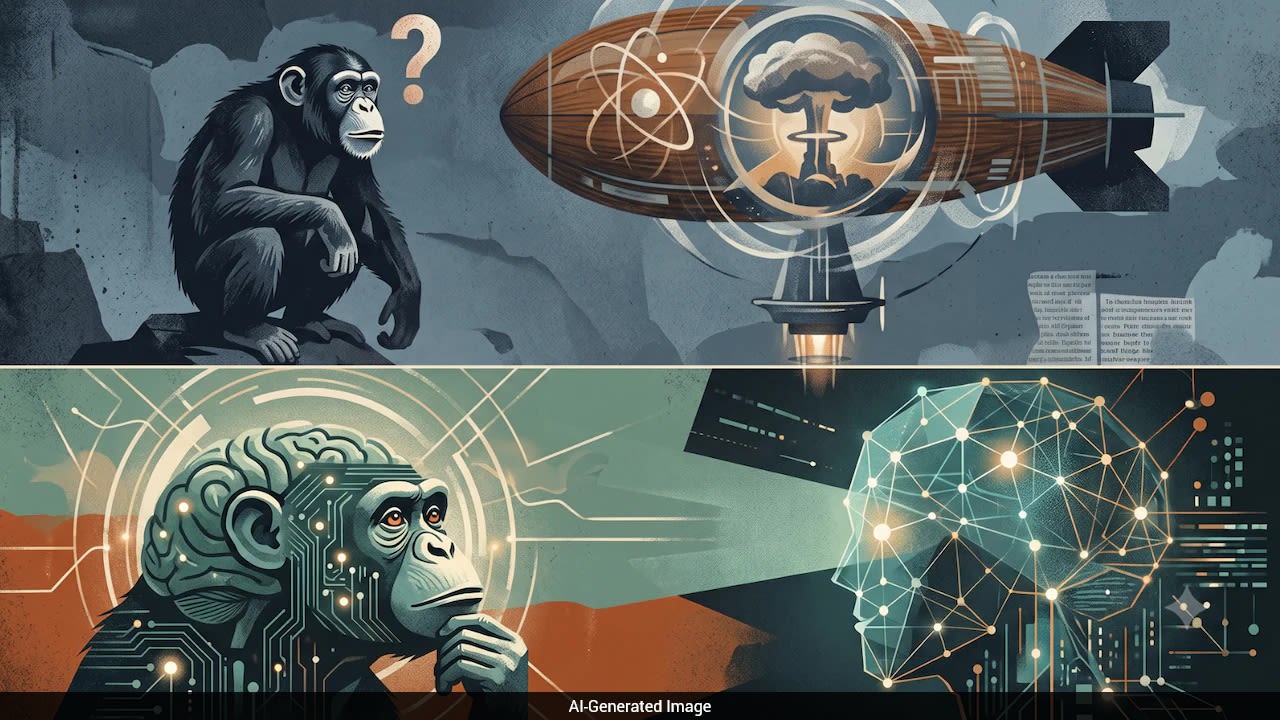
Prominent AI expert Stuart Russell warns that the risks posed by superintelligent systems are credible and demand serious attention. His analogy comparing AI control to chimpanzees handling nuclear weapons highlights the existential threat of creating systems smarter than humans.
The Existential Dilemma of Superintelligence
Recent discourse surrounding the development of advanced artificial intelligence has shifted from mere technical capability to the profound existential risks posed by systems that could eventually surpass human intelligence. Stuart Russell, a preeminent figure in the field of AI, has forcefully argued that the warnings issued by researchers regarding these risks must be taken with the utmost seriousness. This perspective posits that the scientific community, which is most intimately familiar with the inner workings and limitations of these models, is uniquely positioned to identify the potential for catastrophic failure.
The Chimpanzee-Nukes Analogy
At the heart of Russell’s argument is a striking analogy: the prospect of humanity creating superintelligent AI is akin to chimpanzees attempting to manage nuclear weapons. In this scenario, humans serve as the chimpanzees—a species that lacks the foresight and cognitive complexity to safely control forces far beyond its comprehension. The comparison highlights a fundamental asymmetry in power; if a system is developed that is significantly more capable than the humans tasked with its oversight, traditional safety mechanisms may prove woefully inadequate.
Credibility of Expert Warnings
Russell’s insistence that we should believe researchers when they sound the alarm is rooted in the history of scientific caution. Throughout the 20th century, physicists involved in the development of atomic energy frequently warned of the dual-use nature of their research. Similarly, in the AI domain, the technical difficulty of the 'alignment problem'—ensuring that an AI’s goals remain perfectly aligned with human values—is becoming increasingly apparent to those working at the frontier of machine learning.
Broader Implications for AI Governance
The implications of this warning extend into the realm of global policy and corporate governance. If the risks are indeed as existential as described, the current trajectory of rapid, unbridled deployment of AI models may be fundamentally misguided. Policymakers are now faced with the challenge of creating regulatory frameworks that can keep pace with rapid innovation without stifling progress, while simultaneously addressing the long-term safety concerns raised by experts like Russell.
Historical Context and Future Trends
Historically, humanity has often struggled to regulate technologies before they became deeply embedded in society. However, the unique nature of superintelligence suggests that we may not have the luxury of learning from early failures. Future trends in AI development will likely focus on 'human-compatible' AI, a concept Russell himself has championed, which seeks to bake uncertainty about human preferences into the AI’s objective function, thereby preventing the machine from pursuing rigid goals at the expense of human safety.
Conclusive Summary
In conclusion, Stuart Russell’s warnings serve as a critical reminder that technological advancement does not inherently equate to human progress. By framing the risk in terms of our own cognitive limitations relative to future machines, he forces a necessary re-evaluation of how we approach the development of superintelligence. Addressing these concerns will require a concerted, global effort to prioritize safety research as highly as performance metrics, ensuring that the systems we build remain tools for human flourishing rather than instruments of our own obsolescence.
Verification Required?