40 years ago July 14, 1986: Five more killed in Gujarat
Source Entity
The Indian Express
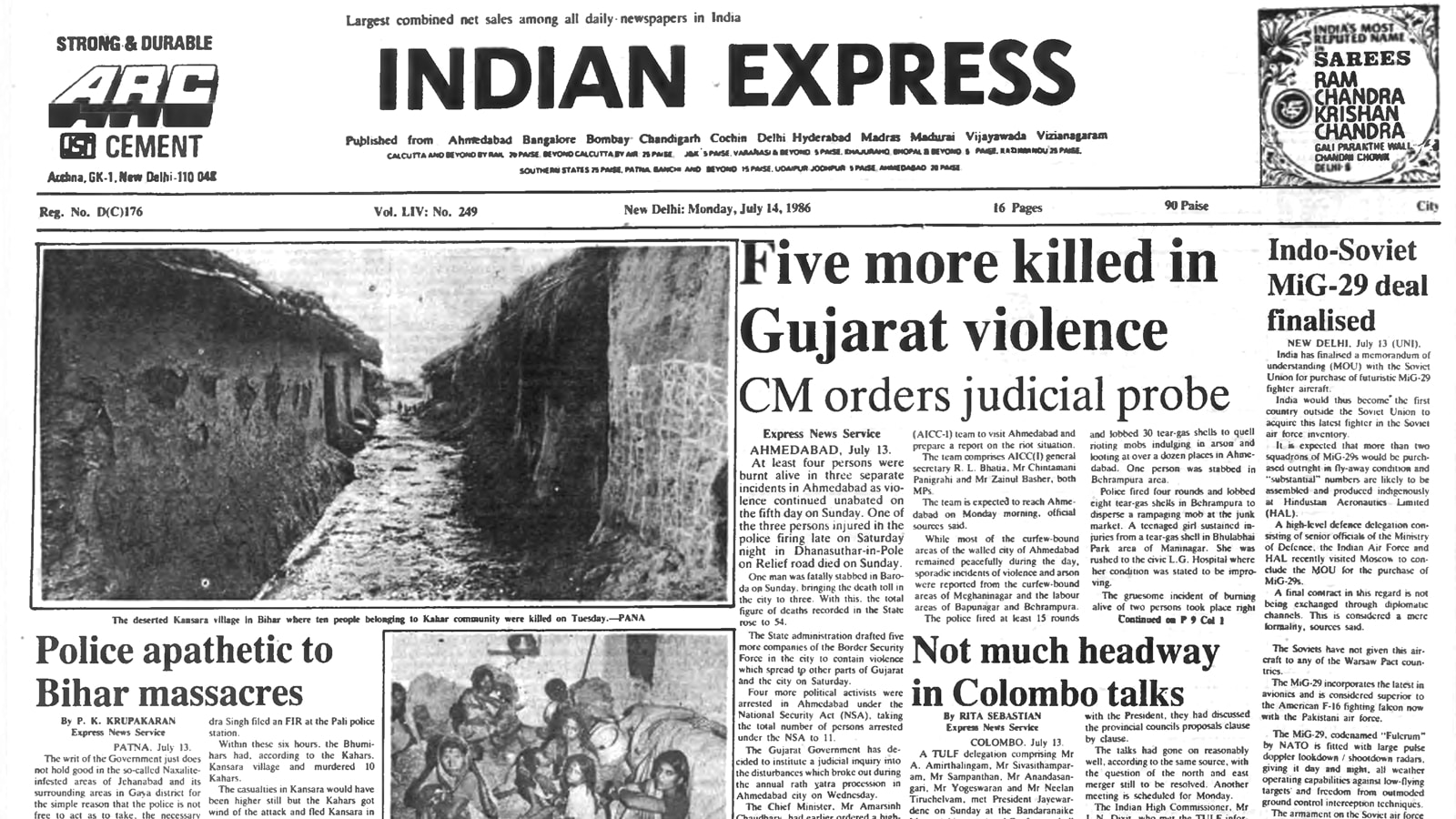
At least four persons were burnt alive in three separate incidents in Ahmedabad as violence continued unabated on the fifth day. One of the three persons injured in the police firing late on Saturday ...
The Tragedy of July 1986: Analyzing the Ahmedabad Violence
On July 14, 1986, the city of Ahmedabad in Gujarat was gripped by a wave of brutal communal violence. Reports from the time indicate a harrowing scene where at least four individuals were burnt alive across three separate incidents. This particular day marked the fifth consecutive day of unrest, suggesting a systemic failure in maintaining law and order and a rapid escalation of tensions that the local administration struggled to contain. The inclusion of police firing as a means of crowd control further underscores the volatility of the situation, highlighting a state of emergency where lethal force became the primary tool for stabilization.
The Anatomy of the Unrest
The specific nature of the violence—burning people alive—points to a high degree of animosity and a desire for terror rather than mere spontaneous clashes. In the context of Ahmedabad's history, such incidents often emerged from deep-seated socio-economic frictions and religious polarizations. The fact that the violence continued "unabated" for five days indicates that the triggers were not isolated sparks but were fueled by a broader atmosphere of instability. The police firing mentioned in the reports reflects the desperate attempt by security forces to prevent the spread of riots to other parts of the city, though such actions often added to the casualty count and increased public resentment.
Historical Socio-Political Context
To understand the events of July 1986, one must look at the broader landscape of Gujarat during the 1980s. This era was characterized by shifting political alignments and an increase in identity-based mobilization. Ahmedabad, as a commercial hub with a diverse population, often became a flashpoint for communal tensions. The 1980s saw a pattern of sporadic but intense violence that mirrored national trends of communal polarization. These events were rarely isolated; they were typically the result of rumors, provocative rhetoric, or local disputes that were quickly amplified by communal networks, leading to the kind of widespread carnage described in the report.
Implications of State Response
The report's mention of "police firing late on Saturday" suggests a reactive rather than proactive security strategy. When violence reaches a stage where citizens are being burnt alive in multiple locations, it indicates a breakdown of intelligence and a failure of the early warning systems. The reliance on firing upon crowds typically happens when the police lose the ability to manage mobs through non-lethal means, often resulting in a cycle of revenge and further instability. This historical precedent shows how the perceived inadequacy or bias of state machinery during riots can leave long-term scars on the collective psyche of the affected communities.
Long-term Legacy and Future Trends
The violence of 1986 served as a grim precursor to later, more expansive conflicts in the region. The patterns observed here—the rapid spread of violence, the use of fire as a weapon, and the struggle of the state to maintain peace—set a template for communal unrest that would haunt Gujarat for decades. However, these tragedies also led to the gradual evolution of riot control tactics and the eventual implementation of more stringent laws to curb hate speech and communal incitement. Studying these archival reports is critical for modern policymakers to understand the triggers of urban violence and the necessity of community-based peace-building initiatives.
Conclusion
The events of July 14, 1986, remain a somber reminder of the fragility of social cohesion. The loss of five lives on a single day, amidst a week of chaos, illustrates the devastating human cost of communal hatred. By analyzing these events through a historical lens, it becomes clear that the violence was not an anomaly but a symptom of deeper societal fissures that required more than just police firing to heal. Remembering these incidents is essential to ensuring that the lessons of the past are applied to prevent such atrocities in the future.