What reversing, modernising old games tells us about the economic impact of AI
Source Entity
Hacker News
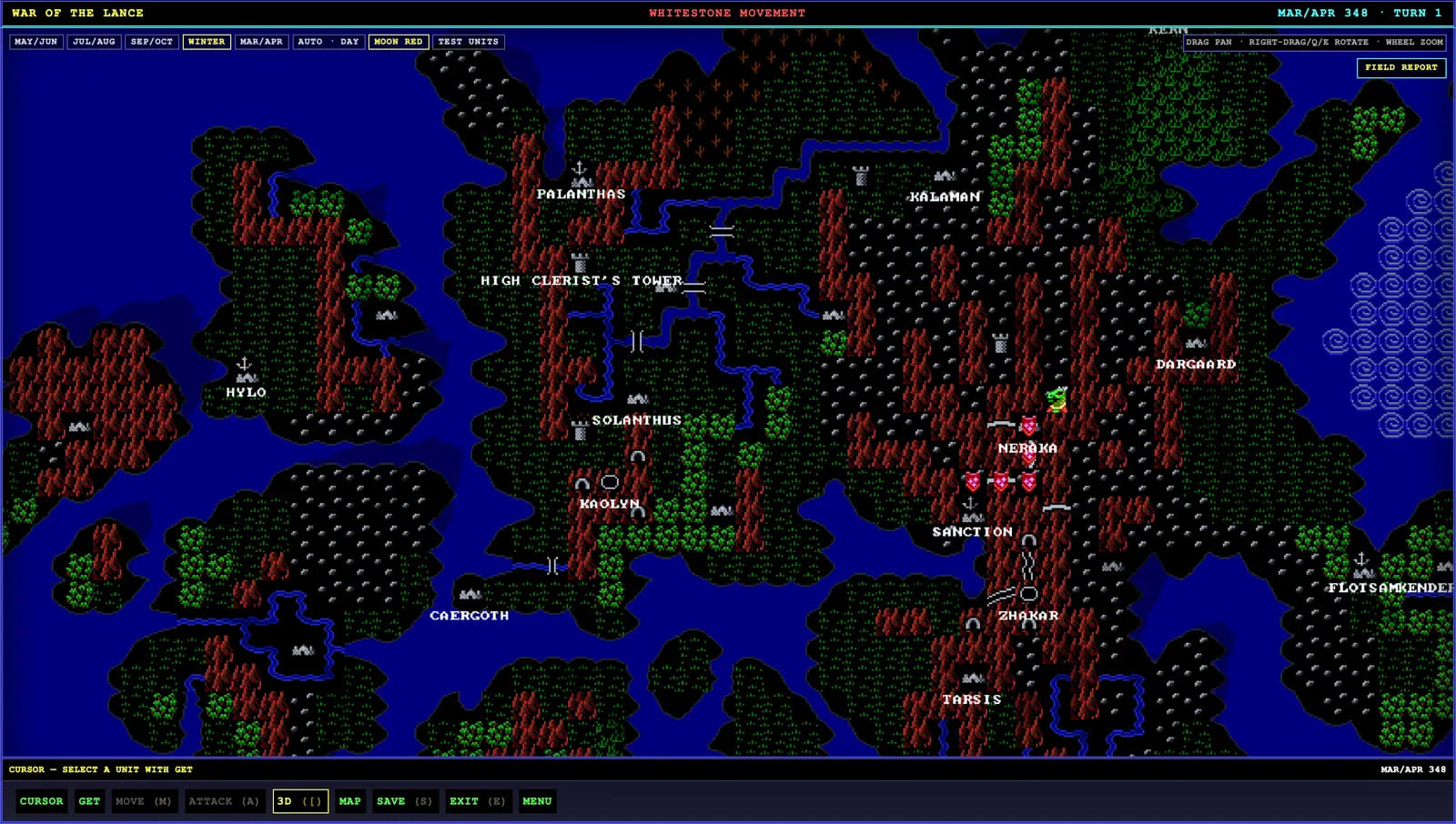
Developer Georg Zoeller has demonstrated the potential of AI-assisted software modernization by porting the 1989 game 'War of the Lance' to modern browsers. This process highlights how AI can accelerate legacy code preservation and the economic viability of reviving vintage digital assets.
The Intersection of Legacy Software and AI Modernization
Software developer Georg Zoeller has recently showcased a compelling use case for artificial intelligence in the realm of digital preservation: the modernization of the 1989 strategy game War of the Lance. By utilizing a localized instance of the Qwen-3.8-Flash-Next model, Zoeller successfully reverse-engineered the original codebase to port the title into a modern, browser-based environment powered by the Three.js rendering engine. This project serves as a practical blueprint for how AI can bridge the gap between obsolete programming architectures and contemporary web standards.
The Mechanics of AI-Assisted Porting
The process, which Zoeller termed 'Code Harness assisted modernisation,' highlights a shift in how developers approach legacy software. Traditionally, porting a game from the late 1980s would require an immense manual effort to decipher undocumented assembly code or proprietary logic. By feeding the game's logic and rendering rules into an AI model, the developer was able to automate the translation of these rules into a format compatible with modern JavaScript-based engines. Despite VRAM constraints on a single workstation, the AI proved capable of maintaining the fidelity of the original game rules while successfully updating the rendering pipeline.
Economic Implications for Digital Preservation
The economic impact of this workflow cannot be overstated. For decades, the high cost of manual porting—requiring senior engineers to spend weeks or months reverse-engineering aging systems—has relegated many vintage titles to 'abandonware' status. If AI can reduce a complex porting task to a single week of development, the barrier to entry for remastering, distributing, and monetizing classic digital assets drops significantly. This creates a new economic pathway for IP holders to revitalize their back catalogs without the prohibitive overhead of traditional software engineering cycles.
Bridging the Gap: Performance and Scalability
While the current experiment was limited by hardware constraints, it hints at a future where localized, high-efficiency models can handle increasingly complex software stacks. The ability to run these models locally addresses significant concerns regarding data privacy and intellectual property security, as the source code does not need to be uploaded to a third-party cloud provider. As these models become more optimized, we can expect a surge in 'AI-assisted modernization' projects that breathe new life into legacy enterprise software and consumer applications alike.
Future Trends in Software Maintenance
Looking ahead, the success of this project points toward a future where software maintenance is no longer a burden but an automated capability. We are moving toward an era where legacy systems are not just 'maintained' but continuously 'evolved' by AI agents capable of translating logic across linguistic and architectural boundaries. The implications extend beyond gaming; industries relying on legacy mainframe codebases could utilize similar techniques to modernize critical infrastructure, significantly reducing technical debt and improving the long-term sustainability of complex digital environments.
Conclusion
Georg Zoeller’s work on War of the Lance is a microcosmic example of a larger shift in the software industry. By proving that AI can handle the heavy lifting of reverse-engineering and translation, the project demonstrates that the history of computing is no longer destined to be lost to obsolescence. As these tools mature, the economic and cultural benefits of preserving our digital heritage will become increasingly accessible, fundamentally changing how we value and maintain the software of the past.