AI cancer cures slowed by chip shortage, says UK's biggest tech boss
Source Entity
BBC News
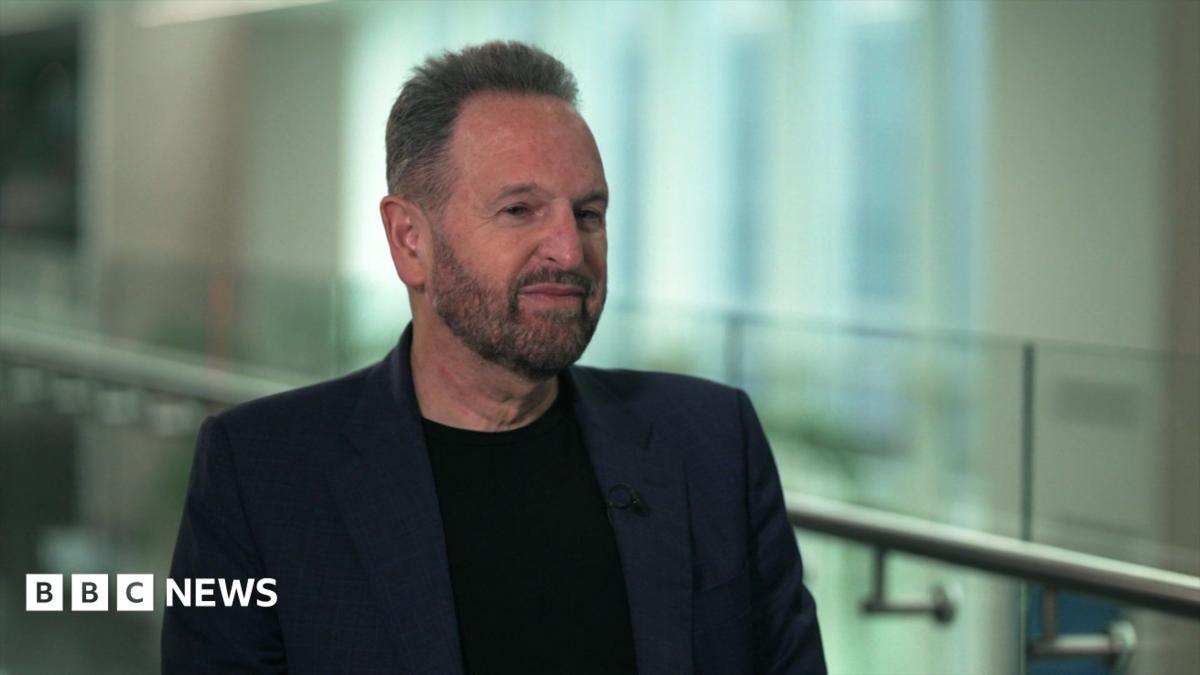
Arm CEO Rene Haas predicts AI will eventually solve cancer research challenges, though current progress is hindered by a global chip shortage. While humanoid robots are expected within five years, the UK's role in future chip manufacturing remains uncertain.
The Intersection of AI and Oncology: A New Frontier
Recent statements from Rene Haas, the CEO of Cambridge-based chip designer Arm Holdings, have ignited a significant conversation regarding the role of artificial intelligence in medical breakthroughs. Haas posited that AI possesses the potential to discover cancer cures that would otherwise remain beyond the reach of human researchers within our lifetimes. Central to this vision is the ability of advanced computing to navigate the staggering complexity of biological data, specifically the way DNA markers are influenced by cancerous mutations.
The Computational Bottleneck
Despite the optimistic outlook, the path to these medical milestones is currently obstructed by physical infrastructure limitations. Haas highlighted that the rapid scaling of AI is being constrained by a global shortage of the specialized chips required to build and maintain the massive data centers necessary for such high-level processing. Currently, modeling the interaction between DNA markers and cancer is described as "too complex" for existing infrastructure, underscoring a critical gap between theoretical potential and current hardware availability.
The Rise of Robotics
Beyond medicine, the impact of Arm’s silicon architecture extends into the physical realm. Haas projected that the integration of AI will lead to the proliferation of humanoid robots within the next five years. Given that Arm designs the central processing units (CPUs) for hundreds of billions of devices—ranging from smartphones and smartwatches to automotive systems—the company is uniquely positioned at the heart of this technological shift. The evolution of these robots depends heavily on the efficiency and availability of the chips that serve as their "brains."
Geopolitical and Manufacturing Realities
While Arm remains a titan of the UK tech sector, Haas expressed skepticism regarding the feasibility of large-scale chip manufacturing within the United Kingdom. This perspective reflects broader industry challenges, as the semiconductor supply chain is highly globalized and capital-intensive. The reliance on existing, complex manufacturing hubs suggests that while the UK excels in design and intellectual property, the physical production of the silicon required for future AI and medical breakthroughs will likely remain concentrated in established international markets.
Future Outlook and Conclusion
Looking ahead, the synthesis of AI and biotechnology remains one of the most promising fields for humanity, yet it is tethered to the tangible reality of hardware production. The industry must navigate the "chip crunch" to realize the potential of AI-driven cancer modeling. As Arm continues to supply the foundational architecture for global computing, its role in enabling these advancements is pivotal. Ultimately, while the promise of curing complex diseases through AI is immense, the timeline for these breakthroughs will be dictated by our collective ability to scale the underlying computational infrastructure.