AI has not triggered DeFi ‘hackpocalypse,’ Dragonfly partner says
Source Entity
Cointelegraph by Zoltan Vardai
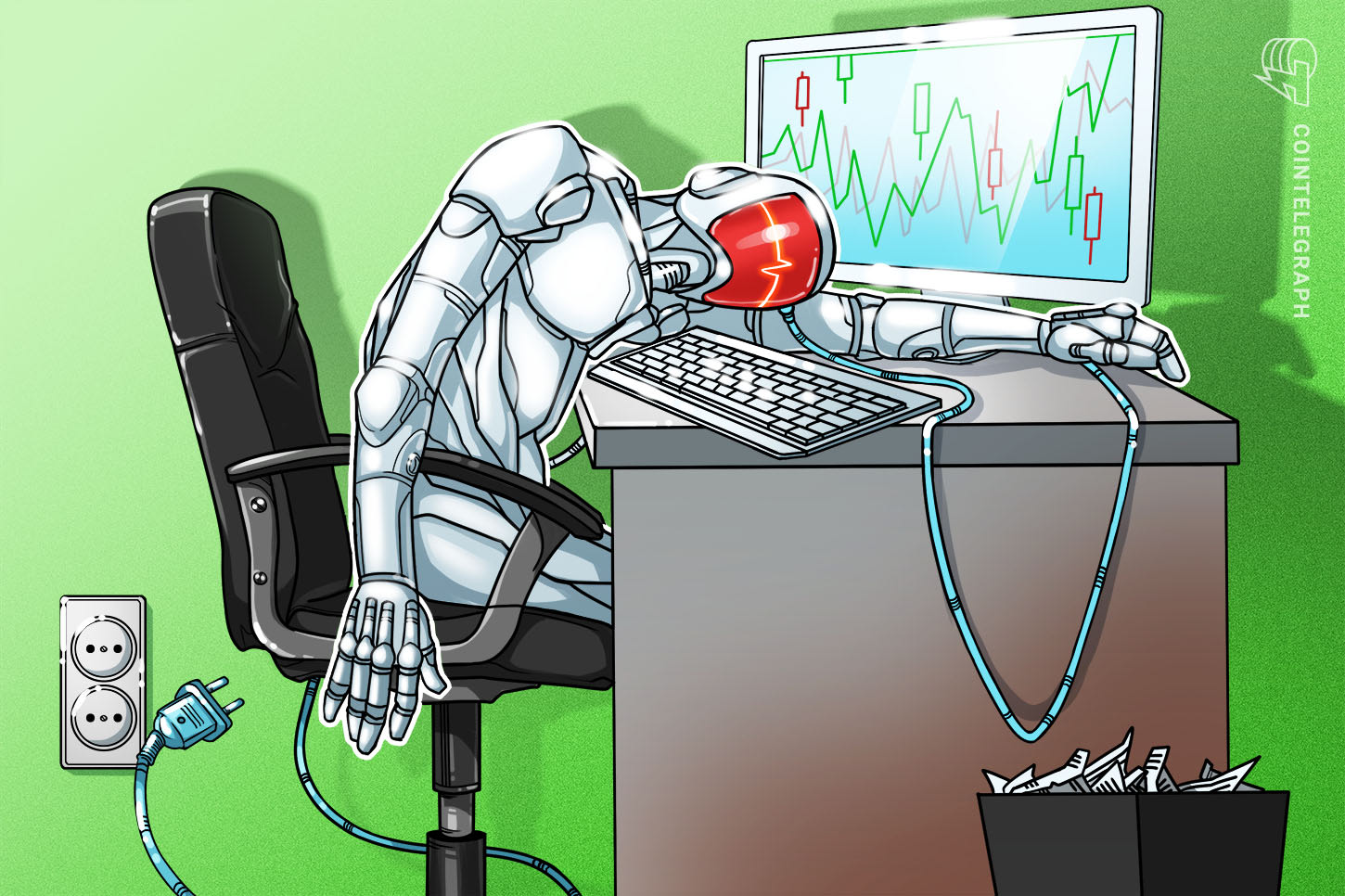
<p style="float: right; margin: 0 0 10px 15px; width: 240px;"><img alt="AI has not triggered DeFi ‘hackpocalypse,’ Dragonfly partner says" class="type:primaryImage" src="https://s3-images.ctmedia.io/media/article-covers/hi-amm-are-dead.jpg" /></p><p>Total value stolen and median hack size are declining compared to 2025, signaling that the AI hacking apocalypse was a false alarm, argued Dragonfly managing partner Haseeb Qureshi.</p>
Deconstructing the DeFi 'Hackpocalypse': Analysis of AI's Impact on Blockchain Security
For several years, the intersection of Artificial Intelligence (AI) and Decentralized Finance (DeFi) has been viewed through a lens of extreme caution. The prevailing narrative among cybersecurity experts and blockchain developers was the looming threat of a 'hackpocalypse'—a systemic collapse of DeFi protocols triggered by AI agents capable of identifying and exploiting smart contract vulnerabilities at a speed and scale impossible for human hackers. However, recent commentary from Haseeb Qureshi, a managing partner at Dragonfly, suggests that this catastrophic prediction was a false alarm, pointing to empirical data that contradicts the fear-driven narrative.
The Anatomy of the AI Fear
To understand why the 'hackpocalypse' was feared, one must look at the capabilities of Large Language Models (LLMs) and automated reasoning tools. The concern was that AI could be used to conduct exhaustive, automated audits of open-source smart contracts, finding 'zero-day' vulnerabilities—such as re-entrancy bugs or logic errors—and executing exploits in milliseconds. In a landscape where billions of dollars are locked in autonomous code, the ability of an AI to weaponize code analysis threatened to undermine the very trust that DeFi is built upon. This fear created a climate of anxiety, where every major exploit was attributed to the rising tide of AI-driven warfare.
Data-Driven Reassurance: The Decline of Hack Scale
Qureshi's analysis pivots the conversation from theoretical fear to empirical evidence. By observing that the total value stolen and the median hack size are actually declining compared to 2025, he highlights a critical trend: the efficacy of attacks is not increasing exponentially as AI adoption grows. This suggests a 'plateau' in offensive capabilities or, more likely, a successful adaptation of the DeFi ecosystem. When the median hack size drops, it indicates that the 'big wins'—the systemic failures that can bankrupt entire protocols—are becoming rarer, signaling that the most critical vulnerabilities are being patched or avoided entirely.
The Defensive AI Counter-Revolution
One of the most significant reasons for this 'false alarm' is the parallel evolution of defensive AI. While attackers have access to LLMs, developers and security firms have integrated AI into their Continuous Integration/Continuous Deployment (CI/CD) pipelines. AI-powered formal verification and automated fuzzing tools are now used to stress-test contracts before they ever hit the mainnet. This creates a symmetrical arms race where defensive AI neutralizes offensive AI in real-time. The decline in stolen value is likely a testament to the fact that AI is proving to be a more potent tool for the 'shield' than for the 'sword' in the context of smart contract security.
Historical Context and Ecosystem Maturity
Historically, DeFi has gone through cycles of 'hack seasons' where a single vulnerability in a common library (like a specific oracle or a bridge) leads to a cascade of exploits. In the early days of DeFi, security was often an afterthought, with many projects rushing to launch to capture liquidity. The current decline in hack sizes reflects a maturing ecosystem. Developers are now employing more rigorous standards, utilizing multi-signature wallets, implementing time-locks, and conducting multiple third-party audits. The 'hackpocalypse' failed to launch not just because of AI defense, but because the foundational hygiene of DeFi development has improved significantly since the 2020-2022 era.
Future Outlook: Toward AI-Native Security
Looking forward, the relationship between AI and DeFi security will likely shift from a battle of 'hacks vs. patches' to a state of continuous, AI-native monitoring. We can expect the rise of autonomous security agents that monitor mempools in real-time to detect and front-run malicious transactions before they are finalized. As the industry moves away from the fear of a singular 'apocalypse,' the focus will shift toward building resilient, self-healing protocols. The lesson from Qureshi's observation is clear: while AI changes the tools of the trade, it does not fundamentally break the economics of security if the defenders are equally equipped.
Summary
In conclusion, the data suggests that the anticipated AI-driven collapse of DeFi security has not occurred. Instead, a combination of improved developer discipline and the deployment of defensive AI has led to a decrease in the scale and frequency of major thefts. The 'hackpocalypse' served as a necessary warning that spurred the industry toward better security, but the current trend indicates a more stable and resilient financial infrastructure.