Show HN: AI Law Tracker – one audited API for US, EU and global AI law
Source Entity
Hacker News
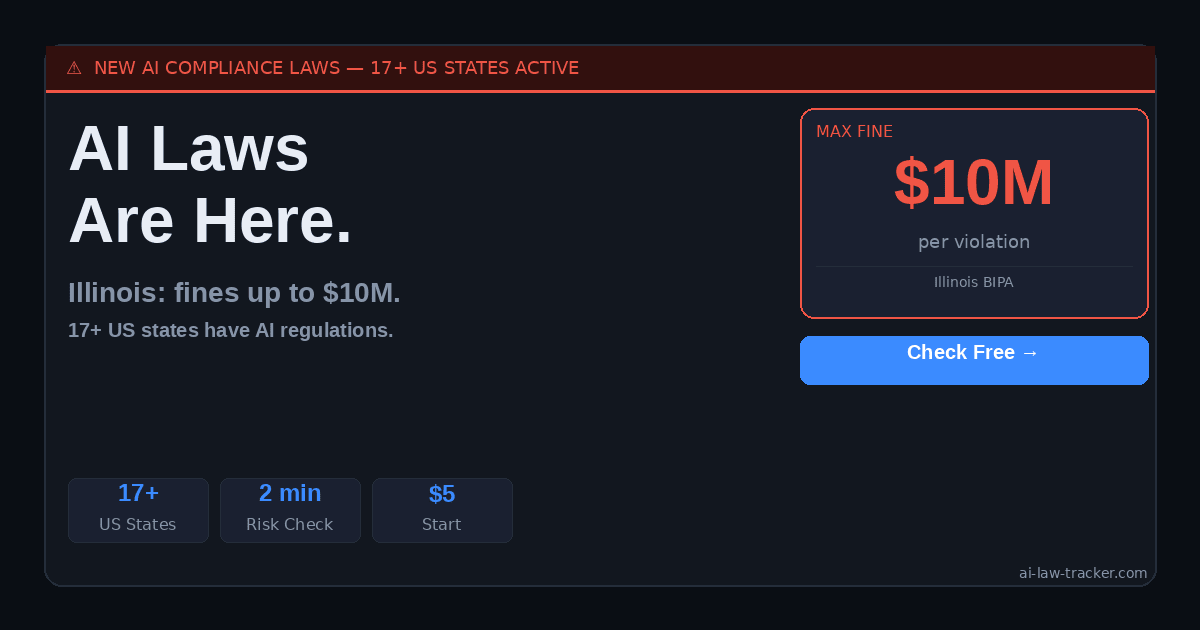
A new tool called AI Law Tracker has been launched, offering an audited API that helps developers and businesses monitor and comply with fragmented AI regulations across the US, EU, and global jurisdictions.
Navigating the Regulatory Maze: The Launch of AI Law Tracker
The recent introduction of the AI Law Tracker via the "Show HN" community marks a significant step toward solving one of the most pressing challenges facing the modern artificial intelligence industry: regulatory fragmentation. As AI capabilities evolve at an exponential rate, governments worldwide are racing to implement guardrails. However, these laws are often disparate, contradictory, and buried in dense legal jargon. The AI Law Tracker aims to bridge this gap by providing a single, audited API that aggregates AI law data from the United States, the European Union, and other global regions, transforming legal text into actionable data for developers and compliance officers.
The Strategic Importance of an Audited API
What distinguishes the AI Law Tracker from a simple database or a curated list of links is its delivery method as an audited API. In the enterprise software world, manual tracking of laws is insufficient because regulatory changes can happen overnight, potentially rendering a product non-compliant and exposing a company to massive fines. By offering an API, the tool allows companies to integrate regulatory tracking directly into their internal compliance dashboards or CI/CD pipelines. The "audited" nature of the data is critical; in a legal context, the cost of a false positive or a missed regulation is far higher than in standard software bugs, making verification a core value proposition of this service.
The EU AI Act and the Global Compliance Burden
To understand the necessity of this tool, one must look at the EU AI Act, the world's first comprehensive framework for AI regulation. The Act categorizes AI systems by risk levels—unacceptable, high, limited, and minimal—each with different stringent requirements for transparency, data governance, and human oversight. For a developer in San Francisco or Bangalore building a tool for the European market, keeping track of these specific tiers is a monumental task. The AI Law Tracker provides the necessary infrastructure to monitor these shifts in real-time, ensuring that "high-risk" classifications are identified before they lead to legal repercussions.
Fragmentation in the US and Global Markets
While the EU pursues a centralized approach, the United States presents a more fragmented landscape. Regulation in the US currently consists of a patchwork of Federal Executive Orders, agency-specific guidelines (such as those from the FTC or SEC), and emerging state-level laws—most notably in California. This creates a "regulatory jigsaw puzzle" where a company might be compliant at the federal level but in violation of a specific state mandate. The AI Law Tracker's ability to unify these disparate sources into a single stream allows businesses to maintain a global posture without needing to hire an army of specialized legal consultants for every single jurisdiction they enter.
Lowering the 'Compliance Tax' for AI Startups
For early-stage AI startups, the cost of legal compliance—often referred to as the "compliance tax"—can be a significant barrier to entry. Large tech giants have the resources to maintain internal legal teams to track global shifts, but smaller innovators often operate in a state of legal uncertainty. By democratizing access to audited regulatory data through an API, the AI Law Tracker effectively lowers the barrier to entry. This allows smaller players to build "compliance by design" into their products from day one, rather than attempting to retroactively fix their architecture after a regulatory crackdown.
Future Trends: The Rise of RegTech for AI
Looking forward, the launch of the AI Law Tracker signals the emergence of a specialized niche within RegTech (Regulatory Technology) specifically tailored for artificial intelligence. As we move toward more complex requirements—such as mandatory algorithmic auditing and copyright transparency—the demand for automated, machine-readable legal data will only grow. We can expect to see a trend where AI compliance becomes an automated part of the software development lifecycle, with tools like the AI Law Tracker acting as the "source of truth" for the legal parameters within which an AI model must operate.
Conclusion
In summary, the AI Law Tracker is more than just a convenience tool; it is a critical piece of infrastructure for the sustainable growth of the AI ecosystem. By converting the chaotic landscape of global AI law into a structured, audited API, it empowers developers to innovate with confidence. As the gap between technological capability and legal framework continues to fluctuate, tools that provide clarity, accuracy, and automation in compliance will become indispensable for any organization deploying AI on a global scale.