Ramayana trailer imagined by AI, featuring Mahesh Babu, Jr NTR, Janhvi Kapoor, Keerthy Suresh; fans bowled over. Watch
Source Entity
Latest News: Today's Latest News Headlines from India & World | Hindustan Times | Hindustan Times
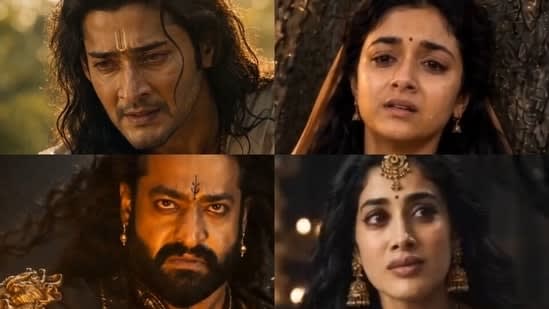
Fans were thrilled to see an AI-generated Ramayana trailer featuring Tollywood stars instead of Ranbir Kapoor, Sai Pallavi and Yash. Take a look.
The Convergence of Artificial Intelligence and Cinematic Fandom
In a striking demonstration of how generative AI is reshaping fan engagement, a fan-made 'imagined' trailer for the highly anticipated film Ramayana has captured the internet's attention. By leveraging advanced AI tools, creators have envisioned a version of the epic that swaps the officially announced cast—featuring Ranbir Kapoor, Sai Pallavi, and Yash—with Tollywood heavyweights such as Mahesh Babu, Jr NTR, Janhvi Kapoor, and Keerthy Suresh. This phenomenon highlights a growing trend where audiences no longer passively consume casting news but actively use technology to manifest their own ideal visions of cinematic storytelling.
The Clash of Casting: Official vs. Imagined
The core of the viral reaction lies in the contrast between the production house's choices and the fans' preferences. While the official casting of Ranbir Kapoor as Lord Rama and Yash as Ravana represents a strategic blend of Bollywood and Pan-Indian appeal, the AI-generated alternative taps into the deep-rooted loyalty of the Telugu cinema audience. By placing Mahesh Babu in the lead role, the AI trailer leverages his image of poise and serenity, which many fans feel aligns more closely with the traditional depiction of Rama. Similarly, the inclusion of Jr NTR adds a layer of intensity and dramatic weight that resonates with the epic scale of the Ramayana, illustrating a divide between professional casting directives and emotional fan expectations.
Technological Implications of Generative Video
This event underscores the rapid evolution of AI-driven content creation. The ability to create a cohesive, visually convincing trailer featuring specific actors who were never on a physical set indicates that deepfake technology and generative video tools have reached a level of accessibility that allows non-professionals to produce 'concept art' that looks like a final product. This shift transforms the 'fan-cast'—previously a simple list of names on a forum—into a tangible visual experience. As these tools become more refined, the boundary between official promotional material and fan-generated content will continue to blur, potentially influencing how studios gauge audience sentiment before a film's release.
Cultural Weight and the Burden of Representation
The intense reaction to this AI trailer is not merely about celebrity preference but is deeply rooted in the cultural and spiritual significance of the Ramayana. For millions, the characters of Rama and Sita are not just roles but divine archetypes. Consequently, any casting choice is scrutinized through a lens of devotion and tradition. The AI trailer serves as a digital 'litmus test,' allowing fans to visualize whether an actor's screen presence matches the sanctity of the character. This suggests that for mythological epics, the visual 'aura' of the actor is often more important to the audience than their acting range or commercial viability.
The Shift in Power Dynamics: Studios vs. Community
Historically, film studios held absolute control over the image and narrative of a project until the first official teaser was released. However, the emergence of AI-generated trailers shifts some of this power to the community. When a fan-made version goes viral and receives overwhelming praise, it creates a secondary narrative that the official production must compete with. While this does not change the actual casting of the film, it sets a psychological benchmark for the audience. If the AI version is perceived as 'more authentic,' the official film may face uphill battles in managing expectations and satisfying a fragmented fanbase.
Predicting the Future of 'What-If' Cinema
Looking forward, we can expect a surge in 'What-If' cinema, where AI is used to explore alternative casting or plot directions for major franchises. This could evolve into a formalized part of movie marketing, where studios might actually release multiple AI-generated 'concept paths' to see which version the public prefers. In the case of Ramayana, the viral success of the Mahesh Babu and Jr NTR version proves that there is a massive appetite for regional representation in Pan-Indian epics, potentially pushing future filmmakers to diversify their casting strategies even further.
Summary
The AI-generated Ramayana trailer is more than a technical curiosity; it is a reflection of the evolving relationship between technology, cultural identity, and cinema. By replacing the official cast with Tollywood stars, fans have used AI to express a specific cultural preference, challenging the traditional top-down approach of film production and signaling a new era of interactive, visual fan-participation.
Verification Required?