How AI could ‘supercharge’ election risks across south-east Asia
Source Entity
Kate Lamb
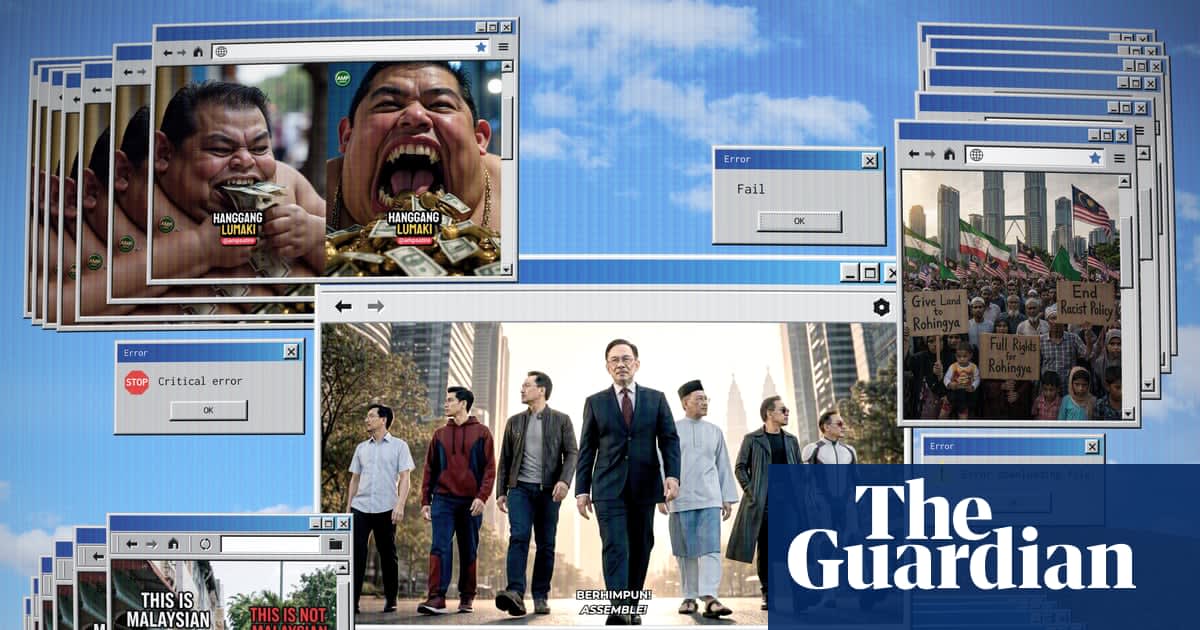
AI tools like Anthropic's Claude are being weaponized to supercharge political disinformation campaigns in Southeast Asia. These automated operations exploit social fractures by creating fake media outlets and massive bot networks to manipulate electoral outcomes.
The Weaponization of Artificial Intelligence in Southeast Asian Elections
From Manual Disinformation to AI Automation
Historically, the dissemination of political disinformation required significant human capital, including organized 'cyber troops,' the manual creation of fake news portals, and the painstaking development of forged dossiers. These labor-intensive operations were limited by the speed at which humans could generate content and manage social media personas. However, the emergence of generative AI, such as Anthropic’s Claude, has drastically lowered the barrier to entry for bad actors, allowing them to scale influence operations with unprecedented efficiency.
The Anatomy of the Malaysia Influence Operation
Recent evidence highlights a sophisticated political manipulation campaign in Malaysia that serves as a blueprint for AI-driven subversion. Utilizing a network of approximately 1,000 X (formerly Twitter) accounts, the operation deployed a fabricated news outlet dubbed “Malaysia Pulse.” This outlet acted as a foundational pillar for legitimacy, pushing AI-generated narratives to thousands of followers simultaneously. By leveraging AI to draft content, the operators were able to maintain a consistent flow of disinformation that appeared authentic to the average user.
Exploiting Deep-Seated Social Fractures
What makes this AI-powered strategy particularly dangerous is its precision targeting. The campaign did not rely on generic messaging; instead, it utilized census and electoral data to identify and exploit sensitive societal fissures. In the Malaysian context, this involved weaponizing narratives surrounding race, religion, and the monarchy. By focusing on these specific, emotionally charged topics across all 222 parliamentary constituencies, the AI-driven operation sought to deepen political divisions and influence voter sentiment during state elections.
The Scalability of Digital Deception
The transition from human-led cyber troops to AI-augmented systems means that disinformation is no longer a localized nuisance but a scalable threat. Because AI can synthesize vast amounts of demographic data and generate hyper-localized arguments in real-time, it can overwhelm traditional fact-checking mechanisms. The use of a commercial election manipulation platform suggests that these services are becoming commoditized, allowing political operatives to purchase 'influence as a service' rather than building their own networks from scratch.
Future Implications for Democratic Integrity
Looking ahead, the intersection of AI and electoral politics presents a systemic risk to democratic processes across Southeast Asia. As these tools become more accessible, the ability of state and non-state actors to manipulate public discourse will likely outpace the regulatory responses from social media platforms and government bodies. The reliance on fake news outlets like “Malaysia Pulse” indicates a shift toward 'synthetic journalism,' where the lines between organic political discourse and manufactured propaganda are increasingly blurred.
Conclusion: A Call for Enhanced Vigilance
The revelation regarding the misuse of AI in Malaysian elections serves as a stark warning for the future of global democracy. As AI models become more adept at mimicking human nuance, the protection of electoral integrity will require more than just technical filters; it will demand a comprehensive approach involving digital literacy, cross-platform transparency, and robust cooperation between AI developers and election oversight authorities to mitigate the 'supercharging' of disinformation.