Air India crash: Draft final report will be ready by October, AAIB tells Supreme Court
Source Entity
India Latest News: Top National Headlines Today & Breaking News | The Hindu
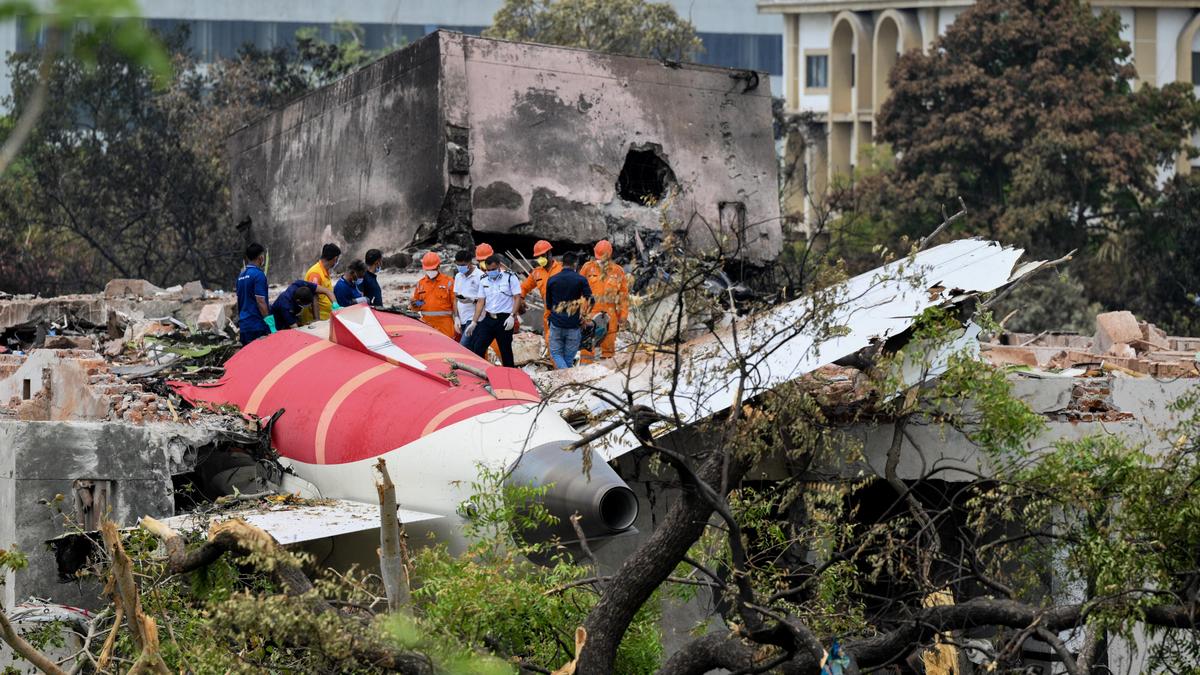
The Aircraft Accident Investigation Bureau (AAIB) has informed the Supreme Court that the draft final report regarding the Air India crash will be ready by October, while asserting that cockpit voice and image recordings remain legally protected from public disclosure.
Timeline for Accountability: AAIB’s Update to the Supreme Court
In a significant legal update regarding one of the most scrutinized aviation incidents in recent history, the Aircraft Accident Investigation Bureau (AAIB) has formally notified the Supreme Court that the draft final report for the Air India crash is expected to be completed by October. This announcement marks a critical juncture in the pursuit of closure for the victims' families and the aviation industry at large. The submission of a draft report is a pivotal step in the official investigation process, transitioning the inquiry from the evidence-gathering phase to the analysis and conclusion phase.
The Significance of the Draft Final Report
The transition to a "draft final report" is more than a mere administrative milestone. In aviation forensics, the draft phase allows the AAIB to synthesize vast amounts of telemetry data, witness testimonies, and mechanical wreckage analysis into a coherent narrative of the crash's causality. Once the draft is completed, it typically undergoes a rigorous review process by stakeholders, including the airline and regulatory bodies, to ensure technical accuracy. For the Supreme Court, this timeline provides a concrete window for judicial oversight, ensuring that the investigation is proceeding with due diligence and is not being indefinitely delayed.
The Legal Shield: Statutory Prohibitions on CVRs
A central point of contention in the AAIB's affidavit is the "absolute statutory prohibition" on the public disclosure of cockpit voice recordings (CVR) and airborne image recordings. This stance is rooted in international aviation standards, such as those set by the ICAO (International Civil Aviation Organization). The rationale behind protecting CVRs is to foster a "just culture" within the cockpit; pilots are more likely to be honest and transparent during emergencies if they know their final words will not be used for public shaming or misplaced legal retribution. By shielding these recordings, the AAIB aims to focus on systemic failure rather than individual blame.
Judicial Oversight and the Demand for Transparency
The involvement of the Supreme Court highlights the tension between regulatory secrecy and the public's right to know. Often, in high-profile crashes, families of the deceased seek full transparency to ensure that corporate negligence is not being covered up under the guise of "statutory prohibitions." The court's role here is to balance the AAIB's need for a controlled investigative environment against the legal requirements for accountability. The fact that the AAIB is reporting directly to the highest court in the land indicates that the transparency of this specific investigation is under intense judicial scrutiny.
Broader Implications for Aviation Safety
Beyond the legalities, the eventual release of the final report serves a global purpose: the prevention of future accidents. Aviation safety is an iterative process where every crash provides data that leads to redesigned parts, updated pilot training, or revised air traffic control protocols. Whether the cause was mechanical failure, pilot error, or a combination of environmental factors, the findings in the Air India report will likely influence safety mandates across the Indian aviation sector and potentially impact international flying standards if a systemic flaw in aircraft hardware is discovered.
Balancing Public Interest and Regulatory Protocol
The AAIB's refusal to release image and voice recordings, while legally sound, often creates a vacuum of information that is filled by speculation. However, the agency's commitment to providing the draft report by October suggests a willingness to provide the conclusions derived from that data, even if the raw data remains classified. This distinction is crucial in maintaining the integrity of the investigation, as raw recordings without expert context can be easily misinterpreted by the general public or legal teams seeking to assign liability without technical grounding.
Conclusion: The Path Toward Closure
As October approaches, the focus will shift from the timeline of the report to the substance of its findings. The resolution of this case depends on whether the AAIB's final analysis provides a comprehensive explanation that satisfies both the technical requirements of aviation safety and the moral requirements of the victims' families. While the statutory protections on cockpit recordings may remain in place, the comprehensive nature of the final report will be the ultimate measure of the investigation's success and the justice delivered through the Supreme Court's oversight.
Verification Required?