Staines murder case: Supreme Court gives Odisha govt. one month to consider Dara Singh's remission plea
Source Entity
India Latest News: Top National Headlines Today & Breaking News | The Hindu
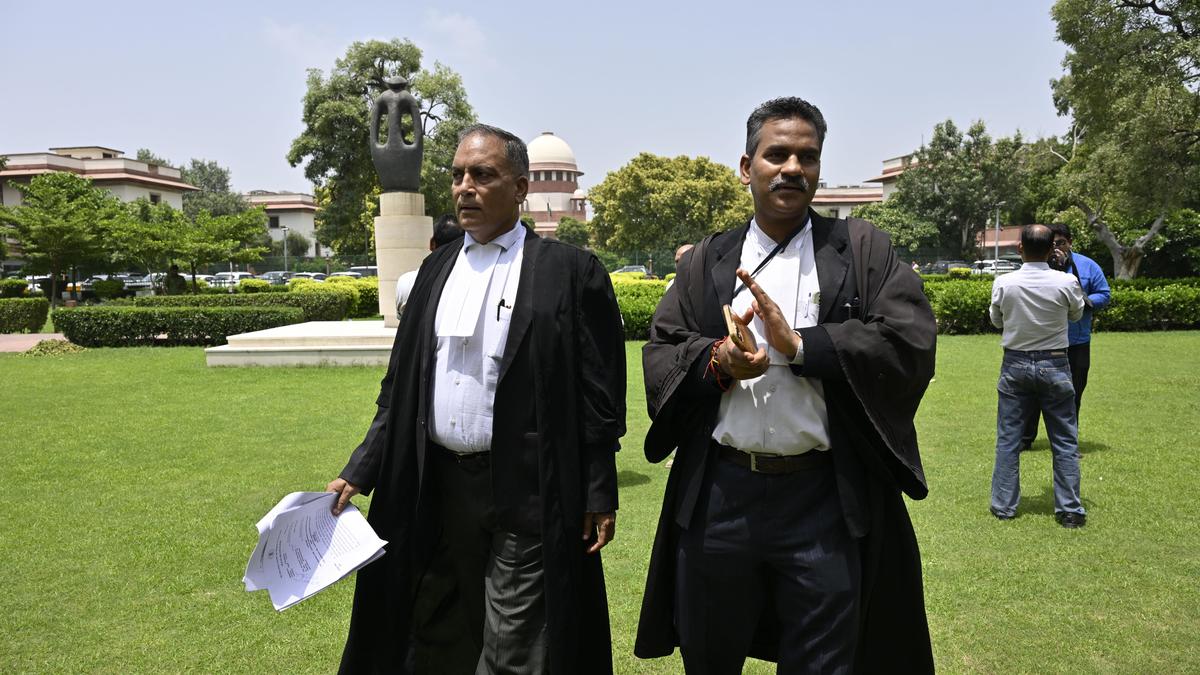
The Supreme Court of India has directed the Odisha government to decide on the remission plea of Dara Singh, a convict in the 1999 Staines murder case, within one month, specifically requesting adherence to the 2022 guidelines for the premature release of life convicts.
Judicial Oversight and the Quest for Remission: The Dara Singh Case
In a significant legal development, the Supreme Court of India has intervened in the long-standing legal battle surrounding Dara Singh, a key convict in the infamous Staines murder case. The apex court has issued a directive to the Odisha government, granting it a strict one-month window to consider and decide upon Singh's plea for remission. This judicial nudge comes as Singh seeks a premature release based on updated guidelines issued in 2022, which aim to standardize the process for life convicts seeking early release from prison.
Historical Context: The Staines Tragedy
To understand the gravity of this legal proceeding, one must look back to January 1999, when Graham Staines, an American missionary, and his two young sons were burned alive in their sleep in Manoharpur, Odisha. The event sent shockwaves across the globe, highlighting the volatile communal tensions present in the region at the time. Dara Singh was identified as the primary mastermind behind the attack. The subsequent legal battle lasted years, eventually leading to Singh's conviction. Given the brutality of the crime and the international attention it garnered, any discussion regarding his release is fraught with emotional and political complexity.
Analysis of the 2022 Remission Guidelines
Central to this current plea are the 2022 guidelines for the premature release of life convicts. Historically, the power of remission—the reduction of a sentence—was often exercised by state governments with a degree of opacity or political influence. The 2022 guidelines were introduced to bring objectivity and uniformity to this process. By emphasizing behavioral records, the nature of the crime, and the time served, these guidelines seek to balance the state's power of mercy with the fundamental rights of the prisoner. Singh's insistence that his case be viewed through this specific lens indicates a strategic legal move to move the conversation from the 'nature of the crime' to the 'standardized criteria for release.'
The Dilemma for the Odisha Government
The Odisha government now finds itself in a precarious position. On one hand, it must comply with the Supreme Court's mandate to evaluate the plea within thirty days. On the other, the state must weigh the legal merits of the remission against the public sentiment and the horrific nature of the 1999 murders. Granting remission to a figure as polarizing as Dara Singh could potentially reignite old communal wounds or be viewed as a dismissal of the victims' suffering. Conversely, denying the plea without a robust, guideline-based justification could lead to further litigation and accusations of judicial defiance.
Broader Legal Implications and Future Trends
This case serves as a litmus test for how Indian states apply the 2022 premature release guidelines in high-profile, sensitive cases. It highlights a growing trend where the judiciary is increasingly demanding transparency and time-bound decisions from executive bodies regarding prisoner rights. Moving forward, we can expect more life convicts in similar high-profile cases to cite these guidelines to challenge their continued incarceration. The outcome of this specific case will likely set a precedent for whether 'exceptionally heinous' crimes can be exempted from the spirit of the 2022 guidelines or if the rule of law must apply uniformly regardless of the crime's notoriety.
Conclusion
The Supreme Court's order is not a grant of freedom, but a mandate for due process. By forcing the Odisha government to make a definitive decision within a month, the court is ensuring that the legal limbo surrounding Dara Singh is resolved. Whether the result is a continuation of his sentence or a conditional release, the decision will be a critical intersection of humanitarian law, state executive power, and the enduring memory of a tragedy that scarred the social fabric of Odisha.
Verification Required?