Supreme Court rejects plea to curb reels, podcasts; warns against politicising Article 32
Source Entity
India Latest News: Top National Headlines Today & Breaking News | The Hindu
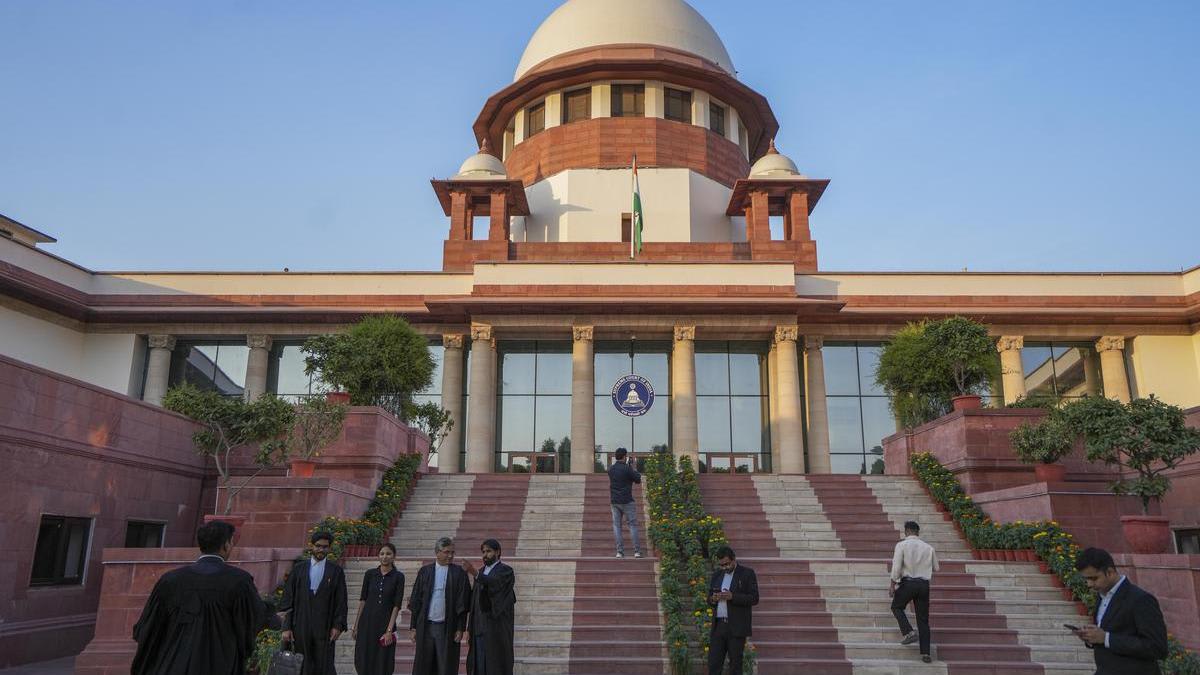
The Supreme Court of India has rejected a petition seeking to curb the use of reels and podcasts following the circulation of derogatory comments about Prophet Muhammed by an influencer, while cautioning against the politicisation of Article 32.
Judicial Restraint and Digital Expression: Analyzing the Supreme Court's Refusal to Curb Social Media Formats
In a significant ruling regarding the intersection of digital media and constitutional law, the Supreme Court of India has rejected a petition that sought to curb the proliferation of 'reels' and 'podcasts.' The petition was triggered by the online circulation of allegedly derogatory comments made by a social media influencer targeting Prophet Muhammed. While the court acknowledged the sensitivity of the issue, it refused to implement a broad restriction on digital content formats, emphasizing a commitment to judicial restraint and the protection of constitutional processes.
The Conflict Between Digital Content and Religious Sentiment
The core of this legal battle lies in the viral nature of modern content consumption. Reels and podcasts have become primary vehicles for information and opinion, often bypassing traditional editorial filters. When these platforms are used to disseminate content perceived as offensive or derogatory toward religious figures, it frequently leads to demands for systemic censorship. In this instance, the petitioners sought a blanket curb on these formats to prevent further communal disharmony. However, the Court's refusal suggests a critical legal distinction: the law must target specific illegal acts (such as hate speech or incitement) rather than the medium through which the communication occurs. By refusing to penalize the format of 'reels' or 'podcasts,' the Court prevented a dangerous precedent that could have led to the over-regulation of digital speech.
The Sanctity of Article 32 and the Warning Against Politicisation
A pivotal aspect of the Bench's observation was the warning against the "politicisation of Article 32." Article 32 of the Indian Constitution is often described as the "heart and soul" of the document, as it allows citizens to move the Supreme Court directly for the enforcement of Fundamental Rights. By cautioning the petitioners, the Court highlighted a growing trend where the apex court is approached to resolve social or religious grievances that should typically be handled by lower courts or through the filing of First Information Reports (FIRs) with the police. The Court is essentially signaling that Article 32 should not be used as a tool for political leverage or as a shortcut to bypass the standard legal hierarchy for issues that do not constitute a direct, systemic violation of fundamental rights.
Balancing Free Speech and Public Order
This case underscores the perpetual struggle within the Indian judiciary to balance the right to freedom of speech and expression (Article 19) with the need to maintain public order and religious harmony. While derogatory comments against religious figures can trigger widespread unrest, the judiciary is wary of "censorship by proxy." If the court were to curb reels and podcasts based on the actions of a few influencers, it would effectively stifle millions of legitimate creators. The legal framework in India already provides mechanisms—such as the Information Technology (IT) Act and various sections of the Bharatiya Nyaya Sanhita (formerly IPC)—to prosecute individuals for hate speech. Therefore, the Court viewed a broad curb as an unnecessary and disproportionate measure.
Broader Implications for the Creator Economy
The ruling provides a layer of protection for the burgeoning creator economy in India. As podcasts and short-form videos become central to public discourse, the threat of judicial mandates curbing these formats could have chilled creativity and journalistic inquiry. By focusing on the specific conduct of the influencer rather than the technology used, the Supreme Court has reaffirmed that the responsibility for content lies with the individual creator and the platform's moderation policies, not with a constitutional ban on the medium itself. This ensures that the digital landscape remains open, provided that users adhere to the existing laws of the land.
Conclusion and Future Outlook
Ultimately, the Supreme Court's decision serves as a reminder that the judiciary will not act as a primary censor for the internet. The warning against the misuse of Article 32 suggests that the Court will be increasingly stringent about the types of petitions it entertains, pushing litigants toward the appropriate trial courts for grievance redressal. In the future, we can expect a greater emphasis on the implementation of the IT Rules for content takedowns rather than constitutional pleas for format-wide bans. This ruling reinforces the principle that while religious sentiments are significant, they cannot be used to override the procedural integrity of the legal system or to dismantle the infrastructure of modern digital communication.
Verification Required?